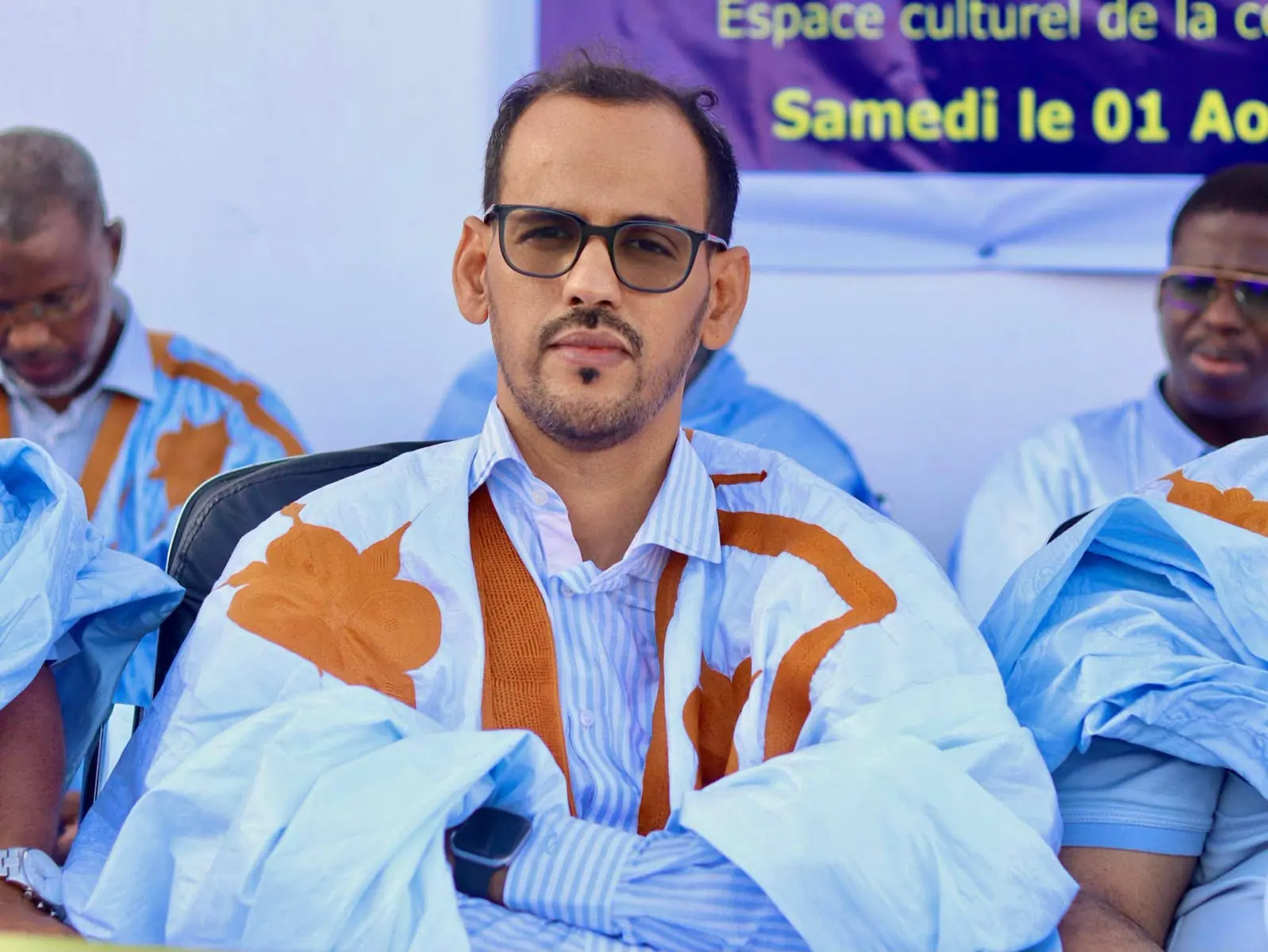
Mauritanian parliamentarian Zain El Abidine Ould Al-Mineer has described a comparison of World Bank financing for Mauritania over the past seven years with the previous six decades as economically naive. He argued that this comparison selectively focuses on financing from one lender, the World Bank, and presents it as a comprehensive picture of Mauritania's debt situation, ignoring the more important indicator of debt size relative to the economy and the state's ability to bear it.
Ould Al-Mineer stated that the data shows a decline in the public sector debt-to-GDP ratio since 2019, from around 70% to approximately 40% despite the financing received during this period. He questioned how an increase in financing from one source could be used to infer a worsening debt situation when the overall debt indicator is moving in the opposite direction.
The parliamentarian argued that focusing solely on World Bank financing raises a methodological question: why compare flows from one lender over two periods instead of comparing total public debt and its ratio to GDP in those periods? He also wondered why the debt of other lenders during the same periods was not presented.
Ould Al-Mineer explained that the comparison ignores debt repayments and settlements during the same period. He cited the example of the Islamic Development Bank, where the balance decreased despite continued financing, and the settlement of an old Kuwaiti debt dating back to the 1970s.
He emphasized the need to break down the $1.64 billion figure before drawing any conclusions, as it represents financing rather than pure debt. According to his analysis, around $900 million is repayable, while at least $575 million consists of non-repayable grants.
Ould Al-Mineer also pointed out that comparing these figures with those from previous decades in nominal terms fails to account for significant changes in the value of the dollar. He noted that $900 million today is equivalent to around $351 million in 1990 and $104 million in 1970, when adjusted for purchasing power.
The parliamentarian concluded that the loans, approximately $900 million over seven years, should be evaluated in light of the current economy, terms, and deadlines, rather than being misrepresented. He stressed that the projects financed are known, documented, and ongoing in various sectors such as energy, health, and agriculture.
Key points
- Ould Al-Mineer disputes the comparison of World Bank financing for Mauritania over the past seven years with the previous six decades.
- The Mauritanian parliamentarian argues that the overall debt indicator shows improvement since 2019.
- He emphasizes the need to consider the value of the dollar and the size of the economy when evaluating financing.