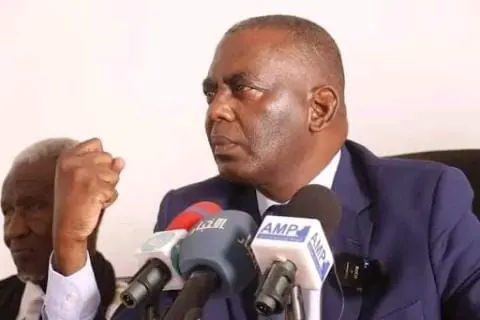
Mauritanian opposition leader Biram Dah Abeid has expressed disappointment and concern over President Mohamed Ould Ghazouani's decision to retain Prime Minister Mochtar Ould Ajay. According to Abeid, the president had an opportunity to break away from the practices that have led Mauritania into its current crisis but chose to maintain the status quo. Abeid emphasized that the president's decision does not address the pressing concerns of the Mauritanian people, including high living costs, unemployment, poverty, and corruption.
Abeid pointed out that the president's decision to reappoint the prime minister instead of listening to the people's grievances indicates a preference for continuity over change. He argued that the current government's performance has been marred by improvisation, incompetence, and cronyism, which have exacerbated the country's multifaceted crisis. Abeid also noted that the decision does not reflect a willingness to address the tensions arising from outdated practices and the accumulation of a heavy historical legacy.
The opposition leader stressed that the president's decision reveals a widening gap between the president's inner circle and the aspirations of the Mauritanian people. He cited the widespread rejection of Prime Minister Ould Ajay and his team, as evident from social media activism, public opinion, and repeated calls for his resignation. Abeid argued that this rejection underscores the need for a change in approach and a more inclusive and representative government.
Abeid emphasized that what Mauritania needs is a clear vision, a coherent strategy, and a genuine will to develop the country, along with honest, competent, and enthusiastic leaders capable of carrying out a reformist project commensurate with national challenges. He criticized Prime Minister Ould Ajay for bearing significant political responsibility for the current state of affairs and argued that retaining him in office means continuing a failed approach.
According to Abeid, Mauritania requires a profound change in governance style, a neutral state, and equal citizenship rights for all. He stressed that the country's revival cannot depend solely on the government's will but requires national mobilization and the construction of a genuine alternative in the service of all citizens. Abeid expressed his intention to propose a national rescue plan to extricate the country from its crisis and called on opposition forces to agree on a common strategy for popular mobilization and democratic access to power.
Abeid urged the opposition to fully grasp the extent of the gap between the government and the people and make a historic decision to either stand alongside the people and invest in the existing rejection, transforming it into an organized popular mobilization, or maintain silence and continue to accept the humiliations imposed by a system that disrespects its opponents. He emphasized that the time for inconsequential deals and dialogues that preserve the status quo is over.
Abeid concluded that it is time for mobilization, organization, and democratic striving for power to restore sovereignty to Mauritanians and renew their hope for the future. He called on the opposition to work together to develop a credible democratic alternative and engage in a national effort to address the country's challenges.
Key points
- Mauritanian opposition leader Biram Dah Abeid criticizes President Ghazouani's decision to retain Prime Minister Mochtar Ould Ajay.
- Abeid argues that the president's decision does not address pressing concerns of the Mauritanian people.
- Abeid calls for a change in governance style, a neutral state, and equal citizenship rights for all.