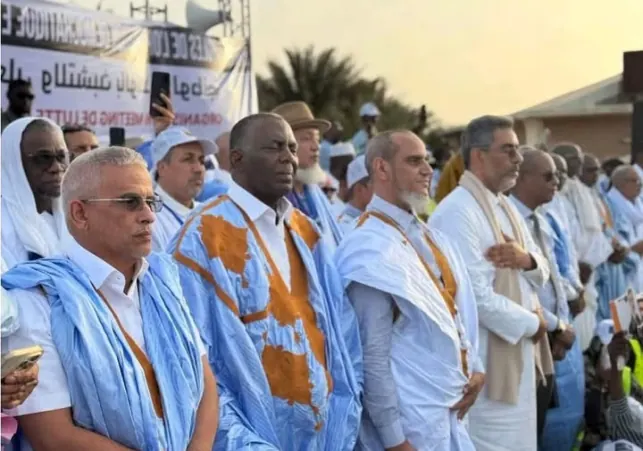
The Coalition for Democratic Alternation 2029 (CAD 2029), a Mauritanian opposition coalition, has released a memorandum emphasizing the need for inclusive dialogue in the country. The memorandum, published on September 23, 2026, highlights the tense political and social situation in Mauritania, which requires urgent attention from national actors and international partners. The coalition's primary concern is that stability in the country can only be ensured if it is based on trust among different ethnocultural and social groups.
The memorandum points out several issues contributing to the current situation, including contradictions between the government's discourse and practice. While the authorities claim to prioritize stability and call for calm and dialogue, they also implement violent and vindictive measures against democratic opposition groups. The coalition notes that these actions have created a climate of fear and frustration among citizens. Furthermore, historical and social issues, such as the legacy of slavery and related discrimination, remain unresolved.
The coalition highlights the issue of land expropriation in the Senegal River valley, which has led to tensions between Arab and Negro-Mauritanian communities, as well as between former masters and slaves. Additionally, many citizens face significant barriers to registering on the national civil registry, which the coalition sees as an attempt to disenfranchise opposition supporters. These issues, combined with high levels of youth unemployment and the spread of substance abuse, have created a sense of hopelessness among young people.
The memorandum also criticizes the restrictive electoral system, which the coalition believes makes democratic alternation illusory. Corruption and embezzlement of public funds have also become widespread, paralyzing the administration and basic socio-economic services. The coalition argues that these issues must be addressed comprehensively to prevent further erosion of trust in institutions.
The coalition points out that the current political situation is characterized by a contradiction between the government's rhetoric and its actions. While the government claims to promote openness and calm, it has implemented restrictive measures against opposition groups and civil society actors. The coalition emphasizes that democratic consolidation requires more than just periodic elections; it also requires that citizens be able to exercise their political rights and that opposition groups play a full role.
The memorandum highlights several specific cases of repression, including the arrest and prosecution of opposition activists, parliamentarians, and civil society leaders. Two deputies, Mariem Cheikh and Ghamou Achour, were arrested and later pardoned by presidential decree, but their civil and political rights were still revoked for five years. The coalition expresses concern about the impunity and recurrence of such cases, which have become almost normalized.
The coalition's memorandum concludes by emphasizing the need for inclusive dialogue to address the country's pressing issues. The coalition calls for an end to repression against opposition groups and civil society actors, as well as measures to promote transparency, accountability, and good governance. Ultimately, the coalition seeks to promote a more equitable and just society, where all citizens can exercise their rights and participate in the democratic process.
Key points
- The Mauritanian opposition coalition releases a memorandum highlighting the country's tense political and social situation.
- The coalition calls for inclusive dialogue to address issues such as land expropriation, electoral restrictions, and corruption.
- The memorandum criticizes the government's restrictive measures against opposition groups and civil society actors.