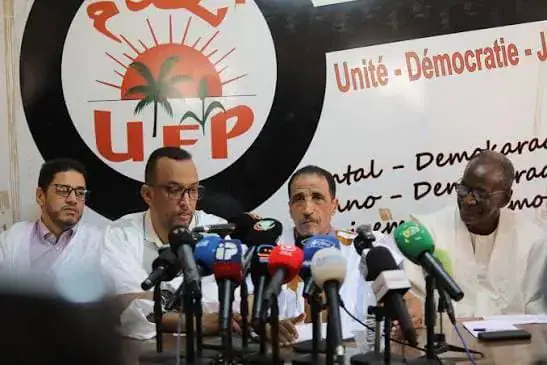
Mauritania's opposition coalition, the Democratic Opposition Coalition, has rejected the inclusion of the Progressive Popular Alliance in the National Dialogue Committee, despite efforts by the committee's head, Moussa Fal, to persuade them to allocate one of the opposition's seats to the party. According to a source within the coalition, Fal attempted to pressure the coalition's leadership to accept the Progressive Popular Alliance's representation within their allocated seats.
The source revealed that Moussa Fal intervened to persuade the coalition to accept the proposal, and Mohamed Ould Mouloud, leader of the Union of Forces for Progress party, attempted to mediate and convince coalition parties to agree to the proposal. However, the coalition leadership remained firm in their rejection. The coalition's stance is based on the fact that the Progressive Popular Alliance withdrew from the opposition coalition months ago and is no longer a member.
As a result, the coalition refuses to count the Progressive Popular Alliance's representative within their allocated seats in the committee. The coalition is demanding that Moussa Fal find a formula that allows the party to participate independently of alliances, similar to what was done with the Tectel Democratic Forces party. The opposition's share in the committee is eight seats, equal to the allocation for parties in the ruling coalition.
The ruling coalition has already submitted the names of its representatives to the committee. As part of the distribution of positions within the committee, the opposition agreed to choose Hamadi Ould Sidi Moukhtar, leader of the National Rally for Reform and Development "Tawassoul" party, as deputy head of the committee. In contrast, the ruling coalition chose Mohamed Bilal Massoud, leader of the Equity party, for the same position.
The Democratic Opposition Coalition had previously selected three representatives to the committee: Nana Sheikhna, Loghermo Abdoul, and Samori Ould Bey. However, the fourth seat remains disputed after Moussa Fal proposed allocating it to the Progressive Popular Alliance, which the coalition rejects. The dispute centers on which entity will occupy the fourth seat allocated to the opposition.
The opposition coalition is insistent that parties that have withdrawn from the coalition should not be represented within their allocated seats. Meanwhile, Moussa Fal is working to include the Progressive Popular Alliance in the committee's formation. The National Dialogue Committee is crucial for the country's progress, and the dispute may hinder its effectiveness.
The situation remains unresolved, with the opposition coalition standing firm on their position and Moussa Fal attempting to find a solution that accommodates all parties. The committee's formation and representation will significantly impact the country's future dialogue and progress.
Key points
- The opposition coalition's rejection of the Progressive Popular Alliance's inclusion in the National Dialogue Committee stems from the party's withdrawal from the coalition months ago.
Reporting sources
- قطب معارض يرفض تمثيل «الشعبي التقدمي» ضمن حصته في لجنة الحوار · saharamedias.net