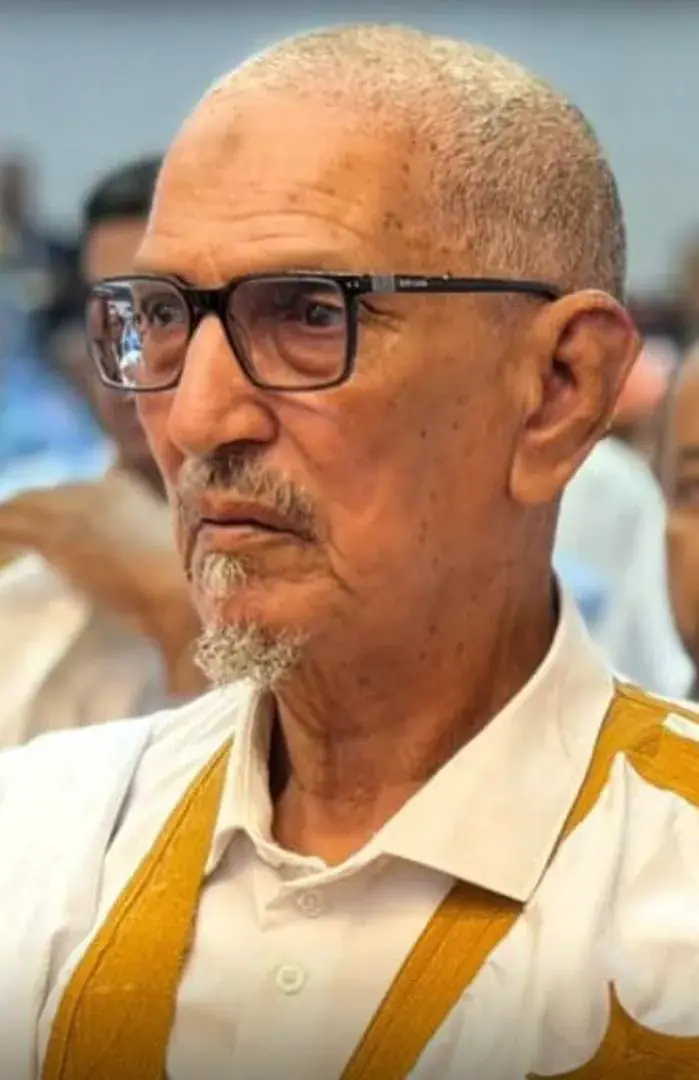
Mauritania's Minister of Culture, Mohamed Ould Babana, has issued a directive requiring officials and employees in his sector to use Arabic in all correspondence and documents addressed to his office. The move has sparked a heated debate, with some criticizing the minister for being monolingual. However, the minister's supporters argue that Arabic is the official language of the country and that its use is essential for national identity.
The directive has been met with skepticism by some, who argue that it is an attack on the use of French, a language that has historically been widely used in Mauritanian administration and education. However, according to the International Organization of La Francophonie, only 13% of Mauritanians speak French, with half of them also speaking Arabic. The minister's supporters argue that it is absurd that French remains dominant in state correspondence when Arabic is the language of the majority and the official language enshrined in the constitution.
Minister Ould Babana has been described as a highly qualified and experienced individual, with a background in law, politics, and international relations. His critics argue that his decision should be evaluated based on its content and consistency with the constitution, rather than his personal language skills. The minister's directive is seen as an effort to implement the constitution's sixth article, which states that Arabic is the official language, while also recognizing other national languages, including Pular, Soninke, and Wolof.
The debate over the minister's directive has highlighted the complexities of language policy in Mauritania, a country with a diverse linguistic heritage. While some argue that the use of Arabic is essential for national identity, others believe that it is not practical to expect all officials to be proficient in the language. The minister's supporters argue that the use of Arabic is not a zero-sum game, where one language must be dominant at the expense of others.
The issue of language policy in Mauritania has a long history, dating back to the country's independence. In 1991, President Maaouya Ould Sid'Ahmed Taya signed the constitution in Arabic, and required state officials, including high-ranking military officers, to learn to read Arabic within a specified timeframe. The military was one of the most committed institutions to the Arabization process, with Arabic becoming the language of military communications and ceremonies.
However, the momentum behind Arabization stalled after President Taya's departure from power, and some of the gains made in promoting Arabic have been eroded. The current minister's directive is seen as an effort to revive the Arabization process and promote the use of Arabic in state institutions. Critics argue that the government needs to develop a comprehensive plan to support the use of Arabic, including training for officials and the development of administrative and legal terminology.
The debate over the minister's directive has also highlighted the need for greater recognition and promotion of Mauritania's other national languages. While Arabic is the official language, other languages, including Pular, Soninke, and Wolof, are also important components of the country's cultural heritage. The government has a constitutional obligation to promote and develop these languages, alongside Arabic.
Key points
- The Mauritanian government is urged to develop a comprehensive plan to support the use of Arabic and other national languages in state institutions.
- The minister's directive is seen as an effort to implement the constitution's sixth article, which states that Arabic is the official language.
- The debate over language policy in Mauritania highlights the complexities of promoting national identity and cultural heritage in a diverse linguistic context.