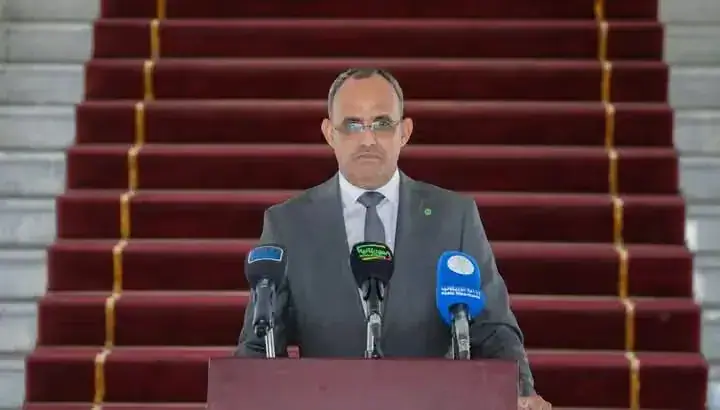
The recent publication of a list of professional media outlets in Mauritania by the High Authority of Press and Audiovisual (HAPA) has sparked debate on the criteria used to assess media professionalism. Mohamed Ould Oumar has contributed to the discussion, emphasizing the need for a comprehensive, rigorous, and transparent evaluation approach. This approach should consider the quality of content, institutional functioning, respect for ethics, and public trust. Ould Oumar's comments come as the Mauritanian media landscape evolves, with the expansion of digital platforms and diverse editorial initiatives.
Ould Oumar stresses that evaluating media professionalism requires moving beyond administrative and formal considerations. Instead, the focus should be on objective indicators and a clearly defined methodology. He notes that media outlets have varying levels of structuration, production, professionalism, and influence on public opinion. A credible selection of professional media must integrate the quality of journalistic work, respect for professional rules, contribution to society, and compliance with legal provisions governing the sector.
According to Ould Oumar, a media outlet should have a clear editorial identity, institutional vision, qualified human resources, and a genuine commitment to its audience. The quality of content should be a central indicator of professionalism, encompassing accuracy, reliability, depth, and diversity. The analysis should also consider the media's ability to inform public opinion and address national, economic, cultural, and social issues. A distinction should be made between outlets producing original content and those merely reproducing existing information.
Ould Oumar highlights the importance of evaluating media outlets' organizational and institutional capacities. This includes examining the existence of a clearly identified leadership, structured editorial team, and coherent editorial program. The regularity of production, continuity of activities, and ability to sustainably develop the media project are also crucial. He emphasizes the need to distinguish between a genuine media outlet and an individual initiative, without underestimating the contribution of new media initiatives.
Respect for ethics and deontology is another essential dimension in evaluating media professionalism. Ould Oumar stresses that credibility relies on verifying information, respecting private life and the presumption of innocence, and avoiding defamation and hate speech. Recognizing and correcting errors is also an indicator of professional seriousness. He warns against a conception of media competition based solely on the pursuit of scoops, audiences, or digital interactions, which should not justify abandoning fundamental journalistic principles.
In the digital age, Ould Oumar cautions against prioritizing visibility over other aspects of professionalism. The number of subscribers, views, or reactions does not necessarily reflect a media outlet's trustworthiness or real influence on society. Evaluation should consider the regularity of publications, diversity of platforms used, and nature of interactions with content. He notes that a media outlet with a large audience is not automatically the most professional or effective in informing and sensitizing citizens.
Finally, Ould Oumar emphasizes the importance of public appreciation and trust in evaluating media outlets. Citizens should be considered active participants in assessing the relevance and credibility of media work. He suggests that surveys and feedback from readers, listeners, and viewers should be taken into account to ensure a comprehensive evaluation of media professionalism in Mauritania.
Key points
- Mohamed Ould Oumar advocates for a comprehensive and transparent evaluation of Mauritanian media based on professional criteria.
- The evaluation should consider the quality of content, institutional functioning, respect for ethics, and public trust.
- Ould Oumar warns against prioritizing visibility over other aspects of professionalism in the digital age.