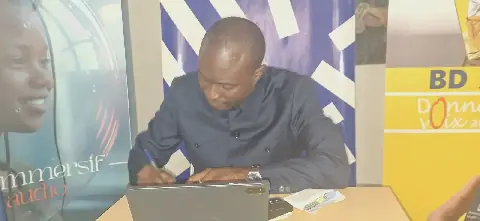
Bassine Aly N'Diaye, a former functionary of the Agency for Air Navigation Safety in Africa and Madagascar (ASECNA), has been fighting for his rights for 43 years. Despite being recognized by all Mauritanian courts, including the Supreme Court, N'Diaye has not received his due benefits. His case began in 1983 when he was revoked without pension rights after 21 years of service. The Supreme Court of Mauritania annulled the decision in 1999, deeming it arbitrary and abusive.
Me Diabira Maroufa, N'Diaye's lawyer and former president of the Mauritanian Bar Association, has written to President Ghazouani, soliciting his intervention to end N'Diaye's ordeal. This is the third letter to the current president and the fifth to his predecessors, with no response. Maroufa highlights that previous attempts to resolve the issue through the Prime Minister and Ministers of Justice have been ignored. N'Diaye's situation was regularized in 1999, but ASECNA has refused to reintegrate him or pay his salaries and emoluments.
The case has been ongoing for decades, with multiple court decisions in N'Diaye's favor. In 2002, the Administrative Chamber of Nouakchott's Wilaya condemned ASECNA to pay N'Diaye 21,681,920 MRO, equivalent to 200 months of salary. However, ASECNA appealed, and the president of the Administrative Chamber falsified the judgment, reducing the amount to 1,939,200 MRO. The Court of Appeal confirmed the initial judgment in 2003, but ASECNA has refused to execute the decision.
Maroufa argues that ASECNA's refusal to execute the court's decision is a grave case of impunity and a violation of Mauritania's sovereignty. He claims that the agency hides behind an inapplicable Seat Agreement, and there is a lack of vigorous will from the Mauritanian state to support an elderly, sick, and powerless citizen. The High Council of Fatwa and Grievance Redress, after investigation, confirmed that the judicial procedures were regular and founded, urging ASECNA to comply.
Despite efforts to resolve the issue through diplomatic channels, ASECNA has maintained its stance, denying the decisions taken against it at all administrative and judicial levels. In 2020, the Presidency of the Republic requested the Ministry of Justice to ensure the execution of the Supreme Court's decision, but no action was taken. A second note verbale from the government in 2021 also had no effect on ASECNA.
Maroufa asserts that the Seat Agreement does not grant ASECNA immunity from executing court decisions. He cites Article 4.7, which states that ASECNA must cooperate with competent authorities to facilitate the good administration of justice and avoid abuses. The lawyer urges President Ghazouani to intervene and resolve the case, ensuring that N'Diaye receives his due rights after 43 years of litigation.
Key points
- The case highlights the challenges faced by Mauritanian citizens in accessing justice and the need for the government to take a stronger stance in enforcing court decisions.
Reporting sources
- Affaire Bassine Aly N’Diaye contre ASECNA, Me Diabira Maroufa interpelle le président Ghazouani · L'Authentique (Mauritania)