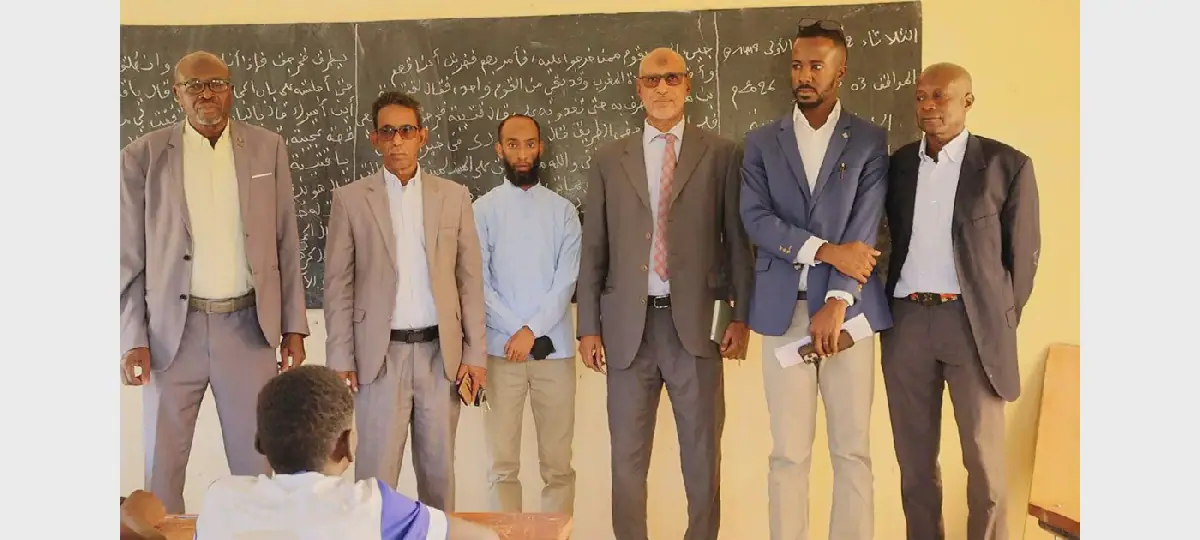
A delegation from Mauritania's High Council for Education conducted a field visit to Ahlel Ajem Model School in Gabou, Kidi Magha state, on November 3, 2026. The team toured various classrooms, listening to detailed explanations from teachers on the progress of educational reforms and teaching conditions. This visit aimed to evaluate the implementation of the Republican School and educational reform five years into its introduction.
The delegation also visited a secondary school, a model language school, and a Koranic school in Selibabi. These inspections were part of the council's efforts to assess the state of education in the region. The team was accompanied by the regional education director, Sidi Ould Farrah, and the president of the Parents' Association, Ambirik Ould Laghzaf.
According to Maimoun Ould Asouad, head of the delegation, the visits aimed to assess the progress of educational reforms and identify areas needing improvement. The team observed a positive response from education stakeholders to ongoing reforms and noted that visited schools generally had necessary facilities to continue the educational process.
The High Council for Education's visits are part of a broader effort to evaluate the effectiveness of educational reforms introduced in Mauritania. By inspecting schools and engaging with educators, the council seeks to identify best practices and areas requiring support. This information will inform future policy decisions and resource allocation.
During their visit, the delegation engaged with teachers, administrators, and students to gain a comprehensive understanding of the challenges and opportunities in the region's education sector. Their findings will contribute to the ongoing development of Mauritania's education system.
The Mauritanian government has prioritized education as a key area for reform and development. The High Council for Education plays a crucial role in driving these efforts, working to ensure that all students have access to quality education. The council's visits to schools in Gabou and Selibabi reflect this commitment.
The delegation's observations and recommendations will be presented to relevant authorities to inform future decision-making. By working together, stakeholders aim to improve educational outcomes and provide opportunities for Mauritania's students to succeed.
Key points
- The High Council for Education's visit to Gabou and Selibabi aimed to assess the implementation of educational reforms and identify areas for improvement.
- The delegation observed a positive response from education stakeholders to ongoing reforms and noted that visited schools generally had necessary facilities.
- The council's findings will inform future policy decisions and resource allocation, contributing to the ongoing development of Mauritania's education system.