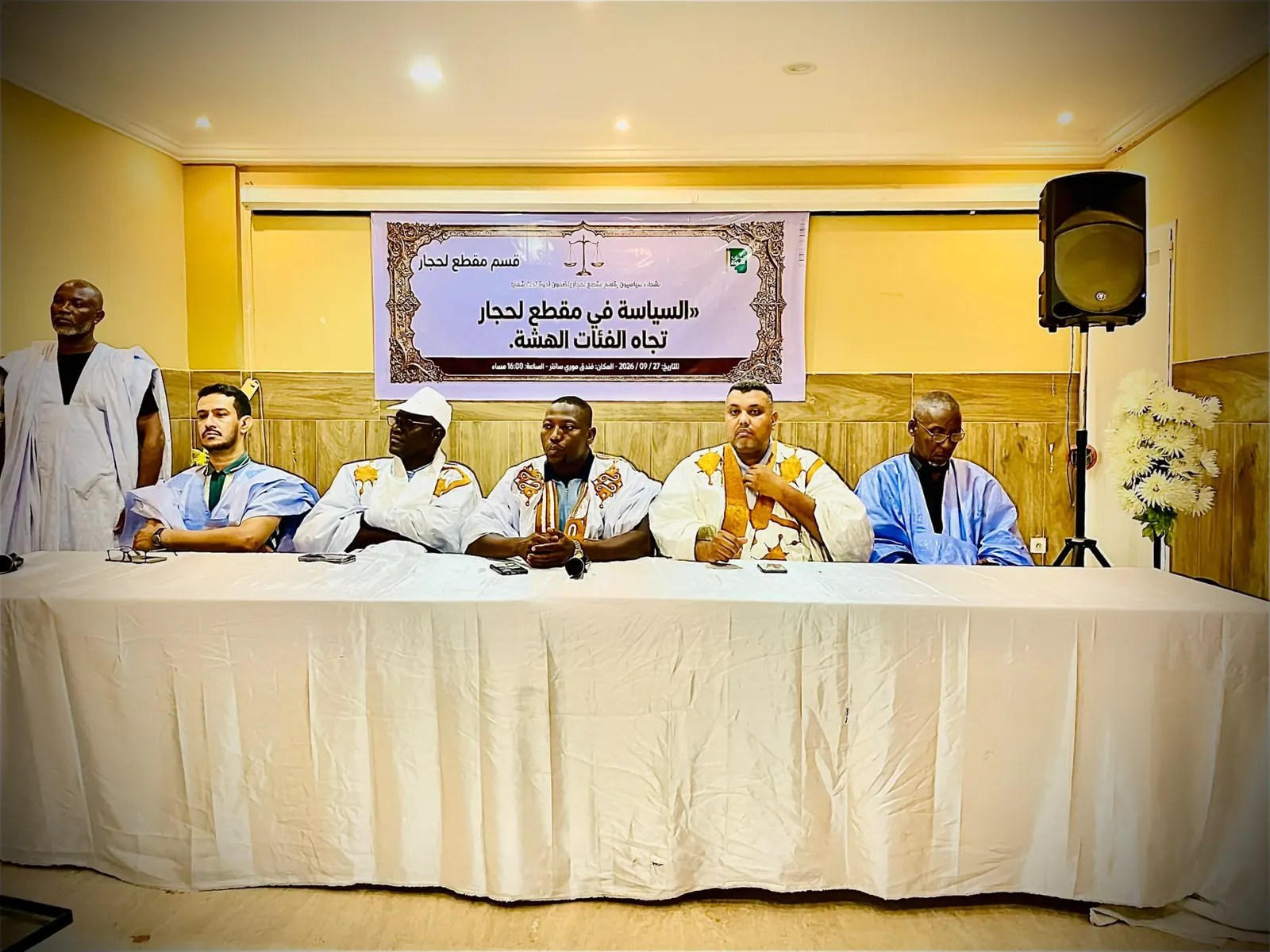
A group of activists and politicians in Mauritania recently gathered in Nouakchott to discuss the state's policy towards vulnerable groups. The meeting, which was attended by several prominent figures, aimed to address some of the challenges facing these groups and explore ways to promote greater inclusion and social justice. According to Sid Ahmed Ould Abahen, spokesperson for the activists, the initiative is not targeting a specific group, but rather seeks to identify some of the imbalances that have affected the country's political and developmental life.
Ould Abahen called for a calm and responsible dialogue on how to address these imbalances, with the aim of promoting trust, justice, and greater participation. He emphasized that continuing with a policy of exclusion and monopolizing political representation would be contrary to the principles of justice and fairness. Ould Abahen's comments were echoed by other participants, who stressed the need for a more inclusive approach to governance.
Ahmed Ould Badah, a participant in the meeting, noted that the government's policies had made the fight against poverty, exclusion, and vulnerability, as well as improving access to basic services, key priorities. He added that the state's policy had evolved from a focus on protection to a broader concept of social protection, encompassing income, health, education, and other areas.
Ahmed Salem Ould Abedman, another participant, emphasized that what guarantees unity among the country's citizens is the involvement of everyone and the fight against unfairness in jobs. He stressed that the state's policies should aim to promote greater inclusion and social justice.
Mustafa Nazeih, a speaker at the meeting, noted that addressing the obstacles to the involvement of vulnerable groups requires a genuine will to do so. He emphasized that the state's policies should be designed to promote greater inclusion and participation.
Mohamed Ould Fou, a participant in the meeting, highlighted the various mechanisms for involvement, including appointments, recruitment, electoral participation, and successful personal initiatives. He stressed that the country should aim to promote greater inclusion and fight against unfairness in jobs.
The meeting in Nouakchott highlights the ongoing debate in Mauritania about the need for greater inclusion and social justice. The participants' calls for a more inclusive approach to governance and the fight against poverty and exclusion are likely to continue to be an important issue in the country's politics.
Key points
- The activists' initiative seeks to promote greater inclusion and social justice in Mauritania.
- The state's policies should aim to address the challenges facing vulnerable groups.
- The participants called for a calm and responsible dialogue on how to address the imbalances facing the country's vulnerable groups.