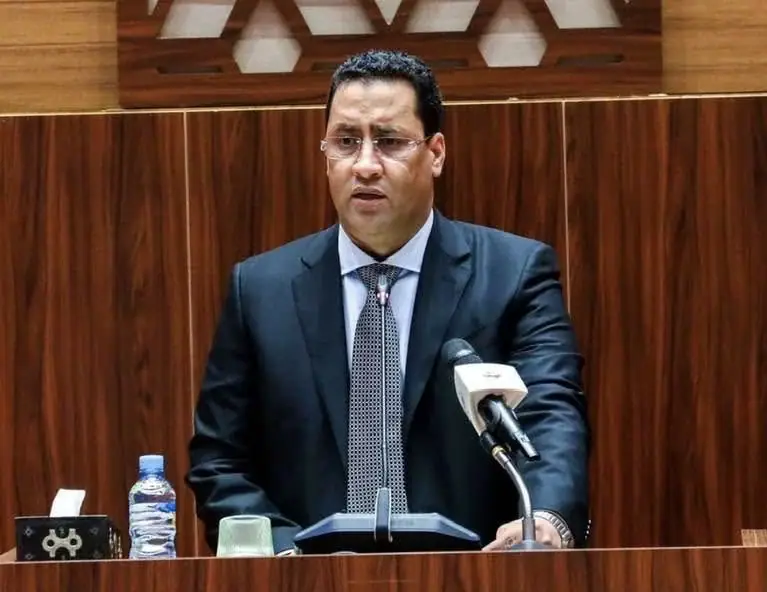
The Mauritanian government, led by Prime Minister Mokhtar Ould Djay, has presented its Declaration of General Policy (DPG) to the National Assembly, outlining a strategic roadmap to address the country's socio-economic challenges. The plan aligns with the vision of President Mohamed Ould Cheikh El Ghazouani, focusing on immediate responses to global economic pressures and long-term structural transformations. The DPG aims to protect the purchasing power of citizens, promote social equity, and drive sustainable development.
To mitigate the impact of global economic volatility, the government has implemented measures to regulate prices, support household incomes, and provide targeted assistance to vulnerable populations. The plan includes revising the formula for calculating liquid and gaseous hydrocarbon prices, maintaining price ceilings on basic food items, and extending these controls to the meat sector. Additionally, the government will adjust public sector salaries, increase retirement pensions, and negotiate with social partners to raise private sector wages.
The government is also committed to promoting territorial equity and revitalizing the country's interior regions. A new program aims to stimulate agricultural development, support livestock production, and modernize rural distribution networks to create sustainable local jobs. The plan also includes infrastructure projects, such as drilling 1,340 wells and increasing water production capacity in secondary urban centers. Furthermore, the government will develop urban planning schemes for interior cities and implement specific restructuring programs for the strategic metropolises of Nouakchott and Nouadhibou.
A key component of the government's strategy is the launch of the "Mauritania 2060" project, a long-term vision that aims to establish a sustainable development framework. This initiative involves a participatory and inclusive approach, engaging with economic actors, civil society, the private sector, youth, and national and international experts. The project will focus on result-oriented methodologies, translating the vision into bankable projects with precise performance indicators and periodic evaluation mechanisms.
To ensure the effectiveness of these reforms, the government is committed to modernizing the administrative apparatus. This includes consolidating nomination and promotion criteria based on competence and integrity, as well as strengthening continuous training. The government will also integrate emerging technologies and artificial intelligence tools to enhance public service efficiency and optimize data management.
The DPG combines urgent social support measures, territorial restructuring, and long-term planning to outline a proactive governance approach. This approach focuses on strengthening national resilience and promoting shared prosperity. By addressing immediate economic pressures and investing in sustainable development, the government aims to create a more equitable and prosperous future for Mauritania.
The implementation of these initiatives will be crucial in determining the success of the government's strategic roadmap. The "Mauritania 2060" project, in particular, has the potential to transform the country's development trajectory, provided it is effectively executed and monitored. As the government moves forward with its plans, it will be essential to maintain transparency, accountability, and stakeholder engagement to ensure that the needs and aspirations of all Mauritanians are taken into account.
Key points
- The Mauritanian government has launched a comprehensive plan to address economic pressures, promote social equity, and drive sustainable development by 2060.
- The plan includes measures to regulate prices, support household incomes, and provide targeted assistance to vulnerable populations.
- The "Mauritania 2060" project aims to establish a sustainable development framework, engaging with various stakeholders and focusing on result-oriented methodologies.