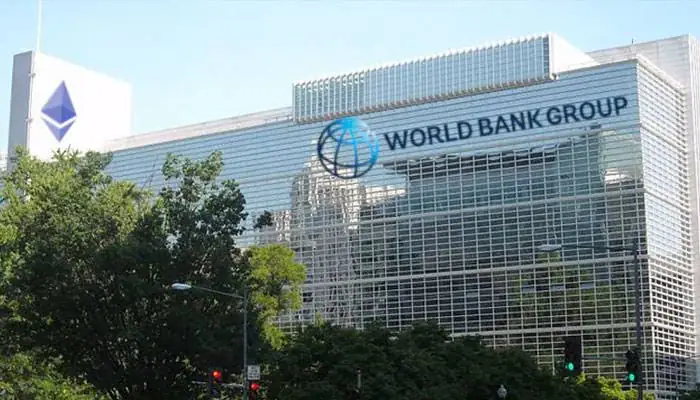
The Mauritanian National Assembly has begun examining three bills to ratify financing agreements between Mauritania and the International Development Association (IDA), the concessional arm of the World Bank Group. The agreements total $69.1 million in loans and grants in special drawing rights (SDRs) to support three strategic sectors: social protection, education, and digitalization.
The first agreement, signed on August 21, 2026, provides $5.6 million in SDRs and a $19.7 million loan, equivalent to approximately 1.2 billion ouguiyas, to strengthen social safety nets and productive social protection. The loan has a 25-year repayment period, with a five-year grace period, and an annual interest rate of 1.5% on the disbursed balance.
The primary objective of this operation is to enhance the national adaptive social protection system's effectiveness by improving identification, accompaniment, and support mechanisms for vulnerable households. The financing will reinforce three essential instruments of national social policy: the Social Register, the Tekavoul national social safety net program, and the shock response mechanism.
The second agreement, also signed on August 21, 2026, provides $9.2 million in SDRs and a $23.6 million loan, equivalent to approximately 1.57 billion ouguiyas, to improve education quality, learning outcomes, and equitable access to education. The loan has a 25-year repayment period, with a five-year grace period, and an annual interest rate of 1.5%.
This operation aligns with the Priority Support Plan for Learning (2026-2030), which aims to improve the education system's performance. The program focuses on enhancing preschool and primary education quality and expanding access to secondary education, with a particular emphasis on girls' education in rural areas and populations affected by forced displacement.
According to the Household Living Conditions Survey, the poverty rate in Mauritania has decreased from 28.2% in 2019 to 25.7% in 2025, while extreme poverty has declined from 12.8% to 11.2%. The survey also shows progress in primary education, with the gross enrollment rate increasing from 79.9% in 2019 to 96.1% in 2025.
The World Bank financing comes as Mauritania's government prepares to increase social spending in its 2027 budget, including a more than 6 billion ouguiyas increase in credits for the "Oun" operation and a 1.6 billion ouguiyas rise in cash transfers to vulnerable households.
Key points
- The World Bank has agreed to provide $69.1 million in financing for social protection, education, and digitalization projects in Mauritania.
- The financing includes a $19.7 million loan and $5.6 million in SDRs for social protection, and a $23.6 million loan and $9.2 million in SDRs for education.
- The projects aim to improve social safety nets, education quality, and digitalization in Mauritania, where poverty rates have declined but challenges persist.