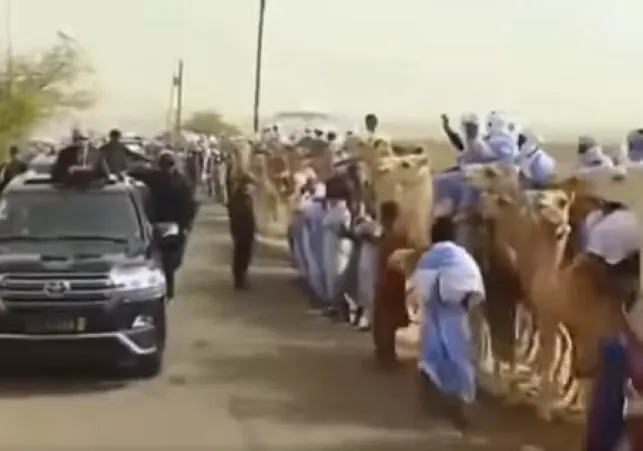
On September 20, 2026, Mauritania's President Mohamed Ould Cheikh El Ghazouani visited Adrar, a move that has brought attention to the country's complex relationship with tribalism. The visit has sparked a competition among different tribes and factions in the region, with each trying to outdo the others in welcoming the president. This phenomenon is not new, but it highlights the persistent influence of tribal logic in Mauritania, despite the country's professed commitment to republican values. The visit has also raised concerns about the use of state resources for tribal mobilization.
Mauritania has long struggled with the tension between its republican institutions and tribal structures. Since gaining independence in 1960, the country has grappled with the legacy of colonialism and the role of tribal leaders in shaping national politics. The current president, Mohamed Ould Cheikh El Ghazouani, has spoken out against tribalism, but his administration's actions have been criticized for perpetuating the very system he seeks to reform. The country's institutions, including the parliament and executive, are dominated by tribal and ethnic groups, with 72% of parliamentary seats and 85% of executive positions held by members of these groups.
The influence of tribalism in Mauritania is not limited to politics; it also has a significant impact on the country's economy and social services. The allocation of state resources, including land and public contracts, is often determined by tribal affiliations rather than merit or need. This has led to widespread corruption and inequality, with some individuals and groups accumulating wealth and power at the expense of others. The country's healthcare and education systems are also affected, with many essential services often neglected in rural areas.
The historical roots of tribalism in Mauritania date back to the colonial era, when French administrators codified tribal hierarchies and relied on local leaders to govern the country. This system has survived independence and continues to shape national politics and institutions. The 1983 land reform and 1989 purges are cited as key events that consolidated tribal control over the economy and marginalized Afro-Mauritanian communities. These policies have had lasting impacts on the country's social and economic development.
President Ghazouani's administration has been criticized for its handling of tribalism, with many accusing him of hypocrisy. While he has spoken out against tribalism, his government has continued to appoint officials based on tribal and regional affiliations. The use of state resources to mobilize tribal support has also been documented, undermining the president's rhetoric about reform. The tension between the government's words and actions has led to skepticism about its commitment to meaningful change.
Attempts to reform the system have been made in the past, but they have often been met with resistance. In 1974, Mauritania's founding president, Mokhtar Ould Daddah, sanctioned officials who participated in tribal meetings, recognizing the threat they posed to the young state. Similar efforts have been made since then, but they have had limited success. The persistence of tribalism has significant implications for Mauritania's development and stability, and it remains to be seen whether the current government can effectively address this challenge.
The situation in Mauritania highlights the complexities of balancing traditional social structures with modern state institutions. The country's experience suggests that addressing tribalism requires more than just rhetoric; it demands concrete actions to reform institutions and promote inclusive governance. The international community is watching closely, as Mauritania's ability to navigate this challenge will have implications for regional stability and development. The success of President Ghazouani's reform efforts, or lack thereof, will be closely monitored in the years to come.
Key points
- The Mauritanian government faces criticism for perpetuating tribalism despite the president's rhetoric to the contrary.
- Tribalism has significant implications for Mauritania's development, including unequal access to state resources and public services.
- The persistence of tribalism in Mauritania raises questions about the country's long-term stability and prospects for inclusive governance.