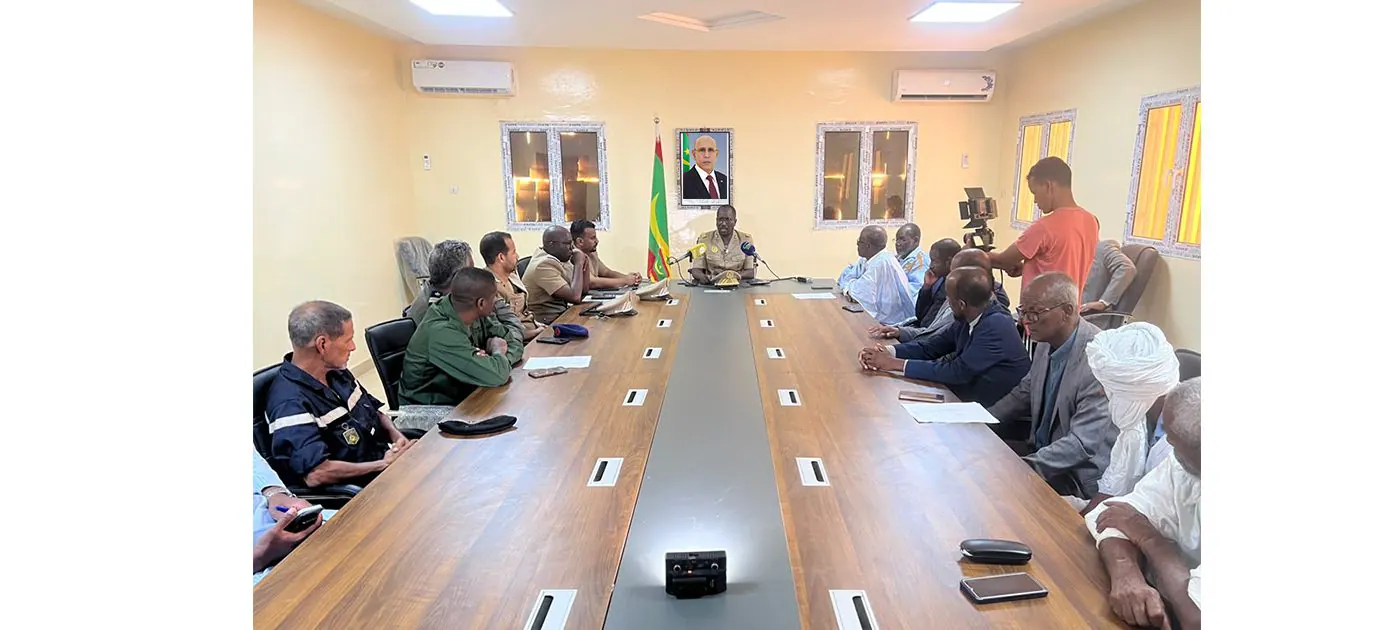
The Mauritanian government has taken a significant step towards improving cleanliness in the country, with the Takant region hosting the first meeting of its regional cleanliness committee. The meeting, chaired by Takant's governor, Ahmadou Mamadou Kli, brought together various stakeholders to discuss a comprehensive plan for implementing a cleanliness initiative launched by the country's president, Mohamed Ould Cheikh El Ghazouani. The initiative aims to promote a national cleanliness campaign.
The meeting was held in response to a call to action by President El Ghazouani, who urged citizens to participate in a national cleanliness effort, particularly in urban areas. The government's instructions, as outlined in a circular issued by the Minister of Interior, Decentralization, and Local Development, emphasize the importance of collective responsibility in maintaining cleanliness. The circular, dated September 30, 2026, sets out a framework and priorities for implementing the cleanliness initiative.
Governor Kli emphasized that the cleanliness campaign is a shared responsibility that involves not only government agencies but also citizens, elected officials, and community leaders. He highlighted that the newly established committee brings together various stakeholders to develop a plan of action and ensure its implementation within a set timeframe. The committee's tasks include organizing awareness campaigns, conducting field operations, and establishing a monitoring mechanism.
The cleanliness plan focuses on five key areas: mobilization and awareness-raising, field campaigns, gradual implementation, deterrent measures, and a follow-up mechanism to promote competition among neighborhoods, schools, and markets. The plan also proposes distributing roles and responsibilities among relevant sectors and establishing a committee to oversee the cleanliness effort.
Participants at the meeting expressed their readiness to implement the cleanliness initiative and ensure its continuity. They discussed the importance of collaboration and coordination among stakeholders to achieve the campaign's objectives. The meeting was attended by administrative and security authorities, local elected officials, and representatives from various sectors.
The Takant region's cleanliness committee includes representatives from various sectors, including administrative and security authorities, local elected officials, and community leaders. The committee's establishment reflects the government's commitment to promoting cleanliness and involving citizens in the effort. The meeting demonstrated the stakeholders' willingness to work together to achieve the campaign's goals.
The Mauritanian government's cleanliness initiative is expected to have a positive impact on the country's environment and public health. The campaign's success will depend on the continued involvement and commitment of all stakeholders. Key points include:
Key points
- The Takant region has launched a comprehensive cleanliness plan to improve the region's environment and public health.
- The plan focuses on five key areas, including mobilization, field campaigns, and follow-up mechanisms.
- The initiative is part of a broader national effort to promote cleanliness and involve citizens in the effort.