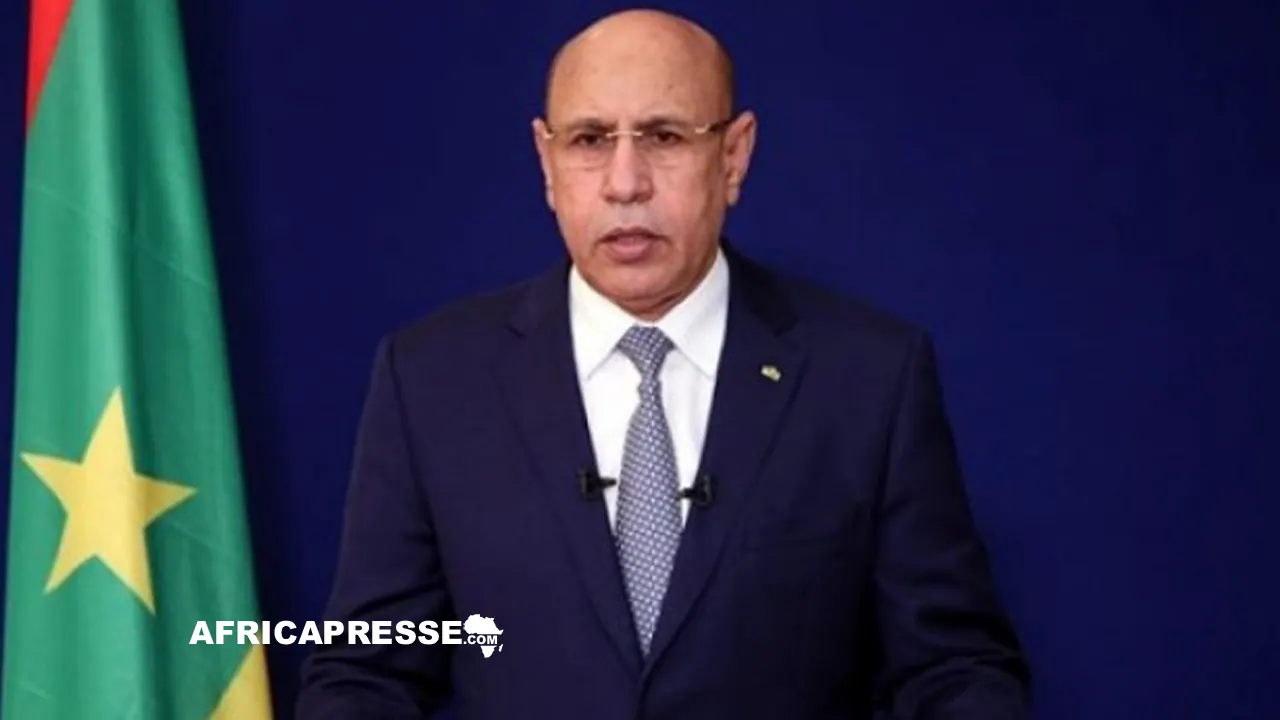
Mauritanian President Mohamed Ould Ghazouani has reappointed Prime Minister Mokhtar Ould Djiay, just hours after he submitted his resignation. According to the Mauritanian Information Agency (AMI), the President tasked Ould Djiay with forming a new government. The reappointment was formalized by a presidential decree on the same day. This move comes after Ould Djiay's government faced criticism for its handling of recent power outages in Nouakchott.
The power outages occurred on August 21 and 22, affecting critical infrastructure in the capital city and leaving many neighborhoods without electricity for several days. The Mauritanian Electricity Company (Somelec) announced a full restoration of power after about five days of repairs. However, a report by an independent commission led by former Finance Minister Ousmane Mamoudou Kane revealed grave negligence and insufficiencies in prevention, protection, and emergency management.
The independent commission's report pointed to serious failures in the electrical protection, control of works, and management of emergencies. The report has been seen as a major document that not only highlights technical failures but also questions the governance of the electricity sector. Somelec, a strategic public enterprise, has been criticized for its inability to anticipate and manage the crisis.
The reappointment of Ould Djiay has raised questions about the country's future political prospects. The move can be seen as a signal of stability from the President, who is refusing to yield to public pressure after the critical report. Alternatively, it may indicate a lack of credible alternative politicians or a desire to avoid a government crisis in an already tense economic context.
The decision to reappoint Ould Djiay has sparked mixed reactions, with some interpreting it as a denial of responsibility. However, others see it as a pragmatic decision, given the limited room for maneuver in the country. Changing the Prime Minister without addressing the structural causes of the electricity crisis may only shift the problem rather than solve it.
The recent developments highlight a deeper tension between the demand for political responsibility and the logic of state continuity. The President's decision will likely be closely watched in the coming weeks, particularly if new power outages occur or if the new government takes time to form. The public's sentiment is already running high, with many residents of Nouakchott expressing feelings of abandonment and frustration.
The Mauritanian government has faced significant challenges in recent times, including a fragile economy and a vulnerable electricity network. The reappointment of Ould Djiay and the formation of a new government will be crucial in determining the country's future trajectory. The President's leadership and the government's response to the electricity crisis will likely have a lasting impact on the nation's stability and development.
Key points
- President Mohamed Ould Ghazouani reappoints Prime Minister Mokhtar Ould Djiay amid criticism over power outages.
- The reappointment comes after a report highlighted grave negligence and insufficiencies in the electricity sector.
- The decision has sparked mixed reactions, with some questioning the government's accountability and others seeing it as a pragmatic move.