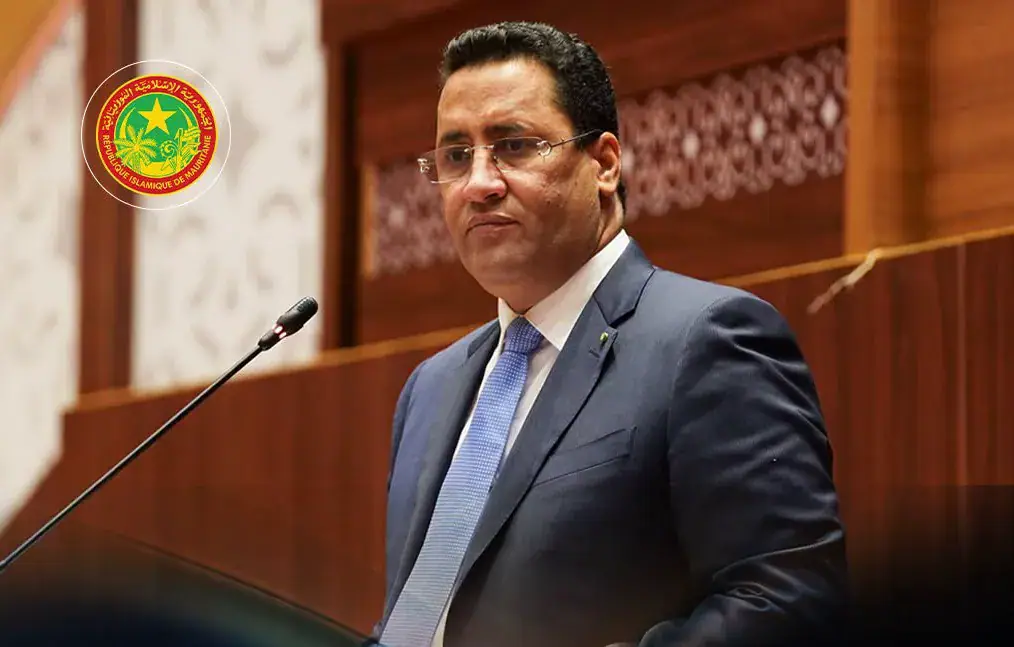
On November 7, Mauritania's Prime Minister Moctar Ould Diay presented his General Policy Declaration (DPG) to the National Assembly. The DPG is a traditional platform for the government to report on its actions and outline future plans. The declaration is based on seven pillars of the president's project "My Ambition for the Nation," which include consolidating the rule of law, promoting good governance, and developing a strong and sustainable economy.
The Prime Minister's declaration highlighted several positive macroeconomic indicators, including a growth rate above 4% and a reduced external debt of less than 40% of GDP. The government also reported increases in salary credits, expansion of social coverage to 1.4 million beneficiaries, and programs to address geopolitical and climate crises. Additionally, the government has invested in infrastructure development, including the construction of thousands of classrooms, roads, and bridges.
Despite these achievements, the Prime Minister's declaration was criticized by opposition parliamentarians, who argued that it did not accurately reflect the country's reality. They pointed out that many Mauritanians continue to struggle with high living costs, limited access to basic services, and poverty. The opposition also questioned the government's commitment to good governance and transparency, particularly in regards to public procurement and corruption.
One of the main criticisms of the government's policy is its inability to address the daily needs of citizens. While the government has announced measures to control prices and provide compensation for inflation, many households continue to struggle with the high cost of living. The opposition argues that the government's focus on large-scale infrastructure projects has not translated into tangible benefits for ordinary citizens.
The Prime Minister's declaration also highlighted the government's commitment to promoting youth employment and entrepreneurship. However, critics argue that more needs to be done to address the root causes of poverty and unemployment. The government's plan to develop Nouakchott, the capital city, has also been met with skepticism, with some questioning the effectiveness of previous development programs.
To achieve sustainable development, the government needs to prioritize transparency, accountability, and inclusivity. The opposition has called for a more comprehensive approach to addressing the country's challenges, including a focus on social justice and equitable distribution of resources. The government must also demonstrate a commitment to implementing its plans and delivering tangible results.
Ultimately, the success of the government's policy will depend on its ability to deliver concrete benefits to citizens. The Prime Minister's declaration has set out a vision for Mauritania's future, but it remains to be seen whether the government can translate this vision into reality. The country's citizens are eager for tangible solutions to their daily challenges and a more equitable distribution of resources.
Key points
- The government's General Policy Declaration has been met with criticism from opposition parliamentarians, who argue that it does not accurately reflect the country's reality.
- The Prime Minister's declaration highlighted several positive macroeconomic indicators, but critics argue that more needs to be done to address the root causes of poverty and unemployment.
- To achieve sustainable development, the government needs to prioritize transparency, accountability, and inclusivity.