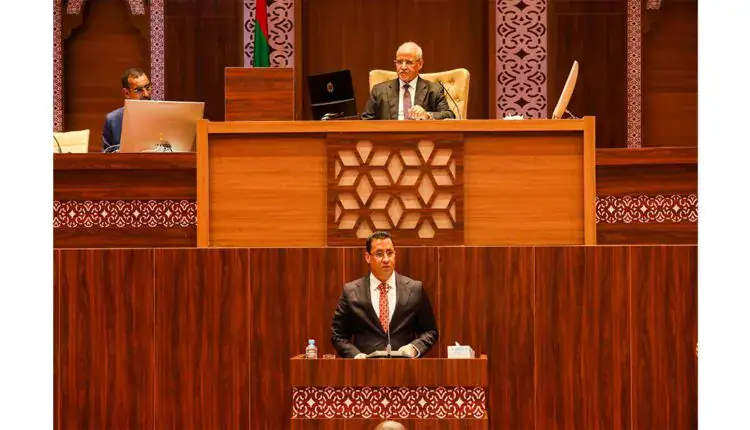
Mauritania's Prime Minister, Mokhtar Ould Diay, recently presented the government's general policy declaration for 2026 to the National Assembly. This declaration marks a significant moment in assessing public action and national ambitions. The Prime Minister's address highlighted achievements in infrastructure, essential services, social protection, and administrative modernization over the past few years. It also laid out the government's vision for the next stage, focusing on long-term development aligned with President Mohamed Ould Cheikh El Ghazouani's orientations.
The Prime Minister's declaration acknowledged past achievements while also addressing persistent challenges. These challenges include difficulties accessing healthcare, education, water, electricity, and employment, particularly for modest households and vulnerable populations. By emphasizing these issues, the Prime Minister placed social dimension at the heart of public action evaluation. This approach underscores that government policy success is measured by its concrete impact on citizens' living conditions.
The government's future priorities aim to address immediate citizen concerns and transform the national economy. These priorities include supporting purchasing power, responding to international economic conditions, and stimulating economic and agricultural dynamics in the country's interior regions. Another significant project is the development of a national strategic vision for 2060, focusing on wealth creation, employment, and better resource distribution between Nouakchott and the interior regions.
The 2060 vision represents a development approach that goes beyond infrastructure to prioritize wealth creation, employment, and national resource valorization. This long-term perspective aims to ensure continuity and coherence in strategic choices, moving away from periodic recommencement. It requires solid institutions and an capable administration to implement and monitor progress.
The Prime Minister's address also emphasized the importance of administrative modernization, competency development, and objective promotion criteria. This focus demonstrates a commitment to evolving practices and strengthening the state's capacity to drive expected transformations. The government's approach seeks to improve public action effectiveness and responsiveness to citizen needs.
The declaration highlighted the importance of national dialogue, respect for political sensitivities, and cooperation between the executive and legislative powers. This approach encourages constructive political competition, where differences are seen as opportunities for enriching debate and improving public policies. Stability is valued in an environment where dialogue and institutional respect enable transforming differing views into collective progress factors.
Ultimately, the success of these orientations will be measured by concrete results and the government's ability to translate ambitions into tangible improvements in citizens' lives. The next stage will focus on more effective public action, with a closer attention to policy impact and better translation of investments into sustainable improvements. The goal is to build a more just, balanced, and prosperous Mauritania.
Key points
- The Mauritanian government aims to develop a national strategic vision for 2060, focusing on wealth creation, employment, and better resource distribution.