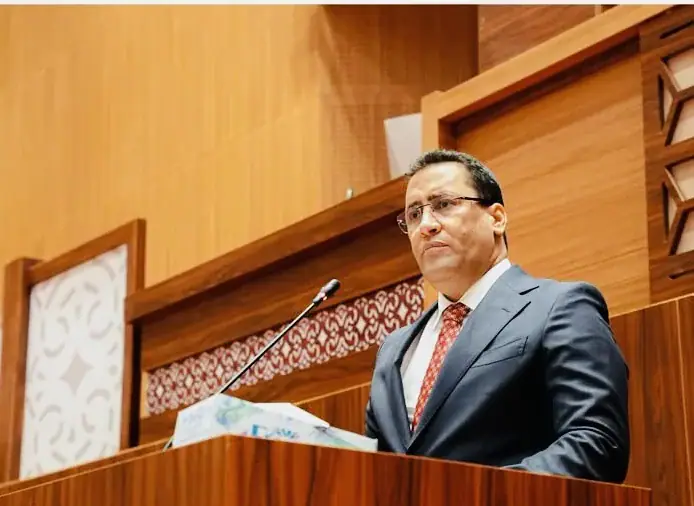
Mauritania's Prime Minister, Mokhtar Ould Djay, has announced that the government will revise the mechanism for fixing liquid hydrocarbon and gas prices. The goal is to mitigate the impact of international price fluctuations on consumers and preserve their purchasing power. This move is part of the government's strategy to address the ongoing international crisis.
During a presentation of the Government's General Policy Declaration to the National Assembly, Prime Minister Ould Djay stated that President Mohamed Ould Cheikh El Ghazouani has instructed the government to prepare for the persistence of international crisis repercussions until mid-2027. The government will develop contingency plans in case the situation persists beyond that date. This approach aims to protect vulnerable populations from the crisis's effects.
The government's strategy focuses on two main areas: containing price increases for essential products and supporting the purchasing power of vulnerable groups. To achieve this, the government plans to maintain price caps on staple goods such as wheat, rice, sugar, and oil. The government also intends to extend these price controls to meat products and strengthen measures against speculation and anti-competitive practices.
To directly support households, the government is considering measures such as compensating for inflation's effects on civil servants' salaries and retirement pensions through potential increases or temporary financial aid. The government also plans to engage in negotiations with social partners to revalue workers' remuneration under the collective convention. These measures aim to alleviate the financial burden on citizens.
The government's plan includes temporary coverage of a portion of water and electricity bills for low-income households. Additionally, the government intends to expand the base of beneficiaries for subsidies targeting people with disabilities and chronic illnesses. These measures demonstrate the government's commitment to supporting vulnerable populations during the crisis.
Prime Minister Ould Djay emphasized that the government will closely coordinate with the Central Bank of Mauritania to utilize economic, financial, and monetary policy instruments to curb inflation. The government will also work to stabilize animal feed prices, ensure sufficient supply, and sell it at cost price if necessary. This coordination aims to maintain economic stability.
The government's multi-faceted approach aims to protect Mauritanian citizens' purchasing power and alleviate the effects of the international crisis. By revising hydrocarbon prices, maintaining price controls on essential goods, and providing direct support to households, the government seeks to mitigate the crisis's impact on the population. The implementation of these measures will be closely monitored to assess their effectiveness.
Key points
- The Mauritanian government plans to revise hydrocarbon prices to shield citizens from international market fluctuations.
- The government will maintain price caps on staple goods and extend these controls to meat products.
- Direct support measures for households include potential salary increases and temporary financial aid for low-income families.