Mauritanian Prime Minister Moctar ould Djay has formed a new government, just a day after being tasked by President Mohamed Cheikh Ghazouani to do so. The new cabinet was announced on Saturday evening, following Djay's resignation on Friday morning. The move comes after a report by the Ousmane Kane commission on a scandal involving the Société Mauritanienne d'Électricité (SMELEC), which led to a massive power outage in Nouakchott.
The new government lineup reflects the traditional balance of regional, tribal, and ethnic representation, with some notable exceptions. The Ministry of Defense, Veterans, and Martyrs' Children will be led by Bâ Ousmane, former general director of Maaden, replacing General Hanana ould Sidi. This change marks a significant shift, as Hanana ould Sidi is a retired general who has ceded his position.
Another key change is the replacement of Mohamed Ahmed ould Mohamed Lemine as Minister of Interior and Decentralization Promotion by Moctar ould Ahmed ould Bouceif. Lemine, a prominent figure in Mauritanian administration and politics, has left the government. Moulaye ould Mohamed Laghdaf has also left his position as secretary general of the presidency, further indicating a significant reshuffle.
The departures of these three influential figures, considered close to President Ghazouani and not dependent on Prime Minister Djay, suggest a strengthening of Djay's control over the government. By replacing them with new appointees, Djay appears to be consolidating his power and reducing potential opposition from within the government.
One of the notable appointments is Mohamed Abdel Fettah as Minister of Energy and Petroleum, replacing Mohamed ould Khaled. Fettah, considered a protégé of Djay, has previously served in the government under President Mohamed Abdel Aziz and has just completed his term at the OMVS. This appointment is seen as a strategic move by Djay to consolidate his influence.
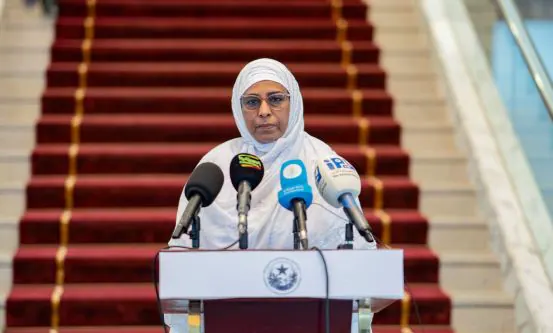
The new government also marks an increase in the number of women in key positions, with Aissata Lam appointed as Minister of Fisheries, Maritime Infrastructure, and Port Facilities. This move reflects a broader trend towards greater representation of women in Mauritanian politics and government.
The changes in the government have sparked interest and analysis, with many observers interpreting the moves as a sign of Djay's growing influence and control over the government. The new cabinet will face challenges in addressing the country's energy crisis, economic development, and social issues, among others.
Key points
- The new government has seen significant changes in key ministries, including defense, interior, and energy.
- Prime Minister Moctar ould Djay appears to have consolidated his power and influence over the government.
- The new cabinet includes more women in key positions, reflecting a broader trend towards greater representation.