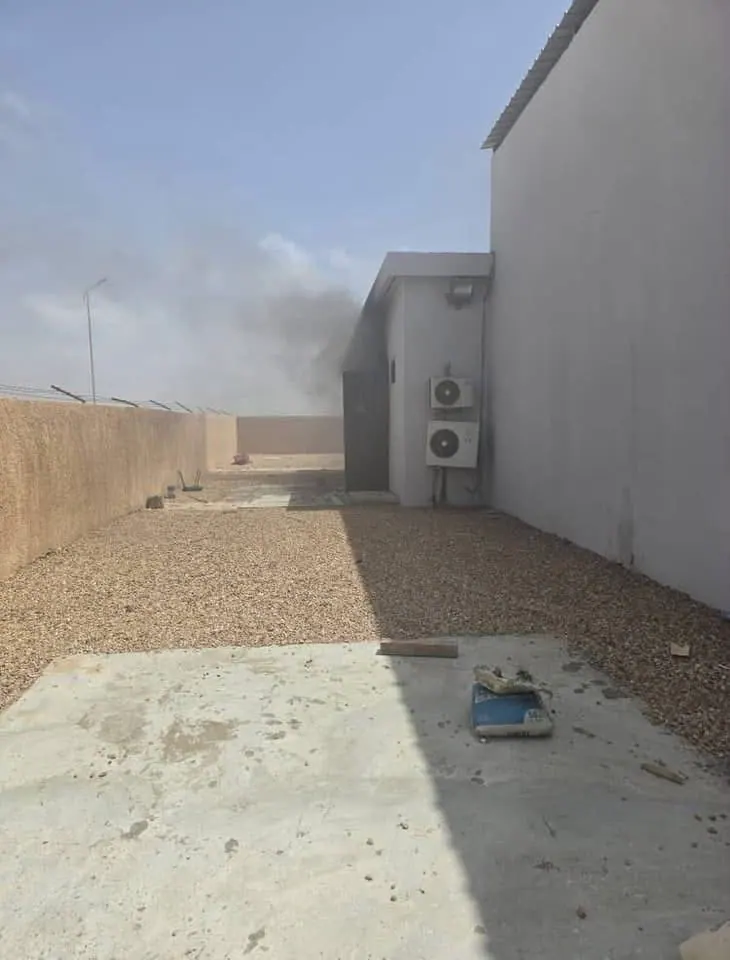
An independent investigation committee in Mauritania has found significant irregularities and negligence in the execution of an emergency program by the National Electricity Company (SOMLEC) related to two power plant fires in Nouakchott. The committee's summary report highlighted several issues, including the awarding of a contract to an unqualified bidder and changes to the cable specifications without proper justification. These actions led to major concerns about the safety and reliability of the power plants.
The investigation identified several entities and individuals responsible for the irregularities, including the Ministry of Energy and Petroleum, SOMLEC, and several high-ranking officials. The Ministry of Energy and Petroleum was criticized for failing to formalize agreement monitoring and lacking proper oversight and control. SOMLEC, as the project owner and operator, was found to have neglected prior technical studies and had issues with contract bidding and awarding.
The investigation also implicated several top officials, including the current and former general managers of SOMLEC, Habib Ahmed and Sidi Ould Salem. They were accused of various shortcomings, including launching projects without prior studies, poor monitoring, and failing to apply penalty clauses for delays. The report emphasized that these actions contributed to the power plant fires and highlighted the need for greater accountability.
The investigation committee also examined the role of CTM Bâtiments, the company awarded the contract, and IRAF, the consulting engineer. CTM Bâtiments was found to have used unauthorized documents, changed specifications without proper testing, and delivered non-compliant cables. IRAF was criticized for inadequate evaluation and reporting, as well as insufficient monitoring of the project.
The report detailed several key issues with the contract awarded to CTM Bâtiments, including the company's lack of qualifications and the use of non-compliant materials. The contract was awarded under a "turnkey" arrangement, requiring the company to complete all studies, supplies, and work up to testing and commissioning. However, the investigation found that CTM Bâtiments failed to meet these obligations, leading to significant concerns about the safety and reliability of the power plants.
The investigation's findings have significant implications for the power sector in Mauritania, highlighting the need for greater oversight and accountability. The report's recommendations are expected to lead to changes in the way projects are managed and executed, with a focus on ensuring safety and reliability. The government is expected to take action to address the issues raised by the investigation and prevent similar incidents in the future.
The investigation's conclusions will likely lead to further action, including potential disciplinary measures against those found responsible. The government has a critical role to play in ensuring that the necessary steps are taken to prevent similar incidents and maintain public trust in the power sector. Key points from the investigation include: irregularities in contract bidding and awarding; shortcomings in project monitoring and oversight; and concerns about safety and reliability.
Key points
- Irregularities in contract bidding and awarding
- Shortcomings in project monitoring and oversight
- Concerns about safety and reliability