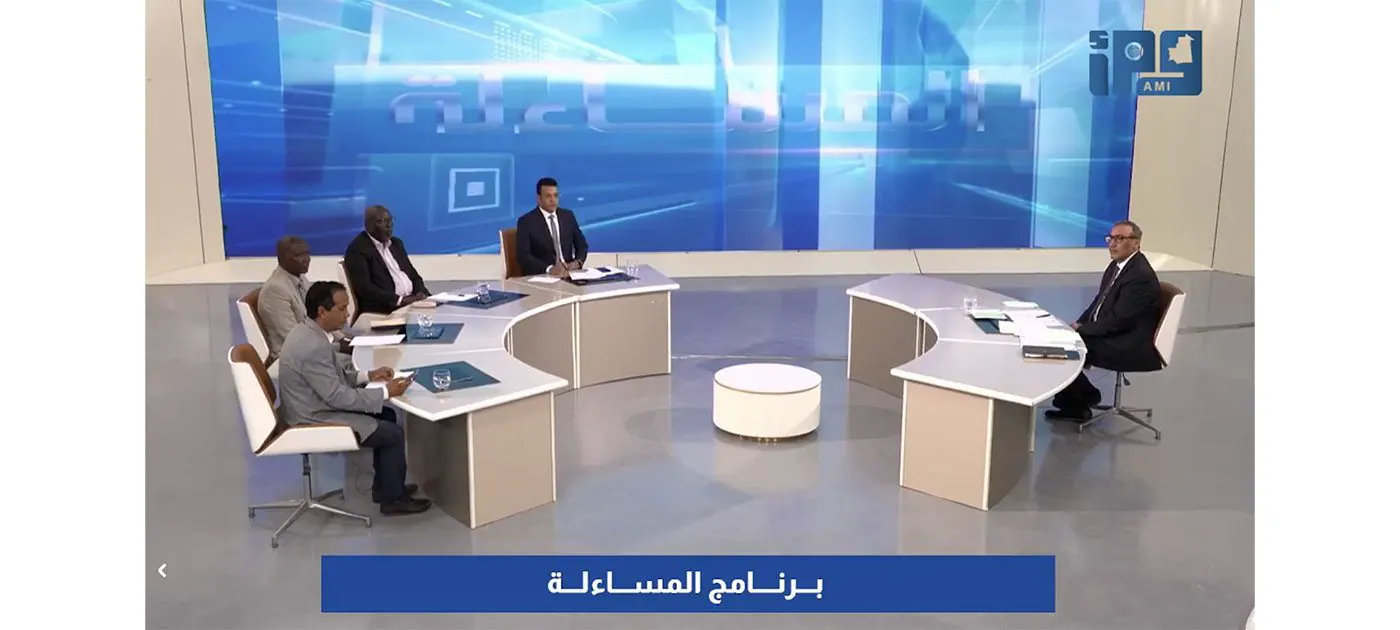
Mauritania's Minister of Higher Education and Scientific Research, Yakou Ould Amein, recently reviewed the sector's achievements and future plans on the "Al-Mas'ala" program. The program aims to promote transparency and accountability in government. The minister highlighted the sector's progress, including the expansion of institutional infrastructure, increased access to higher education, and diversified academic programs.
The minister emphasized that the higher education sector has received significant attention under President Mohamed Ould Cheikh El Ghazouani's administration. The sector is considered a key driver of the country's development and human capital growth. The minister noted that the higher education budget has increased from 10 billion ouguiya in 2016 to 23 billion ouguiya in 2026.
The number of students in higher education has also seen a substantial increase, rising from 22,679 in 2019 to 51,214 in 2026. This represents a significant increase in the enrollment rate, which has surpassed the African average. The minister highlighted that the number of students pursuing higher education represents about 1% of the country's population.
The minister reported that seven new specialized educational and research institutions have been established since 2019. These institutions include the Higher Institute of Statistics, the Higher Institute of Energy, and the National Agency for Scientific Research and Innovation. The minister also noted that the number of academic programs has increased from 30 in 2019 to 136 in 2026.
The minister discussed the improvement in the qualifications and working conditions of academic staff. The number of direct professors has increased from 764 in 2019 to 921 currently. The minister also noted that the salaries of higher education professors have increased by 62% compared to 2019.
The minister highlighted the expansion of research capabilities, with the number of doctoral schools increasing from three to nine. The ministry has also launched 65 master's programs and established partnerships with international institutions. Some institutions, such as the Polytechnic Complex and the Higher Institute of Digitization, have achieved a 0% unemployment rate among their graduates.
The minister outlined plans to increase the capacity of the Higher Education School and establish new institutions in internal regions. The ministry aims to raise the number of higher education institutions in internal regions to 17 by 2028. The minister also emphasized the importance of aligning research with national development priorities and providing scholarships to students.
Key points
- The Mauritanian government has invested heavily in the higher education sector, with a significant increase in the budget and the establishment of new institutions.
- The number of students pursuing higher education in Mauritania has increased substantially, surpassing the African average.
- The ministry plans to establish new institutions in internal regions and increase the capacity of existing institutions to improve access to higher education.