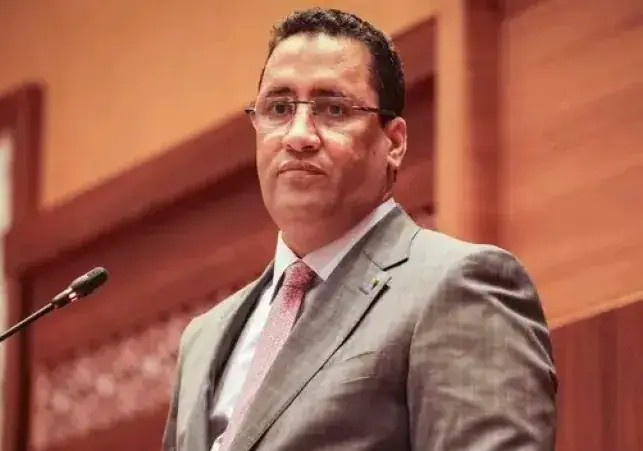
The government of Mauritania, led by Prime Minister Mokhtar Ould Djay, has secured a vote of confidence from the National Assembly. The vote, which took place on November 9, 2026, saw 145 members out of 167 express their support for the government's general policy statement. This development paves the way for the government to implement its program without any significant parliamentary hurdles. The policy statement was presented by the Prime Minister on November 7, 2026.
The two-day debate in the National Assembly allowed the Prime Minister to clarify his government's orientations, address concerns raised by lawmakers, and defend the economic and social choices made by his team. The Prime Minister's presentation was well-received, with many lawmakers praising the government's diagnosis and proposed mechanisms. However, some concerns were raised regarding the need to accelerate stalled projects, hold individuals accountable for execution failures, and better address the concerns of citizens in various constituencies.
The government's policy statement has been endorsed by several political parties, including the Union for Democracy and Progress (UDP). However, not all parties were supportive, with some lawmakers, such as Isselkou Ould Bahah, calling for a boycott of the debate. Biram Dah Abeid, a prominent anti-corruption activist, announced his resignation from parliament during the session, citing his desire to focus on combating corruption and disinformation.
During the debate, Prime Minister Ould Djay provided detailed responses to concerns raised by lawmakers, focusing on the government's budgetary trajectory. He highlighted the expansion of the state's financial capacities and the growth of its own resources. The national budget has increased significantly, from 541 billion ouguiyas in 2019 to 1,449 billion in the 2027 finance bill. The Prime Minister emphasized that this growth is not due to increased taxes, asset sales, or external donations.
The government's budgetary priorities have shifted, with increased allocations for social transfers and support, investments, and salary expenditures. The Prime Minister noted that 80% of the 2027 investment budget would be financed through domestic resources, up from 76% in 2019. He also provided an update on the country's external debt, stating that the debt-to-GDP ratio has decreased from 65.6% in 2019 to 39.9% in 2026.
The issue of fuel and essential products also featured prominently in the debate. The Prime Minister explained that the government has mobilized additional funds to ensure market supply, with around 202 billion ouguiyas allocated in 2026 and 120 billion planned for 2027. He defended the reform of the import mechanism, which has shifted from an intermediation system to direct contracts with suppliers.
The government's efforts to improve the availability and affordability of essential products, including food and fuel, are ongoing. The Prime Minister highlighted the reinforcement of storage capacities in Nouakchott and the maintenance of commercial margins for products such as rice, wheat, and sugar. Further measures to regulate meat prices are being studied.
Key points
- The Mauritanian government has secured a vote of confidence with 145 voices in favor.
- The government's policy focuses on economic growth, social support, and improved public services.
- The National Assembly's endorsement enables the government to implement its program without significant parliamentary hurdles.
Reporting sources
- Vote de confiance à l’assemblée nationale : Ould Djay obtient le feu vert du Parlement avec 145 voix · L'Authentique (Mauritania)