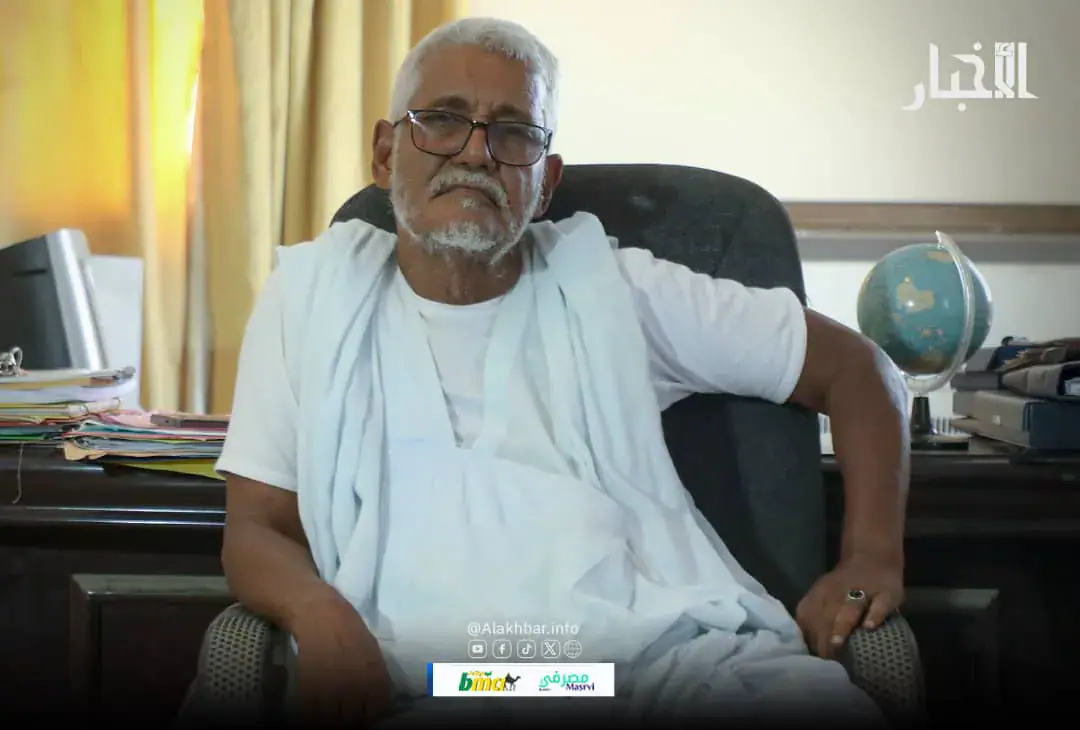
Mauritania's General Labor Confederation secretary-general, Mohamed Ould Abdullah, known as "An-Nahah," has stated that addressing the high cost of living and defending workers' rights requires concrete decisions, laws, and practical measures. He emphasized that merely issuing statements and slogans is no longer convincing and holds little value for the national workforce. Ould Abdullah made these remarks in response to the government's recent address to the parliament.
An-Nahah criticized what he described as the government's "clear neglect" of the social insurance file and the living conditions of workers in the address by Prime Minister Mokhtar Ould Acha. He highlighted key demands and pending issues, including the stalled negotiations on the general employment agreement, which began over a year ago. An-Nahah called for translating political will into legal texts and introducing an annual worker compensation to cover inflation rates, similar to international practices.
An-Nahah expressed surprise at the continued freeze on family allowances for children at 2,000 ouguiyas since the 1990s and the persistent delay in reviewing the retirement system. He argued that due to job instability caused by international price fluctuations and challenges faced by companies, a national unemployment insurance fund should be established. This fund would be financed by joint contributions from workers and employers to protect those unfairly dismissed and provide them with compensation until they find new jobs.
An-Nahah strongly criticized the decision to raise household gas prices, describing it as a "serious strategic mistake." He asserted that this move negatively impacts both the environment and citizens. As gas prices increase, households may resort to cutting trees, threatening vegetation and the environment. An-Nahah's comments reflect growing concerns about the government's economic policies and their effects on the population.
The General Labor Confederation's stance highlights the ongoing debate about addressing the high cost of living in Mauritania. An-Nahah's call for concrete actions and policies underscores the need for the government to provide tangible solutions to economic challenges. The situation remains a pressing concern for workers and citizens, who are seeking relief from rising living costs and improved working conditions.
An-Nahah's statements also reflect broader issues related to social protection and economic stability in Mauritania. The proposed measures, such as the unemployment insurance fund, aim to provide a safety net for workers and mitigate the impact of economic fluctuations. As discussions continue, the government's response to these demands will be crucial in determining the future of labor relations and economic policy in the country.
The government's economic policies have faced criticism from various quarters, with concerns about their impact on vulnerable populations. The response from An-Nahah and the General Labor Confederation underscores the need for a more comprehensive approach to addressing economic challenges. The situation will likely continue to evolve as stakeholders engage in further dialogue and negotiations.
Key points
- The General Labor Confederation is calling for concrete measures to address the high cost of living in Mauritania.
- An-Nahah criticized the government's decision to raise household gas prices.
- The proposed unemployment insurance fund aims to protect workers from job instability.