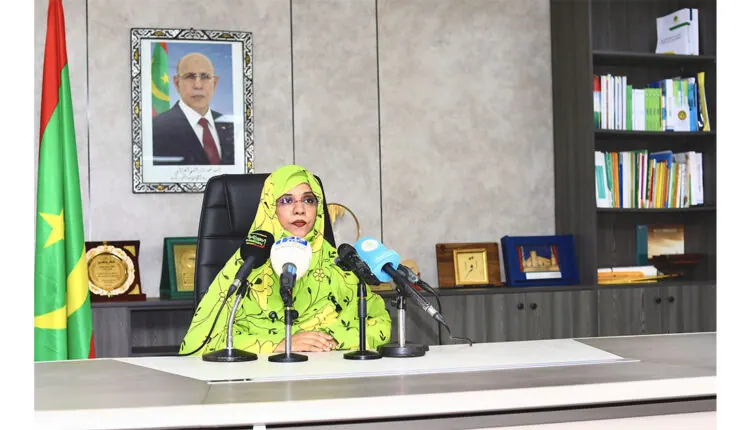
Mauritania's Minister of Education and Educational System Reform, Houda Babah, has reaffirmed the country's commitment to education reform, describing it as an irreversible strategic choice. In a speech on the eve of the 2026-2027 school year, Babah emphasized that the project of the Republican School is a shared responsibility among the state, educational families, families, and society. The minister highlighted the sector's ongoing efforts to build a more qualitative, equitable, and attractive school system.
The minister outlined several key achievements in the education sector, including the absorption of all students in the first four years of primary education in public schools. The government has also recruited nearly 2,283 teachers, bringing the total number of recruits since 2019 to 15,729. Additionally, 575 classrooms were completed in 2026, with an expected 3,340 more to be added soon. The ministry has also provided 165,350 units of unified school uniforms and expanded school canteen services.
Babah highlighted the government's efforts to improve the quality of education, including the development of a reference guide for teacher competencies and the adaptation of evaluation and monitoring tools. The sector has also launched a program to extend the teaching of national languages and created a housing fund for teachers to support their stability and improve working conditions. Furthermore, 4,864 teachers and pedagogical supervisors have benefited from specialized training sessions.
The minister emphasized that despite these achievements, the focus should now shift to improving the quality of teaching and learning outcomes. The government aims to prioritize the quality of education, strengthen teacher training, and develop evaluation tools to measure the impact of reform on learning outcomes. Babah stressed that the Republican School project is a national endeavor that aims to provide equal opportunities for all students, regardless of their background or region.
The education sector has also made significant strides in digitalization, including the dematerialization of diplomas and their connection to the "Howiyati" application. The ministry has adopted normative criteria for promotions and transfers via a digital platform, ensuring transparency and efficiency. Moreover, thousands of equipment, including offices, solar energy systems, water tanks, and computers, have been distributed to educational institutions.
Babah called on the educational community to work together to ensure the success of the reform, emphasizing that the outcome of the reform is not solely measured by the ministry's achievements but by what happens in the classroom. The minister stressed the importance of good governance, rationalization of resource management, and the use of data and standards in decision-making.
The minister concluded by emphasizing that the success of the education reform requires a collective effort from all stakeholders, including teachers, parents, and the broader community. The government remains committed to prioritizing education and ensuring that all students have access to quality education. The education sector will continue to work towards achieving the goals outlined in the reform project, with a focus on improving learning outcomes and promoting equal opportunities for all.
Key points
- The Mauritanian government has made significant investments in education, including the recruitment of nearly 15,729 teachers since 2019 and the construction of over 575 classrooms.
- The education reform project aims to build a more qualitative, equitable, and attractive school system that provides equal opportunities for all students.
- The government will prioritize the quality of education, strengthen teacher training, and develop evaluation tools to measure the impact of reform on learning outcomes.