The Mauritanian government has reaffirmed its commitment to a participatory approach in determining development priorities. According to Sidi Moulay Zeine, the General Delegate for National Solidarity and Combating Exclusion "Tazir" and head of the government's mission to the Korokl region, citizens are now at the forefront of identifying development needs. This approach, adopted in 2025, involves direct consultation with administrative authorities, elected officials, and local stakeholders.
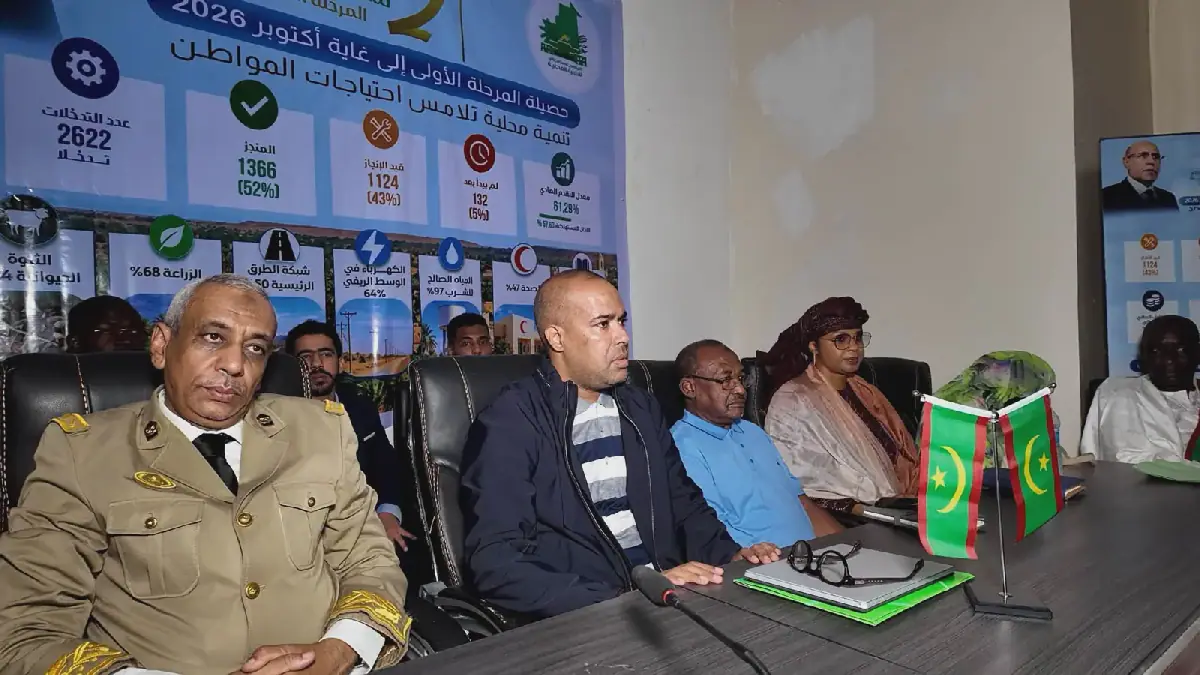
The new approach reflects President Mohamed Ould Ghazouani's vision of fairness, equality, and justice in distributing development benefits. Moulay Zeine stated that citizens' involvement in determining priorities embodies this vision. He made these remarks during a meeting in Kéhidy, the capital of the Korokl region. The discussions focused on the second phase of the emergency program to universalize access to essential services for local development.
The second phase of the program is set to begin in 2027, with ministerial delegations visiting all regions to listen to citizens and assess the progress of the first phase. Moulay Zeine noted that public investments in the Korokl region have exceeded 84 billion ouguiyas since 2019. Of these, approximately 20 billion ouguiyas have been allocated to the emergency program for access to essential services for local development.
The emergency program covers 304 projects in various sectors, including education, health, water, electricity, agriculture, animal husbandry, youth, and sports. Moulay Zeine reported that the progress rate of works in the first phase of the program in the region has reached 61%, with 67% of the scheduled deadlines completed. He emphasized that the next phase will focus on accelerating the pace of implementation, completing projects, and addressing shortcomings.
The government's approach is an extension of its efforts to involve citizens in the development process. Moulay Zeine stressed that citizens are the source of authority and have the final say in major national issues. He also highlighted that discussions on constitutional reforms should consider the aspirations and national will of the Mauritanian people, ensuring stability and continued development.
The country is currently enjoying security and stability, with strong relationships with its regional and international environment. The government continues to improve basic services, infrastructure, and job opportunities, aiming to achieve sustainable development. Moulay Zeine expressed optimism about achieving economic growth of around 5% this year, despite current international challenges.
The government's focus on citizen participation and inclusive development reflects its commitment to addressing the needs of the population. The approach aims to ensure that development benefits are equitably distributed, with citizens playing an active role in shaping the country's development agenda. This strategy is expected to have a positive impact on the lives of Mauritanians, particularly in rural areas.
Key points
- Citizens to play a key role in determining development priorities in Mauritania
- Government adopts participatory approach to ensure fairness and equality in development benefits
- Public investments in Korokl region exceed 84 billion ouguiyas since 2019