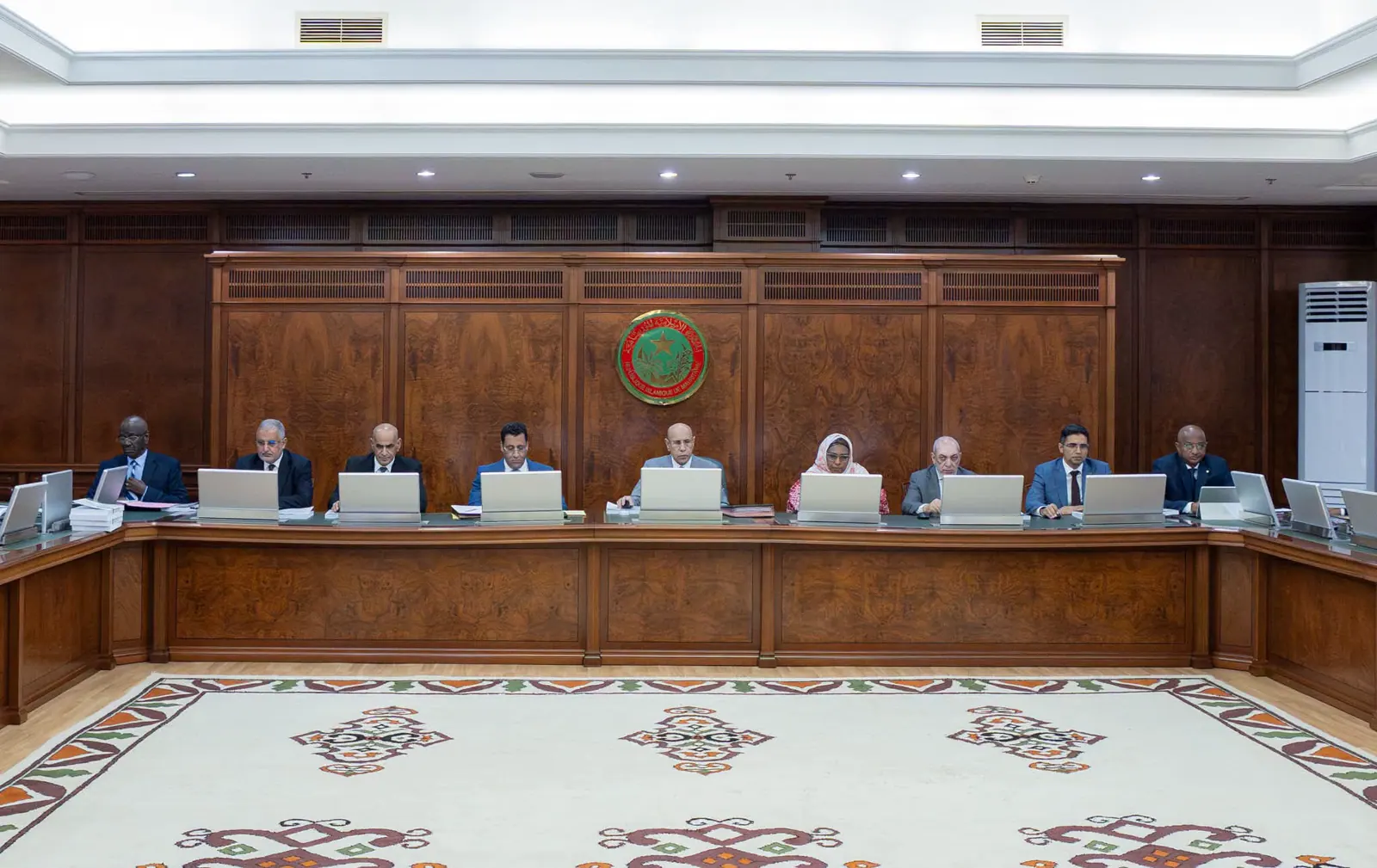
On October 21, 2026, Mauritania's cabinet convened under the leadership of President Mohamed Ould Cheikh El Ghazouani to discuss and approve several crucial projects. The most significant item on the agenda was the 2027 budget, which is part of the president's "Ambition for the Nation" program. This program is designed to drive national development through the government's general policy and the Accelerated Growth and Shared Prosperity Strategy (2016-2030).
The 2027 budget is based on a medium-term budgetary programming document (2027-2029) that was approved by the cabinet on July 1, 2026. It adheres to a new budgetary rule that aims to maintain a primary balance, excluding extractive revenues, at 3.5% of the nominal GDP. The budget forecasts a real economic growth rate of 5.0% in 2027 and an average of 4.3% over the period of 2027-2029, with an inflation rate of around 3.3%.
The budget outlines total revenues and grants at 152.11 billion ouguiyas and total expenditures and net loans at 145.91 billion ouguiyas, resulting in a surplus of 6.20 billion ouguiyas. This surplus is in line with the new budgetary rule. The budget also focuses on priority programs aimed at driving national transformation and improving living conditions for citizens. These programs include the development of Nouakchott, an emergency program for universal access to basic services for local development, and the development of the Inal region.
In addition to the budget, the cabinet approved several legislative projects. One of these projects is a decree establishing procedures for the manufacture, importation, storage, and distribution of medical supplies and related advertising. This decree aims to classify medical supplies into four categories based on risk levels and to establish procedures for their approval, licensing, and distribution.
Another approved project is a decree regulating the establishment of pharmaceutical institutions for local drug manufacturing, their technical standards, and procedures for examining applications. This decree is designed to develop a local pharmaceutical industry capable of ensuring the availability of drugs and reducing dependence on imports.
The cabinet also approved a decree regulating the manufacture, importation, storage, and use of hazardous, toxic, and narcotic substances. This decree classifies these substances and establishes conditions for their manufacture, importation, and use for non-medical purposes.
Furthermore, the cabinet approved decrees regulating the practice of optometry and the labeling and advertising of food and dietary products. These decrees aim to establish standards for the practice of optometry and to regulate the labeling and advertising of food and dietary products to ensure public health and safety.
Key points
- The 2027 budget is based on a real economic growth rate of 5.0% and an inflation rate of around 3.3%.
- The budget focuses on priority programs aimed at driving national transformation and improving living conditions for citizens.
- The cabinet approved several legislative projects aimed at regulating various sectors, including healthcare, pharmaceuticals, and food safety.