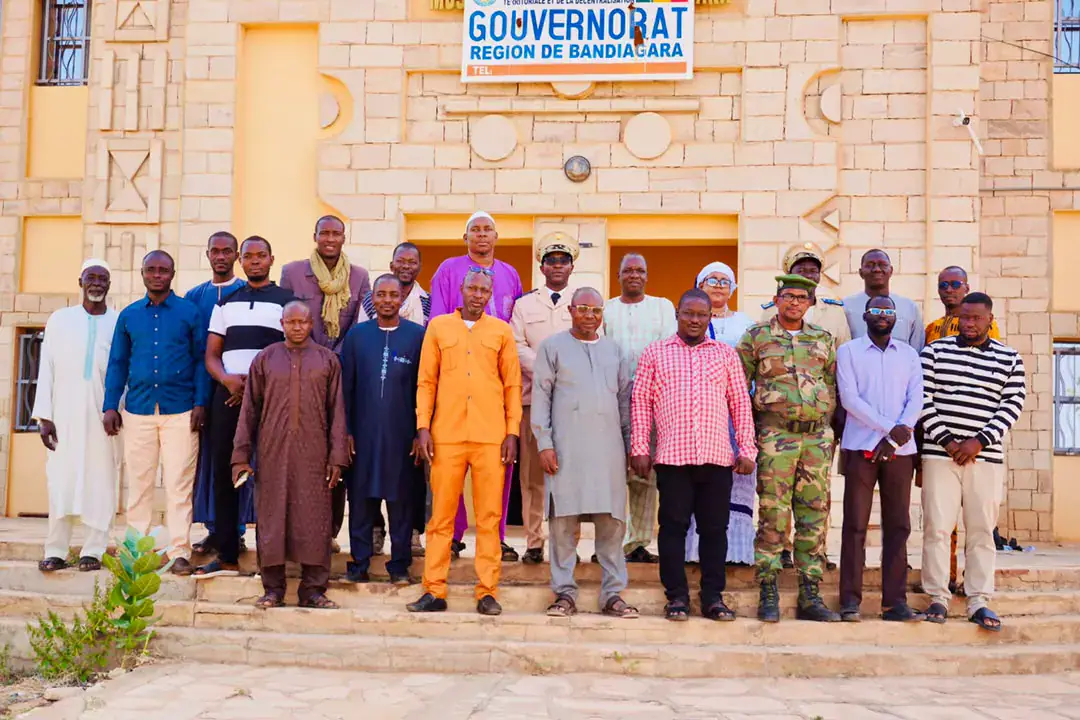
A recent workshop was held in Bandiagara, Mali, to discuss the preliminary findings of the 2026 agricultural campaign. The event was presided over by Issiaka Cissé, Advisor for Economic and Financial Affairs to the Governor. The meeting brought together regional directors and local service heads from the rural development sector. The agricultural sector plays a vital role in Mauritania's economy and livelihoods, employing around 80% of the population and contributing 75% to export earnings.
The agricultural sector is a top priority for the country, focusing on food sovereignty, poverty reduction, job creation, and improved rural living conditions. However, the sector faces several challenges, including climate-related issues, inadequate equipment for producers, and soil degradation. The 2026 campaign in Bandiagara and other central and northern regions was impacted by insufficient and uneven rainfall, disrupting the campaign's progress. Initial estimates indicate that around 49,911 hectares were affected across various crops.
The workshop's objectives align with directives from the country's authorities through the Ministry of Agriculture. Brehima Keita, Director of Agriculture, emphasized the importance of the exercise in obtaining a preliminary assessment of the campaign and guiding future interventions. The initiative follows observations made on the ground, with the Ministry requesting regional workshops to evaluate the campaign's progress. This effort is part of the Committee for Regional Agriculture's monitoring and evaluation tasks.
During the opening ceremony, Issiaka Cissé invited participants to carefully examine the data, share information gathered from the field, and formulate concrete recommendations. He encouraged collaboration to ensure the workshop's conclusions help address producers' challenges and prepare for the 2027 campaign. The discussions focused on presenting and validating preliminary results on crop yields, production, and surface areas.
The workshop evaluated the results against the 2026 targets, 2025 achievements, and the five-year average. Participants also examined the implementation and distribution of agricultural inputs. The findings will inform future interventions and support the development of strategies to address the challenges faced by the agricultural sector. The sector's growth is crucial for the country's economic development and food security.
The agricultural campaign's success is critical for Mauritania's economic and social well-being. The sector's challenges, including climate-related issues and inadequate equipment, require urgent attention. The workshop's recommendations will help guide future initiatives and support the development of sustainable agricultural practices. The country's authorities have emphasized the importance of the agricultural sector in achieving national priorities.
The 2026 agricultural campaign's preliminary findings highlight the need for continued support and investment in the agricultural sector. The sector's growth and development are essential for improving livelihoods and achieving food sovereignty. The workshop's outcomes will inform future policies and initiatives aimed at addressing the challenges faced by the sector and promoting sustainable agricultural practices.
Key points
- The 2026 agricultural campaign in Mauritania's Bandiagara region was impacted by insufficient and uneven rainfall.
- The sector faces several challenges, including climate-related issues, inadequate equipment for producers, and soil degradation.
- The workshop's recommendations will help guide future initiatives and support the development of sustainable agricultural practices.
Reporting sources
- Bandiagara : le bilan provisoire de la campagne agricole 2026 au centre d’une rencontre · Agence malienne de presse et de publicité