The Mauritanian government has unveiled its 2027 budget, projecting 152.11 billion MRU in revenues and 145.91 billion MRU in expenditures, resulting in an expected surplus of 6.20 billion MRU. The budget is built around the government's program "Mon ambition pour la Patrie" and the 2016-2030 Accelerated Growth and Shared Prosperity Strategy (SCAPP).
The budget outlines a growth rate of 5.0% for 2027 and an average of 4.3% from 2027-2029, with an inflation rate estimated at 3.3%. It also highlights significant investments in infrastructure, including 11.59 billion MRU for the second phase of Nouakchott's development program and 26.4 billion MRU for the emergency program for universal access to essential services and local development from 2025-2027.
A substantial allocation of 39.6 billion MRU has been made for the development program of the Dakhlet Nouadhibou wilaya from 2026-2029. This includes 25.44 billion MRU for infrastructure supporting productive sectors, such as a deep-water port and a wastewater treatment station for the fishing sector. Additionally, 4.63 billion MRU will go towards water and sanitation, 3.06 billion MRU for roads and transport, and 3.03 billion MRU for urban modernization.
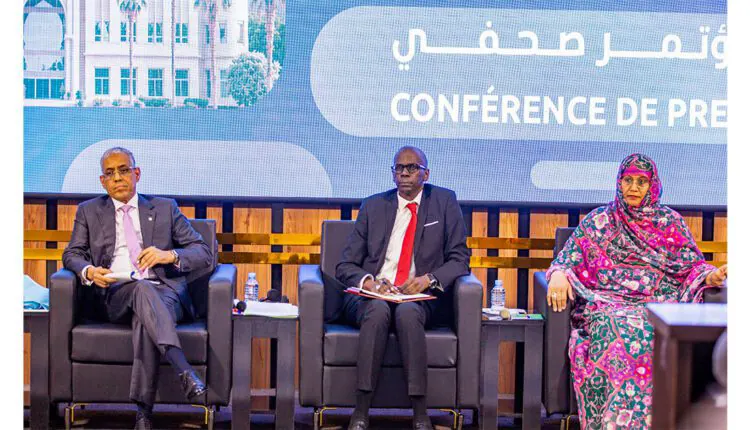
The government's budget also focuses on addressing challenges such as the rising cost of living, particularly the increase in food prices. The Minister of Finance, Codioro Moussa N’guenore, emphasized that the budget is designed to support economic growth, employment, and improved living conditions while maintaining macroeconomic balances and public finance sustainability.
In comparison to the 2026 budget, the 2027 budget shows an increase in allocation for the Aoun operation by over 6 billion MRU. The government has highlighted its commitment to enhancing the well-being of Mauritanian citizens and addressing pressing issues such as food security and infrastructure development.
The budget's implementation is, however, subject to risks including international uncertainties, potential fluctuations in energy prices and gold prices, and possible declines in concessional financing. To mitigate these risks, the government plans to maintain a cap on expenditures, build a liquidity reserve, and contribute to the National Petroleum Revenue Fund.
The presentation of the 2027 budget follows a series of government initiatives aimed at fostering economic growth, stability, and social development in Mauritania. The budget reflects the government's priorities, including infrastructure development, social welfare, and prudent financial management.
Key points
- The 2027 budget for Mauritania is set at 152.11 billion MRU, with a projected surplus of 6.20 billion MRU.
- The budget includes significant investments in infrastructure development, including allocations for Nouakchott and Dakhlet Nouadhibou.
- The Aoun operation's budget has been increased by over 6 billion MRU in the 2027 budget.