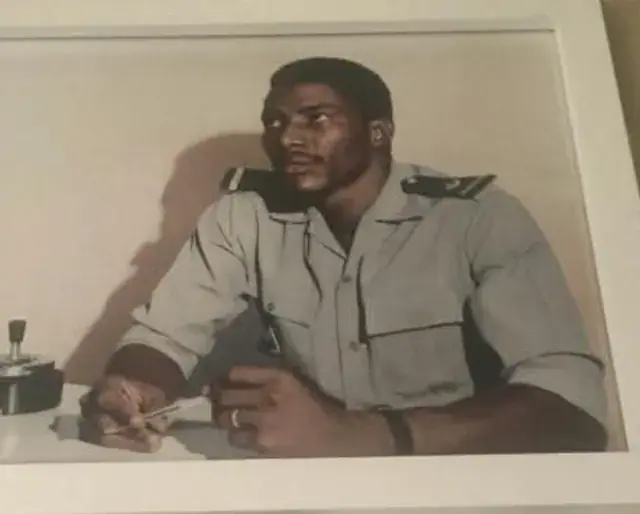
Captain Abou Diakité, a Mauritanian military officer, has been remembered as the embodiment of courage and sacrifice five decades after his death in 1976. He fell on October 7, 1976, during the Western Sahara war, a conflict that tested the country's military and territorial resilience. Diakité's legacy has endured, with his name etched in the nation's military and national memory. His story serves as a testament to the bravery of those who have given their lives for their country.
The historical context of Diakité's sacrifice is rooted in the mid-1970s, when Mauritania became embroiled in the Western Sahara war. The conflict presented significant strategic and territorial challenges for the country's armed forces. Diakité distinguished himself during this period, fighting alongside other notable figures, including Soueidatt Ould Weddad, Ba Ibra Demba, and Dieng Nadhirou. His leadership and bravery in the face of danger have been remembered by those who knew him.
Diakité's character has been recalled by those who perpetuate his memory as a man of noble spirit and an officer respected by his peers. As a captain during the conflict, he shared the hardships of his soldiers, led by example, and made life-or-death decisions under the harsh conditions of the Sahara desert. His ultimate sacrifice on October 7, 1976, has been hailed as a testament to his commitment to his country and his duties.
The legacy of Captain Abou Diakité continues to inspire new generations in Mauritania. His family, children, and fellow soldiers keep his memory alive by sharing stories of his bravery and the values he represented. Diakité's story serves as a reminder of the importance of patriotism, duty, and sacrifice. His country takes pride in having produced a hero whose courage echoes that of the unknown soldier and all those who have given their lives for freedom.
In Mauritania, Diakité's memory is honored through various commemorations, including Martyr's Day. His story has become an integral part of the country's history, symbolizing the nation's struggle for sovereignty and territorial integrity. The captain's bravery has not been forgotten, and his name continues to be celebrated as a hero who gave his life for his country.
Sid'Ahmed Eleya El Ammoni, a writer, has paid tribute to Diakité, saying, "Repose en paix, capitaine. Ta gloire et ton honneur sont éternels, et ton souvenir ne s'effacera jamais des sables du Sahara." This sentiment reflects the nation's enduring respect for Diakité and his sacrifice. His legacy serves as a reminder of the importance of remembering and honoring national heroes.
As Mauritania continues to commemorate the life and sacrifice of Captain Abou Diakité, his story serves as a powerful reminder of the country's history and the values that have shaped its people. His bravery and selflessness have left a lasting impact on the nation, and his memory will continue to inspire future generations.
Key points
- Captain Abou Diakité died on October 7, 1976, during the Western Sahara war.
- He is remembered as a symbol of courage and sacrifice in Mauritania.
- Diakité's legacy continues to inspire new generations in the country.