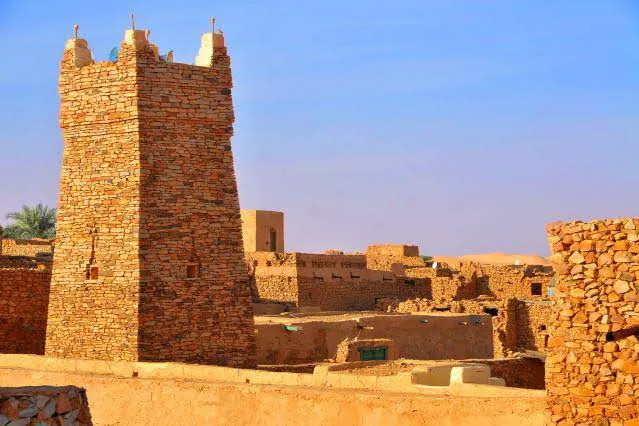
Mauritania boasts an exceptionally diverse cultural heritage, encompassing manuscripts, traditions, and historical sites. The country's rich history is reflected in its ancient cities, such as Chinguetti, Ouadane, Tichitt, and Oualata, which have been UNESCO World Heritage Sites since 1996. These cities played a significant role in trans-Saharan trade, Islamic knowledge dissemination, and commercial activities. Their historical significance is complemented by their architectural landmarks, mosques, and ancient libraries.
However, Mauritania's cultural heritage extends far beyond these iconic cities. The country's intangible heritage includes the mahadra, manuscripts, poetry, oral histories, traditional music and dance, craftsmanship, and culinary practices. The cultures of the pulaar, soninké, and wolof people have preserved oral traditions, genealogical accounts, songs, and community practices that serve as living archives. These diverse elements are now recognized as essential components of Mauritania's national identity.
The Senegal River valley, stretching from Trarza to Brakna, Gorgol, and Guidimakha, holds a significant part of Mauritania's historical and cultural memory. The region is home to ancient villages, mosques, historical cemeteries, archaeological sites, and traditional irrigation systems. The area's cultural landscape is characterized by the blending of Saharan and sub-Saharan African influences. Efforts to document and preserve this heritage are underway, but more work is needed to safeguard the region's cultural legacy.
In recent years, Mauritania has shifted its approach to cultural heritage, placing greater emphasis on intangible traditions and community practices. The country's policy now acknowledges the importance of preserving and promoting its diverse cultural expressions. This new approach has led to the recognition of several Mauritanian cultural elements, including the T'heydinn epic, mahadra, and traditional crafts, by international organizations.
The Mauritanian government has taken steps to integrate culture into its public policies, focusing on social cohesion, national identity, and development. The Ministry of Culture has been instrumental in protecting historical sites, safeguarding intangible heritage, and promoting cultural events. Cooperation with UNESCO has also strengthened the country's conservation efforts and increased international awareness of its cultural heritage.
The Festival of Heritage Cities has become a flagship event showcasing Mauritania's redefined cultural heritage. Initially centered on historical cities, the festival now incorporates various aspects of culture, artisanal crafts, manuscripts, poetry, traditional music, and local economic activities. By engaging local communities and promoting cultural diversity, the festival aims to establish a connection between preservation, transmission, and local development.
As Mauritania continues to evolve its cultural heritage policy, the focus remains on constructing a truly national concept of heritage that acknowledges the country's diverse memories and traditions. The government faces the challenge of balancing the preservation of iconic sites with the need to recognize and value the intangible cultural expressions that define the nation's identity. By addressing these challenges, Mauritania aims to harness its cultural heritage as a driving force for national unity and development.
Key points
- The Mauritanian government has redefined its cultural heritage to include intangible traditions and historical sites beyond famous cities like Chinguetti.
- The country's cultural policy now emphasizes social cohesion, national identity, and development.
- The Festival of Heritage Cities showcases Mauritania's diverse cultural heritage, promoting local development and community engagement.