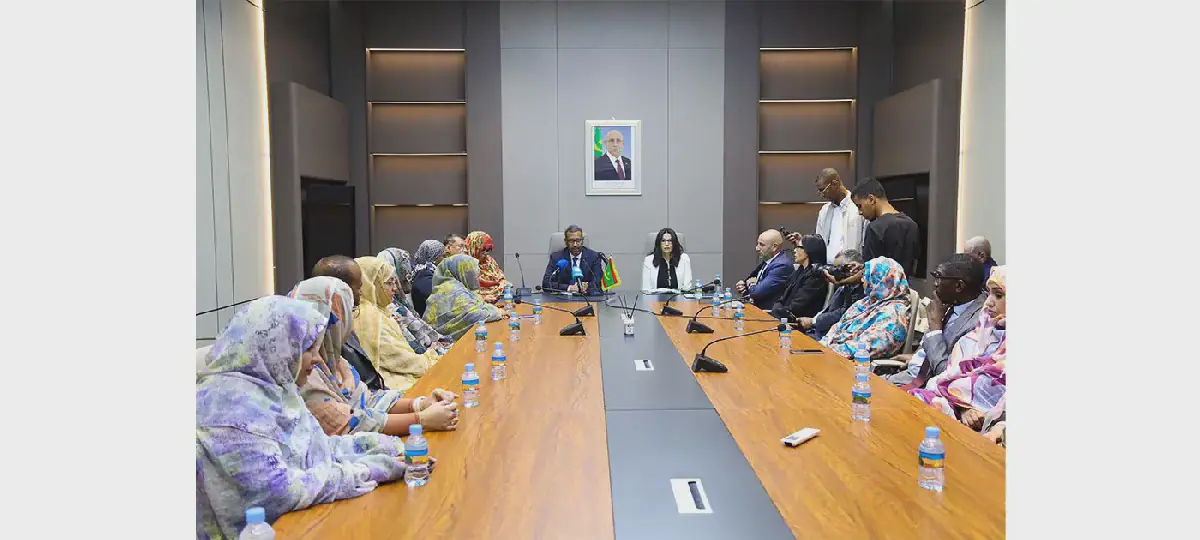
The Mauritanian Ministry of Finance recently organized a training session in Nouakchott on the mechanisms for transitioning from means-based budgeting to program-based budgeting. This initiative aims to enhance performance, monitoring, and auditing in budget execution. The training is part of a project to support effective and efficient public spending, backed by the World Bank and in collaboration with the Institute of Finance of the Kingdom of Morocco.
The training targets officials from the Strategic Priorities Monitoring Cell, the Court of Auditors, the General Inspectorate of State, and the General Inspectorate of Finance. The Director General of Budget, Ahmed Ould Ab, highlighted that this program aligns with the reform vision of President Mohamed Ould Cheikh El Ghazouani and the government's commitment to improving public finance management. The program aims to promote good governance, enhance performance, and optimize public resource management.
Ould Ab emphasized that transitioning to program-based budgeting, which took effect in January 2026, is a cornerstone of this reform. This approach focuses on setting objectives, measuring performance, linking resources to outcomes, and promoting accountability. The Ministry of Finance is working to support this transition, ensuring improved effectiveness of public spending and quality of services provided to citizens.
The success of this transition requires the involvement of various stakeholders, particularly oversight and monitoring institutions. These institutions play a crucial role in ensuring the proper management of public funds and evaluating achieved results. The Ministry of Finance expects the training to result in practical tools and recommendations that will contribute to developing professional practices and consolidating result-based management.
Sonia Hammamouch, Director of the Institute of Finance of the Kingdom of Morocco, noted that this training is part of the excellent cooperation between the Mauritanian Ministry of Finance and the Moroccan Ministry of Economy, Finance, and Public Efficiency. This cooperation is based on strong brotherly ties between the two countries and a shared desire to exchange experiences and develop competencies in public finance management.
Hammamouch added that since 2019, several training sessions have been organized, benefiting over 320 Moroccan officials in various fields related to modernizing financial management. This training focuses on the strategic dimension of budgetary reform, highlighting the role of program-based budgeting in tracking national priorities, measuring achievement levels, and strengthening monitoring and evaluation mechanisms.
The training allows participants to learn from Morocco's experience in adopting program-based budgeting, part of a broader reform that has developed multi-year budget programming and consolidated result-based management. The Mauritanian Ministry of Finance hopes that this training will enhance the capacities of oversight institutions and promote a culture of result-based management.
Key points
- The training aims to support effective and efficient public spending in Mauritania.
- The program-based budgeting approach focuses on setting objectives, measuring performance, and linking resources to outcomes.
- The training is part of a project backed by the World Bank and in collaboration with the Institute of Finance of the Kingdom of Morocco.
Reporting sources
- تنظيم دورة تكوينية حول آليات الانتقال من ميزانية الوسائل إلى ميزانية البرامج · Mauritanian Information Agency