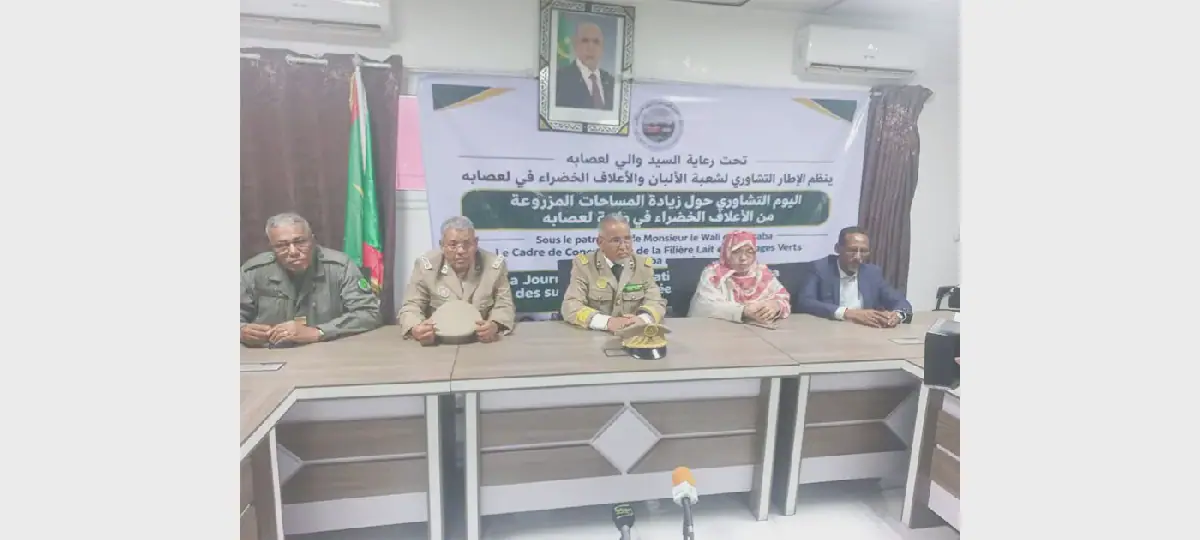
In the Mauritanian city of Kiffa, a consultative day on mechanisms to boost green forage cultivation in the Assaba region was launched on October 29, 2026, by Ahmedou Ould Adahi, Governor of Assaba. The event, organized by the Consultative Framework for the Dairy and Green Forage Sector in Assaba, aims to address the challenges posed by rainfall shortages and potential declines in grazing areas and forage cultivation.
Governor Ould Adahi emphasized that the workshop's timing is crucial given the indicators of rainfall shortages and potential impacts on livestock and forage reserves in the region. He highlighted that Assaba is characterized by its pastoral nature, hosting large numbers of cattle, sheep, and camels, and receiving herds from neighboring regions, necessitating proactive measures to mitigate the effects of forage shortages.
The governor stressed that the primary solution to addressing this situation lies in increasing the areas dedicated to forage cultivation. He noted that this initiative has already garnered initial support from several volunteer farmers who have expressed willingness to allocate over 100 hectares for forage cultivation, with plans to expand these areas in the coming period.
Other officials, including the Deputy President of the Assaba Region, Fatou Ould Bousif, and the Assistant Mayor of Kiffa, Isselm Ould Bian, underscored the importance of developing forage cultivation, particularly in the face of climate and environmental challenges, as well as the country's rainfall shortages. They called for increased efforts and enhanced consultation among stakeholders to develop forage production and expand cultivated areas.
The consultative day was attended by the Assistant Governor of Kiffa, the President of the Consultative Framework for the Dairy and Green Forage Sector in Assaba, representatives from agricultural and pastoral partners, and leaders of security agencies in the region. The event aimed to bring together stakeholders to discuss ways to enhance forage cultivation and address the challenges facing the sector.
Participants at the workshop acknowledged the significance of forage cultivation in supporting the region's livestock and mitigating the impacts of rainfall shortages. They emphasized the need for collaborative efforts to develop sustainable solutions and ensure the long-term viability of the sector.
The Mauritanian government's efforts to boost forage cultivation in Assaba reflect a broader strategy to address the country's agricultural and pastoral challenges. By engaging stakeholders and exploring innovative solutions, officials aim to enhance the resilience of the sector and promote sustainable development in the region.
Key points
- The Mauritanian government has launched initiatives to increase forage cultivation in Assaba, aiming to mitigate the impacts of rainfall shortages on livestock.
- Officials have called for enhanced consultation and collaboration among stakeholders to develop sustainable solutions for the forage sector.
- The region's pastoral nature and reliance on livestock underscore the importance of addressing forage shortages and promoting sustainable agricultural practices.