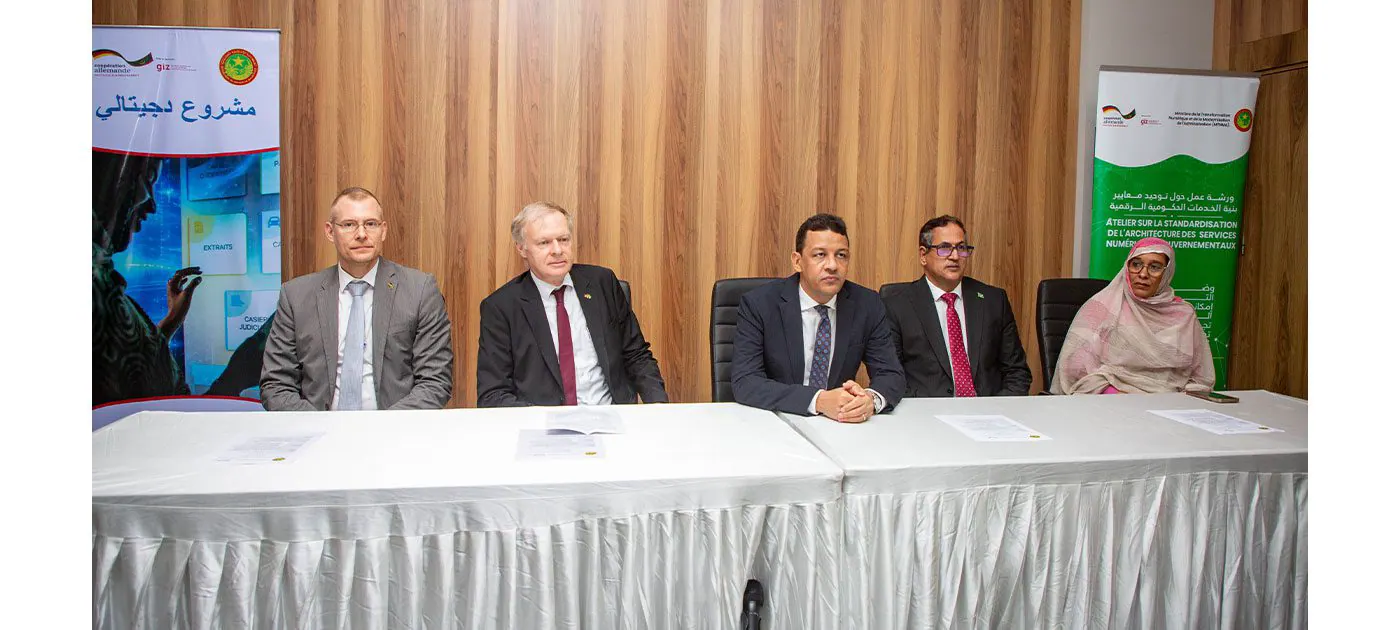
On September 28, 2026, Mauritania's Minister of Digital Transformation and Modernization, Ahmed Salem Ould Achfeg, launched a four-day training program in Nouakchott aimed at standardizing government digital infrastructure. The program seeks to enhance the capacity of administrators and leadership in driving digital transformation and modernization. This initiative is part of the ministry's efforts to establish uniform standards for digital public services, contributing to a more integrated and cohesive government digital system.
The training program aligns with the vision of President Mohamed Ould Cheikh El Ghzouani and the government's efforts to accelerate digital transformation and modernize administration. In March, the ministry organized a national workshop with representatives from 34 government sectors, which resulted in an agreement to develop digital government services within a comprehensive framework. This approach aims to ensure that government services are interconnected and based on uniform standards, guaranteeing consistency and integration.
The minister emphasized that the state functions as a single entity, and its digital services should be interconnected, relying on shared standards to ensure harmony and integration. The workshop led to the establishment of a common reference for digital service engineering and a plan to create a national library of reusable digital components. The national design system, "Digital," has entered the internal usage phase within the sector, with plans for its expansion to various ministerial sectors.
The government's digital cloud, designed to host state digital services, is now operational. The minister stressed that the success of digital transformation depends not only on technology but also on clear leadership, effective coordination and cooperation among different administrations, and continuous adaptation to change. The training program aims to achieve two primary objectives: developing a shared vision for standards governing government digital infrastructure and ensuring the application of these standards in all new digital services.
The program is supported by Mauritania's partners in German cooperation, the German Agency for International Cooperation, and participating experts. The minister acknowledged their efforts in accompanying and supporting national endeavors in digital transformation. The German ambassador to Mauritania, Florian Reindl, noted that adopting these standards aims to make digital services simpler, more cohesive, and focused on citizens' needs.
The ambassador emphasized that setting standards is a crucial step, but the real significance lies in ensuring practical implementation. The training program is expected to enhance capacities and drive the digital transformation process in Mauritanian administration. The launch event was attended by the ministry's Secretary-General, task-assigned officials, sector representatives, and the coordinator of the "Digital" project, along with representatives from German cooperation and the German Agency for International Cooperation.
The program is a significant step towards achieving a more integrated and efficient government digital system in Mauritania. By standardizing digital infrastructure and services, the government aims to improve the quality of services provided to citizens and promote digital transformation across various sectors.
Key points
- The program aims to standardize government digital infrastructure and promote digital transformation in Mauritania.
- The initiative is part of the government's efforts to modernize administration and provide more efficient public services.
- The program is supported by Mauritania's partners in German cooperation and the German Agency for International Cooperation.