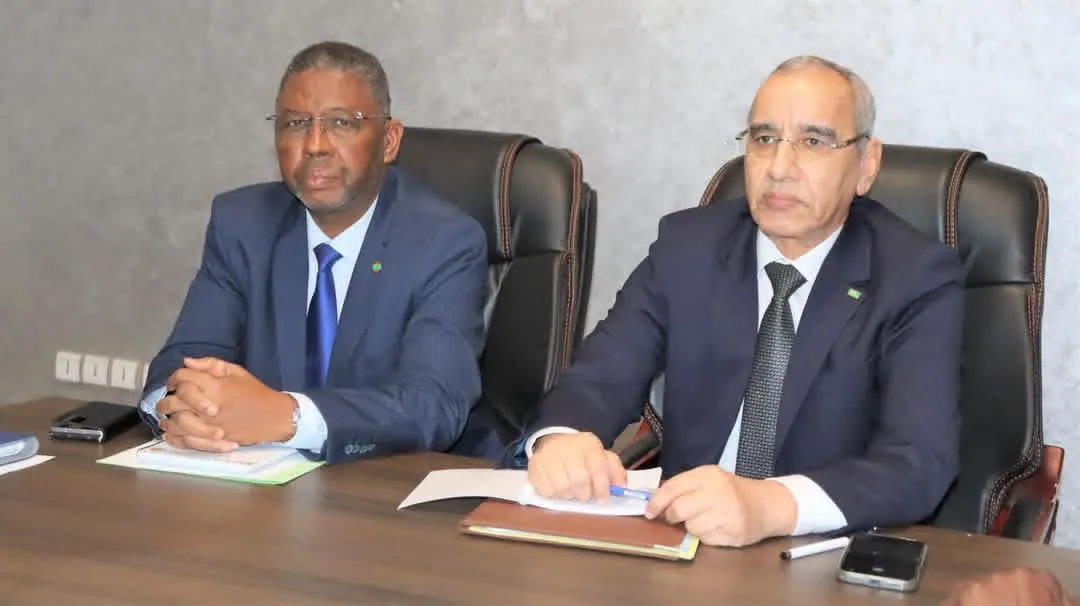
The Mauritanian government has initiated a national cleanliness campaign aimed at promoting sustainable cleanliness and addressing environmental concerns. The campaign was launched following a meeting at the Ministry of Interior, Decentralization, and Local Development. The meeting, chaired by Interior Minister Mohamed Ahmed Ould Mohamed Amin, discussed mechanisms to translate President Mohamed Ould Ghazouani's call to action into a sustained and organized effort. The campaign seeks to engage various stakeholders, including government ministries, administrative authorities, elected officials, economic and social actors, and civil society.
The meeting focused on mobilizing relevant sectors and stakeholders to support the national cleanliness initiative. Participants discussed organizing cleanliness and awareness campaigns, addressing black spots and random waste dumps, and engaging local communities, schools, and the private sector. The government emphasized the need to develop cleanliness plans, mobilize resources and available machinery, and enforce regulations related to cleanliness, including the ban on plastic bags and construction waste. The initiative aims to promote a culture of cleanliness as a collective responsibility.
The government has proposed establishing a national committee to guide, oversee, and monitor the implementation of the national cleanliness strategy. The committee will be supported by regional and district-level committees responsible for coordinating efforts, monitoring progress, and evaluating results. This structure aims to ensure a sustained effort beyond sporadic campaigns. The government has called on all stakeholders to work together to make the initiative a success and to adopt a daily practice of maintaining cleanliness in cities and villages.
The Ministry of Interior has issued a statement emphasizing the need for collective action to achieve the goals of the national cleanliness initiative. The ministry has confirmed that several government ministries and concerned entities are participating in the effort. The initiative follows a directive sent to all administrative authorities and elected officials to engage in the national cleanliness campaign. The government has begun implementing the initiative, with various stakeholders expected to contribute to its success.
President Mohamed Ould Ghazouani's call to action, launched from the city of Benichab, aims to promote sustainable cleanliness and address environmental concerns. The national cleanliness initiative is part of a broader effort to address the country's environmental challenges. The government has acknowledged the importance of collective action and community involvement in maintaining cleanliness and promoting a healthy environment.
The national cleanliness initiative has been welcomed by various stakeholders, who have expressed their commitment to supporting the effort. The government has emphasized the need for a sustained and organized approach to cleanliness, rather than sporadic campaigns. The initiative is expected to have a positive impact on the country's environment and public health.
The Mauritanian government has reaffirmed its commitment to promoting a culture of cleanliness and environmental responsibility. The national cleanliness initiative is a key component of this effort, with the government expected to work closely with stakeholders to ensure its success. The initiative's impact will be closely monitored, with adjustments made as needed to achieve its goals.
Key points
- The Mauritanian government has launched a national cleanliness initiative to promote sustainable cleanliness and address environmental concerns.
- The initiative aims to engage various stakeholders, including government ministries, administrative authorities, elected officials, economic and social actors, and civil society.
- The government has proposed establishing a national committee to guide, oversee, and monitor the implementation of the national cleanliness strategy.