The Hodh Chargui region in southeastern Mauritania is facing an unprecedented refugee crisis, with over 290,000 Malian refugees, including 120,000 in the Mbera camp and 170,000 in over 70 host villages. This influx has put immense pressure on the region's natural resources and basic social services. The crisis has escalated since 2023, making development a crucial aspect of stability and social cohesion.
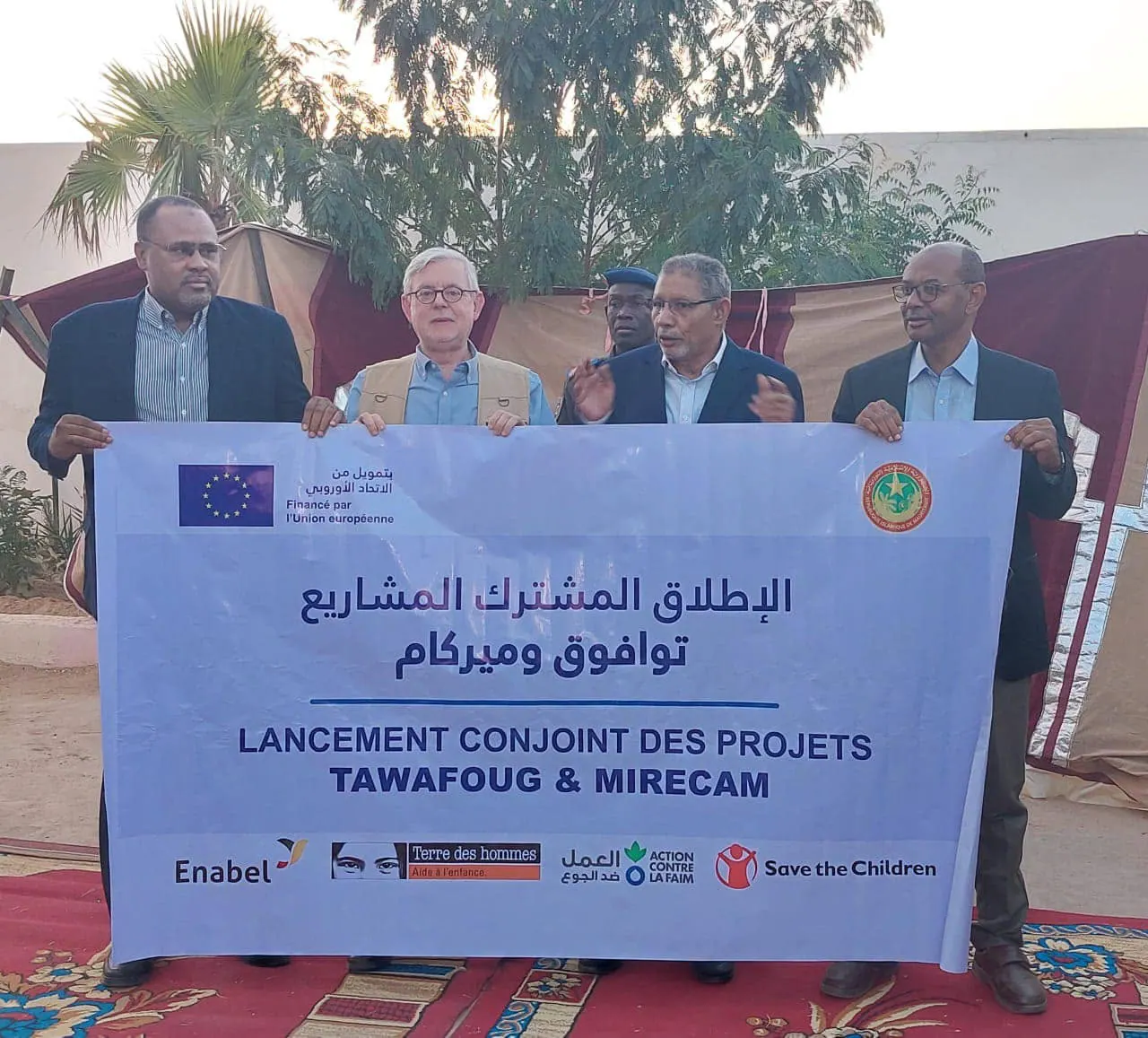
In response, the Tawafoug (Entente) project was launched in August 2024, funded by the European Union and implemented by a consortium of Action contre la Faim (ACF-Espagne), Save the Children, and Terre des hommes. The 36-month project has a budget of 20 million euros and targets five moughataas, 15 communes, and 20 terroirs. Its unique approach focuses on identifying needs at the territorial level, prioritizing them with local populations, and involving authorities, elected officials, and technical services in the examination and validation process.
The Hodh Chargui region has been hosting Malian refugees since 1998, but the situation worsened in 2020 due to Mali's deteriorating security situation, leading to an increased influx of refugees. The Mbera camp, initially designed for 60,000 people, now hosts around 120,000. The pressure extends beyond the camp, affecting 70 to 80 localities, particularly in border areas and zones like Bassiknou, Adel Bagrou, and Djiguenni.
Despite the challenges, Mauritania has maintained a policy of hospitality and sharing with refugee populations. The authorities now face the challenge of strengthening security, development, and hosting capacity in the territories. Cheikh Abdallahi Ewah, coordinator of the Cellule de Coordination, de Suivi et d'Évaluation des Projets et Programmes de Développement du Hodh Chargui, emphasizes the importance of security in the border region and the need for a "security through development" approach.
The Tawafoug project is part of a broader strategy for the Hodh Chargui region, which began with the development of a specific program in 2020-2021. The Cellule de Coordination worked with local authorities, collectives, technical services, and development partners to create the Stratégie Régionale de Croissance Accélérée et de Prospérité Partagée du Hodh Chargui (SCRAPP) 2021-2025. This strategy aligns with the national strategy and focuses on territorial development and stability.
The project's approach involves a multi-step process, starting with identifying needs at the territorial level, prioritizing them with local populations, and involving authorities and technical services in the examination and validation process. Franck Merceron, coordinator of the Tawafoug project since August 2024, highlights the importance of participation and transparency in defining priorities.
The European Union has committed significant funding to support development in the Hodh Chargui region, including 20 million euros for the Tawafoug project and 8 million euros for the MIRECAM project, focused on rural development and livestock. The EU's support aims to promote stability and address the root causes of the refugee crisis.
Key points
- The Tawafoug project aims to promote development and stability in the Hodh Chargui region by addressing the needs of local populations and refugees.
- The project involves a unique approach, focusing on territorial development and involving local authorities, elected officials, and technical services in the decision-making process.
- The European Union has committed significant funding to support development in the Hodh Chargui region, including 20 million euros for the Tawafoug project.