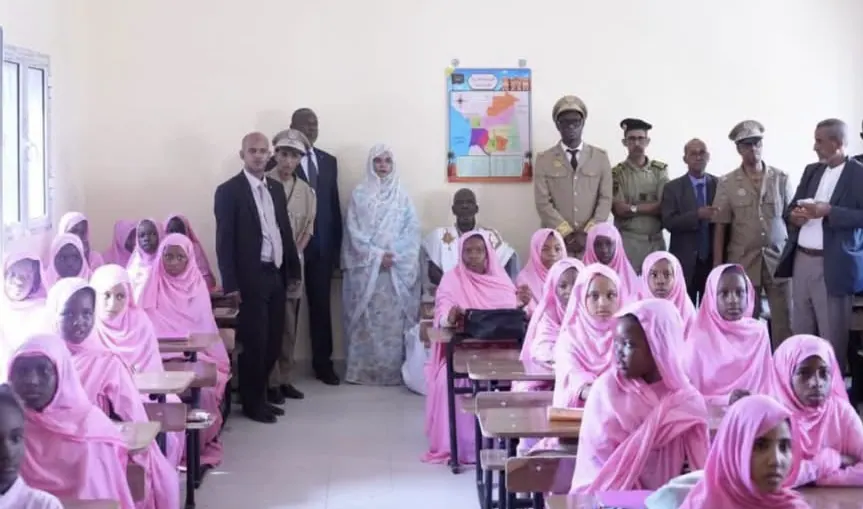
Mauritania's Minister of Education and Educational Reform, Huda Babah, officially launched the 2026-2027 academic year on October 5, 2026. The minister conducted a comprehensive inspection tour of several schools in the capital city of Nouakchott. This marks the beginning of the new academic year across various regions of the country. The minister emphasized the government's commitment to improving the quality of education.
The upcoming phase of educational reform will focus on enhancing the quality of education, improving student learning outcomes, and developing continuous teacher training programs. The minister also highlighted the importance of creating effective evaluation and monitoring tools to ensure better educational performance. These initiatives aim to bring about significant improvements in the country's education sector.
This academic year, a total of 1,216,481 students are enrolled in schools across Mauritania. These students are distributed between the public and private sectors. The public sector comprises 3,955 primary schools that accommodate 768,179 students, supported by 20,519 teachers. Additionally, there are 396 secondary schools with 205,028 students, taught by 7,639 teachers.
The private education sector in Mauritania consists of 1,038 schools, which cater to 243,274 students. The large number of students and schools highlights the significance of education in Mauritania. The government's focus on improving educational quality is expected to have a positive impact on the country's future.
Minister Babah's tour of schools in Nouakchott was an opportunity to assess the readiness of educational institutions for the new academic year. The minister interacted with students, teachers, and school administrators to understand their needs and challenges. This hands-on approach demonstrates the government's commitment to addressing the concerns of the education sector.
The launch of the 2026-2027 academic year is a significant milestone in Mauritania's efforts to improve its education system. The government's initiatives to enhance educational quality, increase access to education, and develop teacher training programs are expected to yield positive results in the coming years.
As the new academic year progresses, stakeholders will be closely monitoring the impact of the government's initiatives on educational outcomes. The success of these initiatives will depend on effective implementation, adequate resources, and collaboration between educators, policymakers, and the community.
Key points
- Over 1.2 million students are participating in the 2026-2027 academic year in Mauritania.
- The Mauritanian government is focusing on improving the quality of education and educational outcomes.
- The country's education sector comprises both public and private institutions, with a significant number of students enrolled in each sector.