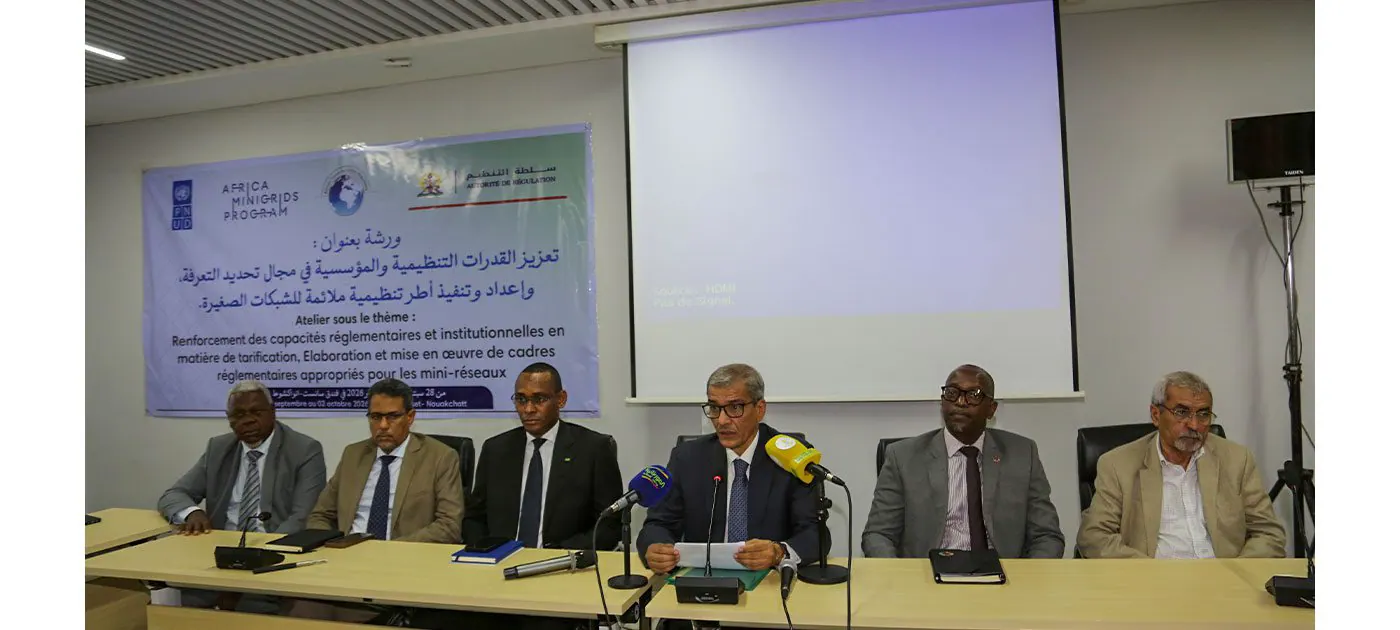
On September 28, 2026, in Nouakchott, Mauritania, a workshop was organized by the Multisectoral Regulatory Authority in collaboration with the United Nations Development Programme. The workshop focused on enhancing organizational and institutional capacities in determining tariffs and preparing and implementing regulatory frameworks for small-scale electricity networks. The event brought together various stakeholders to discuss key areas such as tariffs, licensing, service quality, consumer protection, and monitoring mechanisms.
The workshop aims to develop practical recommendations to improve the governance and regulation of the energy sector and expand electricity services to citizens. Mustafa Bashir, Technical Advisor to the Minister of Energy and Oil, highlighted that expanding access to electricity, particularly in rural and remote areas, is a priority within the country's development program. He emphasized the government's efforts to harness national energy resources, diversify the energy mix, and develop electrical infrastructure to achieve universal access to sustainable and reliable electricity by 2030.
Small-scale electricity networks are seen as a crucial tool for accelerating electrification in remote areas. However, their success depends on a clear regulatory and institutional framework that ensures service quality, protects consumer rights, and promotes economic sustainability for operators. Bashir noted that establishing suitable tariffs for small-scale electricity networks is essential for building a sustainable economic model that balances citizens' ability to pay for services with the financial sustainability of operators.
Sid Ahmed Ould Errais, President of the National Regulatory Council, emphasized that the workshop is part of efforts to enhance organizational and institutional capacities in small-scale electricity networks. He praised the support provided by the United Nations Development Programme to the electricity sector, particularly in updating the new electricity code and establishing a sector data observatory. Ould Errais highlighted the strategic importance of developing small-scale electricity networks to improve access to electricity, especially in rural and remote areas.
The Representative of the United Nations Development Programme in Mauritania, Mansour Ingay, stressed that access to reliable, sustainable, and affordable energy is a fundamental component of sustainable human development. He noted that Mauritania has promising potential in renewable energies, which can accelerate economic transformation and enhance the country's ability to address climate change. Ingay emphasized the importance of small-scale electricity networks and decentralized energy solutions in expanding access to electricity in rural areas.
The workshop was attended by representatives from the African Forum of Public Service Regulators and the General Manager of the Mauritanian Electricity Company (SOMLEC), among others. The event aims to strengthen institutional capacities and develop regulatory frameworks that ensure the economic viability of small-scale electricity networks and balance service expansion with operator sustainability. Ingay commended the efforts of the Regulatory Authority in updating the sector and developing its reference tools.
The workshop's outcomes are expected to contribute to the development of a sustainable and reliable electricity sector in Mauritania. The country's efforts to enhance access to electricity, particularly in rural and remote areas, are crucial for achieving sustainable development goals. The workshop's recommendations will likely inform policy decisions and regulatory frameworks that promote investment in the energy sector and improve the quality of life for Mauritanian citizens.
Key points
- The workshop aims to develop practical recommendations to improve the governance and regulation of the energy sector and expand electricity services to citizens.