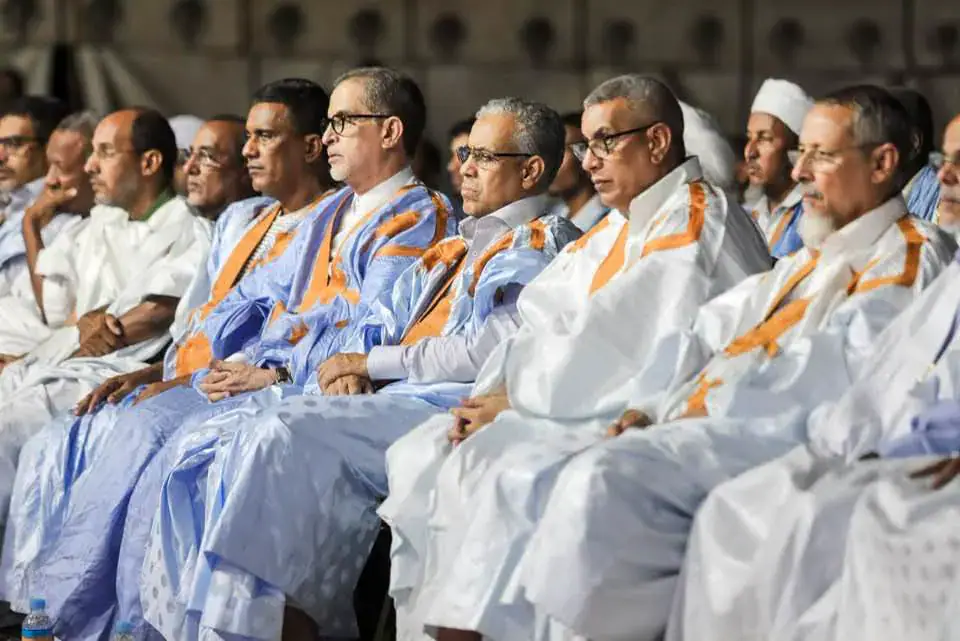
In a ceremony held in Nouakchott, Mauritania's Minister of Culture, Mohamed Ould Babanah, oversaw the distribution of awards to winners of the 13th Quranic competition. The event recognized 63 individuals who excelled in Quranic recitation and memorization. These winners were selected from a pool of 2443 participants who were evaluated by judging panels across the country. The competition utilized regional and local radio stations to reach a wider audience.
Minister Ould Babanah highlighted the nationwide reach of the competition, made possible through Mauritania's regional and local radio stations. He noted that this broad accessibility transformed the competition into a national event, open to participants from all regions. The minister also emphasized the modernization of the competition's organization, including the digitization of registration and result announcement processes. Furthermore, he mentioned that the judging process was entrusted to specialized and impartial scientific committees supervised by the Scientific Council.
The minister underscored the significance of the Quranic competition as a continuation of Mauritania's traditional Quranic schools, which have contributed to the country's scientific and cultural radiance for centuries. These schools have disseminated knowledge, values, and education beyond Mauritania's borders. This legacy was acknowledged by UNESCO, which classified the Mauritanian Quranic schools as part of the world's intangible cultural heritage.
Mohamed Ould Aledah, Director of Mauritania's Radio, provided additional insights into the competition. He revealed that this edition marked the first time all stages of the competition were digitized, from registration to result announcements. Ould Aledah also mentioned the introduction of an annual competition aimed at selecting the most skilled Quranic reciters in the country. The goal is to produce audiovisual and audio Quranic recordings.
Mohamed El Moukhtar Ould Ambalah, head of the Supervisory Committee for Quranic competitions and programs at Mauritania's Radio, stressed the importance of the radio's role in promoting Quranic activities. He emphasized that the Quran should serve as a guide for life, a source of values and legislation. Ould Ambalah called for a deeper engagement with the Quran, moving beyond mere memorization and recitation to contemplation and adherence to its teachings.
The Quranic competition, now in its 13th edition, continues to attract a large number of participants from across Mauritania. The event is a testament to the country's commitment to preserving and promoting Quranic knowledge. By embracing modern technologies and methods, the competition has become more inclusive and accessible to a broader audience.
As the ceremony concluded, the winners received their awards, and the participants were encouraged to continue their Quranic studies. The event highlighted the significance of Quranic education in Mauritanian society and the efforts being made to ensure its preservation and dissemination.
Key points
- The 13th Quranic competition in Mauritania drew 2443 participants, with 63 winners selected for their Quranic recitation and memorization skills.