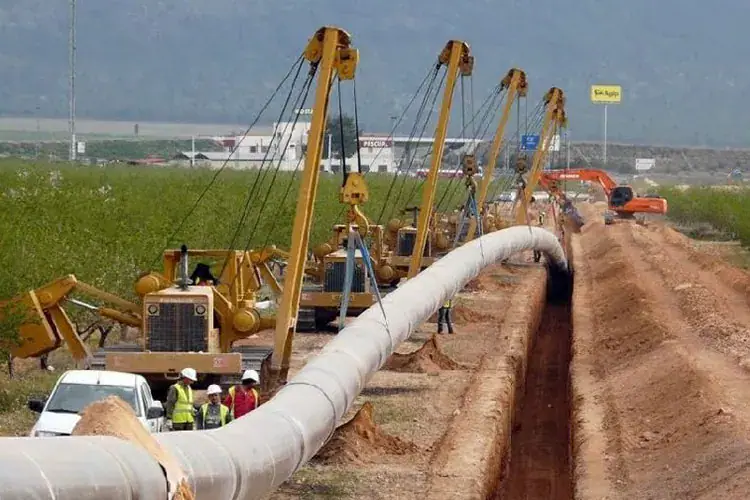
The Mauritanian government is facing growing scrutiny over its involvement in the Atlantic gas pipeline project, a major energy infrastructure that will connect Nigeria to Morocco. The pipeline, which will span over 5,000 kilometers, is expected to pass through the coast of Western Sahara, a disputed territory. Experts warn that Mauritania's participation in the project could have significant implications for the country's sovereignty and its relationship with the international community.
The project has sparked concerns among Sahrawi activists and experts, who fear that it could legitimize Morocco's occupation of Western Sahara. The Sahrawi people have been fighting for independence from Morocco for decades, and the pipeline project is seen as a threat to their rights. Mauritania's President Mohamed Ould Ghazouani has faced criticism for his government's perceived silence on the issue, with many calling for greater transparency and clarity on the country's position.
According to Hamdi Yahaizie, a Moroccan expert, Mauritania is under pressure from Morocco to support the pipeline project, which could have significant economic and strategic benefits for the country. However, Yahaizie warns that this could come at a significant cost, including the potential erosion of Mauritania's sovereignty and its relationship with the international community. He also notes that the project could have significant environmental impacts, particularly in the sensitive ecosystem of Western Sahara.
Ammar Belani, a former Algerian ambassador, has also weighed in on the issue, highlighting the need for Mauritania to clarify its position on the pipeline project. Belani notes that the project raises significant legal and diplomatic questions, particularly with regard to the status of Western Sahara. He emphasizes that the international community has consistently recognized Western Sahara as a non-self-governing territory, and that any agreement on the pipeline project must take this into account.
The Atlantic gas pipeline project has been touted as a major economic opportunity for the region, with Morocco and Mauritania expected to benefit significantly from the project. However, experts warn that the project also poses significant risks, particularly with regard to the environment and the rights of the Sahrawi people. As the project moves forward, it is likely that Mauritania will face growing pressure to clarify its position and ensure that its interests are protected.
In recent weeks, there have been reports of secret talks between Morocco and Mauritania on the pipeline project, with some speculating that Mauritania may have already agreed to support the project. However, these reports have been denied by both governments, and the issue remains shrouded in uncertainty. As the international community watches with interest, Mauritania's government will face significant challenges in navigating the complex geopolitics of the region.
The Atlantic gas pipeline project is expected to have significant implications for the region, with some estimates suggesting that it could generate billions of dollars in revenue over the coming years. However, experts warn that the project also poses significant risks, particularly with regard to the environment and the rights of the Sahrawi people. As Mauritania moves forward, it will need to balance its economic interests with its international obligations and the needs of its people.
Key points
- The Atlantic gas pipeline project raises significant questions about Mauritania's sovereignty and its relationship with the international community.
- The project has sparked concerns among Sahrawi activists and experts, who fear that it could legitimize Morocco's occupation of Western Sahara.
- Mauritania's government will face significant challenges in navigating the complex geopolitics of the region and ensuring that its interests are protected.
Reporting sources
- “أنبوب الغاز الأطلسي” يضع موريتانيا أمام اختبار السيادة الصحراوية! · Echorouk El Yawmi