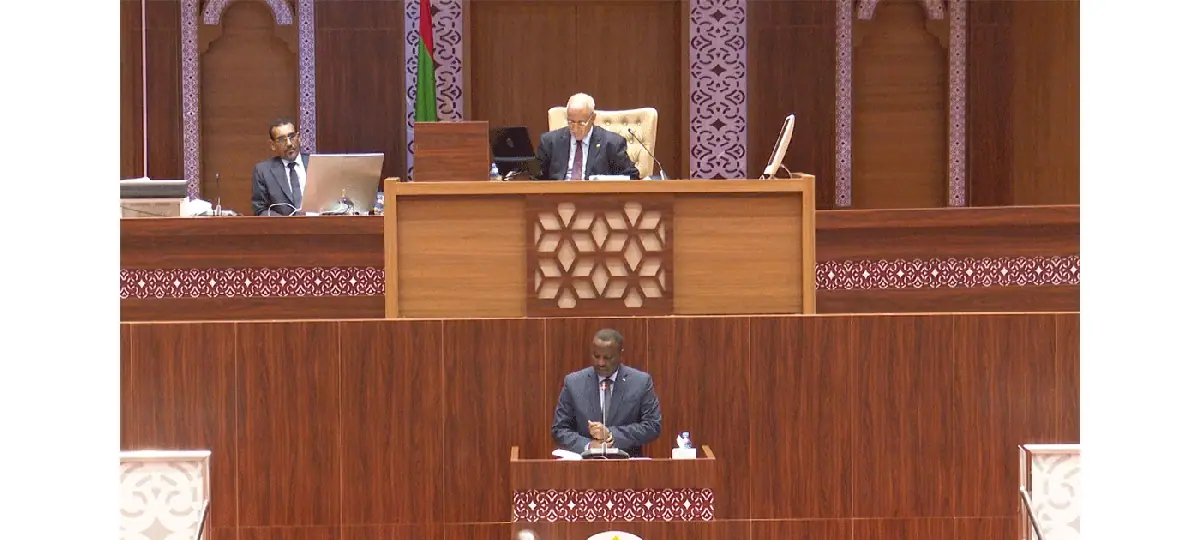
Mauritania's National Assembly has adopted a new law aimed at modernizing the country's legal framework for combating narcotics and psychotropic substances. The law, which was presented by Justice Minister Mohamed Ould Soueidatt, replaces a 30-year-old law and seeks to strengthen the country's efforts to curb the production, trafficking, and consumption of illicit substances. The new law was adopted during a public session presided over by Assembly President Mohamed Bamba Meguett.
The new law expands the scope of criminalized acts to include various forms of production, manufacturing, transformation, possession, cultivation, and trafficking of narcotics. It also criminalizes activities related to equipment used in illicit production and toughens penalties for crimes committed by organized criminal groups or those with a transnational character. Additionally, the law increases penalties for crimes involving violence, arms, or targeting minors and vulnerable groups.
The law establishes mechanisms for investigation, financial investigation, tracing, and confiscation of crime proceeds. It also sets up an institutional framework for prevention and treatment, including the creation of a National Commission for Prevention against Narcotics, a National Treatment Center for Addictions, and secondary centers. The law allows for the authorization of private treatment centers and provides for the submission of consumers to treatment, either voluntarily or by judicial decision.
The new law also introduces significant changes to the country's approach to addressing narcotics and psychotropic substances. It establishes the criminal liability of legal persons and ensures the protection of whistleblowers. The law aims to provide a comprehensive framework for addressing the issue of narcotics and psychotropic substances in Mauritania, including prevention, treatment, and repression.
According to the government, the new law is a response to the growing concern about the impact of narcotics and psychotropic substances on the country's security, health, and development. The law is expected to strengthen the country's cooperation with international partners in the fight against narcotics and organized crime. The government has emphasized its commitment to implementing the law and ensuring its effectiveness.
The adoption of the new law has been welcomed by various stakeholders, who see it as a crucial step towards addressing the challenges posed by narcotics and psychotropic substances in Mauritania. The law is expected to have a positive impact on the country's efforts to reduce the spread of illicit substances and protect vulnerable populations, including minors and young people.
The implementation of the new law will require significant efforts from the government and other stakeholders, including law enforcement agencies, healthcare providers, and civil society organizations. The government has emphasized its commitment to providing the necessary resources and support to ensure the effective implementation of the law and to address the challenges posed by narcotics and psychotropic substances in Mauritania.
Key points
- The new law modernizes Mauritania's legal framework for combating narcotics and psychotropic substances, replacing a 30-year-old law.
- The law expands the scope of criminalized acts and toughens penalties for crimes committed by organized criminal groups or those with a transnational character.
- The law establishes an institutional framework for prevention and treatment, including the creation of a National Commission for Prevention against Narcotics and a National Treatment Center for Addictions.