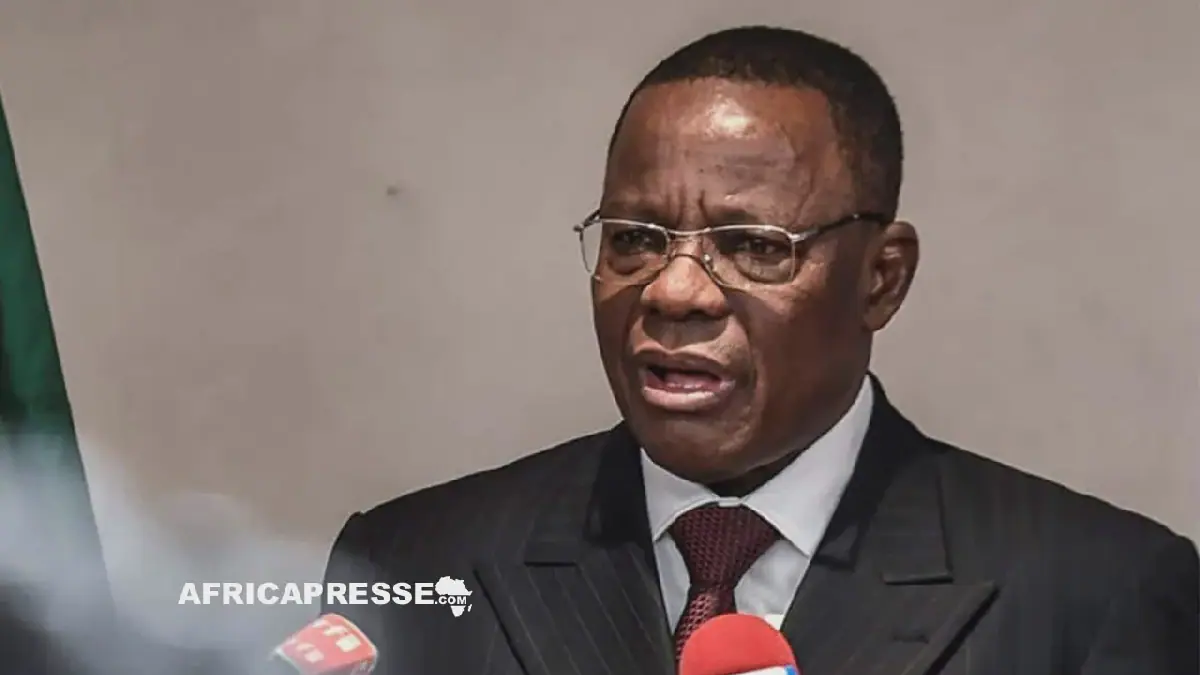
Former President of the Movement for the Renaissance of Cameroon (MRC) Maurice Kamto has submitted his candidacy for one of the seven legislative seats in the Mfoundi region, which covers Yaoundé. He personally deposited his dossier at Elecam, the country's electoral body, on Tuesday, November 24, at around 8:25 pm. Kamto's decision has sent shockwaves through the country's political landscape, with many expecting him to prepare for the next presidential election.
Kamto's candidacy comes as a surprise, especially after he stepped down as MRC president in September, citing the need to preserve the party's interests. His departure was prompted by internal disputes and a court challenge to his re-election as party leader, which was later invalidated by the Minister of Territorial Administration. By choosing to run for a legislative seat, Kamto is demonstrating his commitment to maintaining a strong presence in the country's politics.
The legislative and municipal elections, set for February 7, are taking place in a tense political climate in Cameroon. The ruling RDPC party, led by President Paul Biya, still holds a majority in the National Assembly and local councils but is facing increased divisions and internal dissent. The party's primaries were marked by turmoil in several strongholds, with new figures emerging and fuelling discontent and internal rivalries.
Kamto's candidacy in the Mfoundi region is seen as a direct challenge to the RDPC, which has traditionally dominated the area. A senior RDPC official told RFI that Kamto's presence in Yaoundé is a significant problem for the party, which is already weakened and divided. For the MRC, the goal is to leverage Kamto's high profile to mobilize support beyond the party's traditional base and potentially win seats in the National Assembly.
Kamto's decision to run for office also reflects a broader strategy to strengthen the MRC's presence in urban areas, where opposition parties have traditionally struggled to convert support into electoral victories. The Mfoundi region, with its seven electoral districts, is a crucial battleground in the fight for control of the National Assembly. By running personally, Kamto aims to demonstrate that he remains a key player in Cameroon's politics despite internal turmoil within his party.
The deadline for submitting candidacies, which was midnight on November 24, saw several parties waiting until the last minute to file their nominations, reflecting the high level of uncertainty surrounding the elections. Kamto's last-minute candidacy illustrates this trend of playing out all available options. In the coming weeks, alliances, negotiations, and internal power struggles are expected to intensify, particularly in the capital.
For Yaoundé's voters, the February 7 elections promise to be a significant political test, with the potential to reshape the balance of power in the National Assembly. The outcome will depend on various factors, including the level of mobilization among opposition supporters and the RDPC's ability to overcome its internal divisions. As the campaign unfolds, all eyes will be on whether Kamto's surprise candidacy can translate into a significant electoral impact.
Key points
- Maurice Kamto submits candidacy for Yaoundé's Mfoundi legislative seat
- Kamto's decision seen as challenge to ruling RDPC party
- Legislative elections set for February 7 amid tense political climate in Cameroon