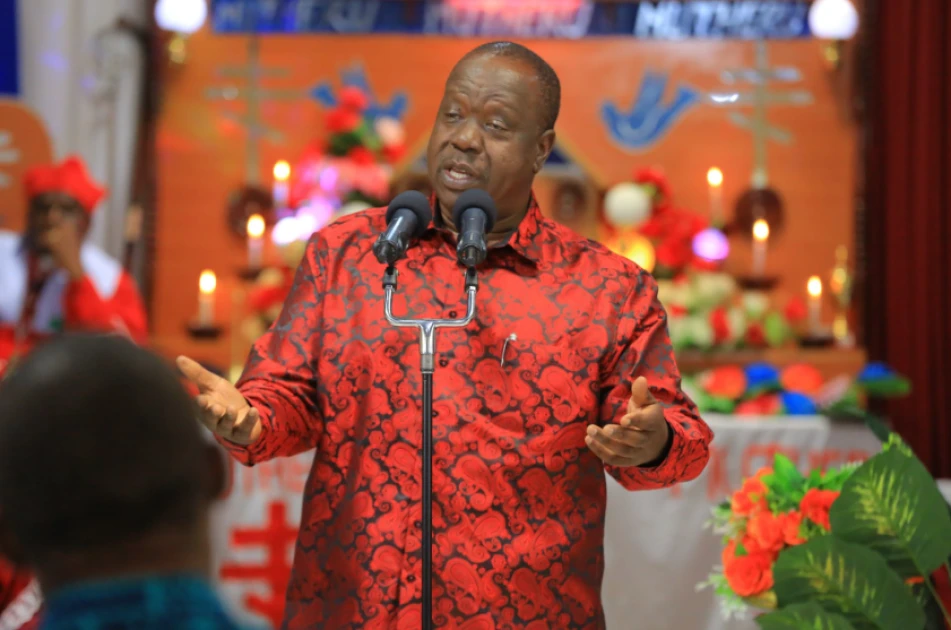
Former Interior Cabinet Secretary and 2027 presidential hopeful Dr. Fred Matiang'i has demanded the full disclosure of the Government-to-Government (G-to-G) oil importation deal. This follows a revelation by Uganda President Yoweri Museveni of an alleged foul supply deal. Matiang'i argues that the matter has raised doubts about Kenya's oil dealings, necessitating transparency and accountability. He emphasized that Kenyans deserve to be furnished with the detailed agreement dossier.
President Museveni recently revealed that a Kenyan legislator, identified as 'Jirongo', exposed the presence of middlemen in East Africa's G-to-G oil importation deal in 2019. Museveni said that Uganda had previously procured petroleum products through intermediaries in Kenya, rather than directly from the government as outlined in the G-to-G framework. This revelation prompted him to end the G-to-G arrangement with Kenya and begin sourcing bulk petroleum products directly.
Matiang'i stated that the G2G agreement must be published in full, and the role of middlemen must be disclosed and scrutinized. He also emphasized that the National Oil Corporation of Kenya (NOCK) must be restored to its proper role in securing supply and helping stabilize the fuel market. According to Matiang'i, when public money is involved, secrecy cannot be the policy, and Kenyans deserve to know who benefited, at what cost, and why.
The government has clarified the allegations, stating that the deal was inked to stop a severe US dollar shortage in 2022 that threatened to crash the economy and drain the country's foreign exchange reserves. The importation deal was brokered in 2023 between Kenya and companies including Aramco Trading Fujairah FZE, Abu Dhabi National Oil Company Global Trading Ltd, and Emirates National Oil Company (Singapore) Private Limited.
Energy Cabinet Secretary (CS) Opiyo Wandayi explained that International Oil Companies (IOCs) opted to appoint licensed Oil Marketing Companies (OMCs) for local supply logistics. A vetting process resulted in the onboarding of several companies, including Gulf Energy Limited, Galana Energies Limited, and Oryx Energies Kenya Limited. CS Wandayi maintains that the deal preserved Kenya's forex reserves and stabilized the US Dollar - Kenya Shilling exchange rate.
The G-to-G oil importation deal has been a subject of controversy, with some arguing that it was orchestrated to benefit middlemen. However, the government has maintained that the deal was necessary to stabilize the fuel market and prevent a severe economic crisis. The debate has highlighted the need for transparency and accountability in Kenya's oil dealings.
Matiang'i's call for transparency has added pressure on the government to disclose details of the deal. The government's response to the allegations and the implementation of the deal will be crucial in determining the level of transparency and accountability in Kenya's oil sector.
Key points
- Former Interior CS Fred Matiang'i demands full disclosure of G-to-G oil importation deal
- Uganda's President Museveni revealed presence of middlemen in East Africa's G-to-G oil importation deal
- Government maintains that deal was necessary to stabilize fuel market and prevent economic crisis