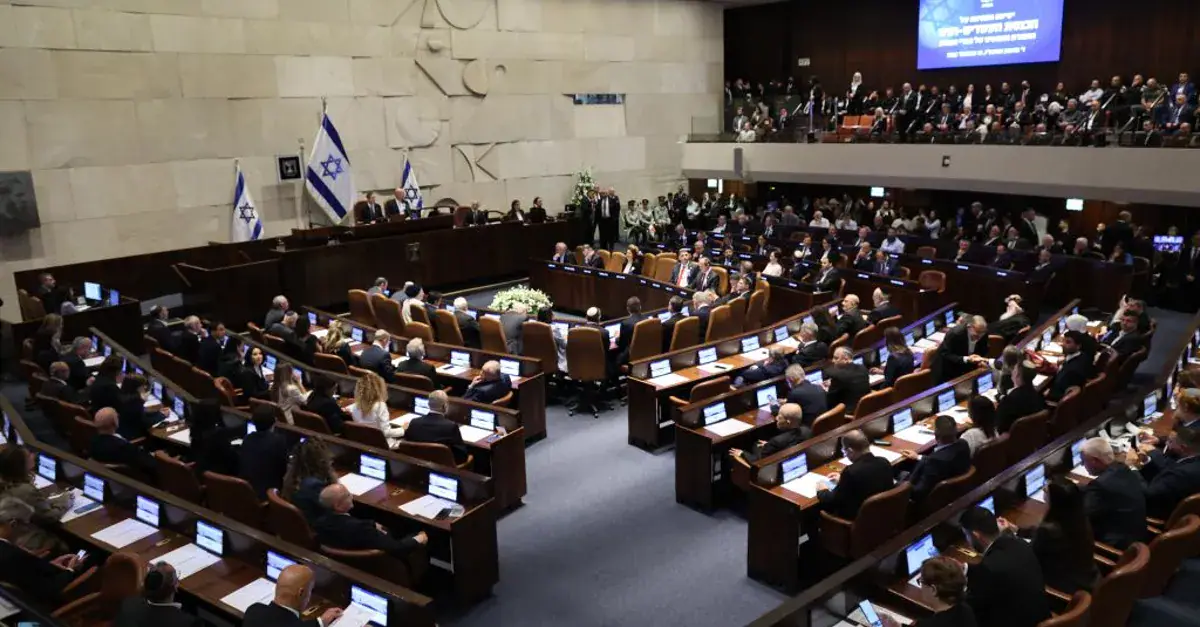
The Israeli parliament, or Knesset, has elected Matan Kahana as its new speaker in a significant move that could impact the country's political landscape. Kahana, a candidate from the Yesh Atid party led by Gadi Eisenkot, secured 66 votes to win the position. He replaces Amir Ohana, who previously held the role. The election took place during a Knesset session where lawmakers voted separately on each candidate.
Kahana's victory was made possible with the support of parties from the Change Bloc, as well as 19 lawmakers from the Joint List and United Arab List. On the other hand, parties from the coalition supporting Prime Minister Benjamin Netanyahu, including Shas and United Torah Judaism, backed Ofir Katz, the Likud party candidate. Katz received 53 votes. This development is seen as a boost to the opposition's influence on the Knesset's agenda.
The election of Kahana as speaker holds considerable political significance, as it grants the opposition bloc, led by Eisenkot, a degree of control over the Knesset's operations and legislative agenda. This comes at a time when Eisenkot has been tasked with forming a government, having been given a 28-day deadline by Israeli President Isaac Herzog. The move could potentially pave the way for changes to Netanyahu's legislative agenda.
As the new speaker, Kahana is expected to prioritize certain legislative initiatives, including the establishment of an independent committee to investigate a Hamas attack that occurred on October 7, 2023. This initiative has been met with opposition from Netanyahu. Additionally, Kahana may push for measures such as limiting the term of the prime minister and repealing laws enacted by Netanyahu's previous government that critics argue undermined judicial authority.
The Likud party, led by Netanyahu, has criticized the election of Kahana, describing it as a victory for those who support "terrorism." Netanyahu has repeatedly expressed concerns about the threat posed by Arab Israeli parties, characterizing them as an existential threat to Israel. These comments have been condemned by the parties in question as racist and discriminatory.
The election of Kahana and the appointment of lawmakers from the Change Bloc to chair key Knesset committees are likely to have a significant impact on the country's legislative agenda. These developments could potentially lead to a shift in the balance of power within the Knesset and influence the course of Israeli politics in the coming months.
The Knesset, Israel's unicameral parliament, comprises 120 members and is a powerful institution with significant influence over the country's legislation. The speaker of the Knesset plays a crucial role in determining which bills are brought to a vote. With Kahana at the helm, the opposition may have greater opportunities to advance its legislative priorities and hold the government accountable.
Key points
- Matan Kahana's election as speaker of the Knesset marks a significant shift in the balance of power within Israel's parliament.
Reporting sources
- انتخاب ماتان كاهانا رئيسا للكنيست الإسرائيلي · Al-Qahera News