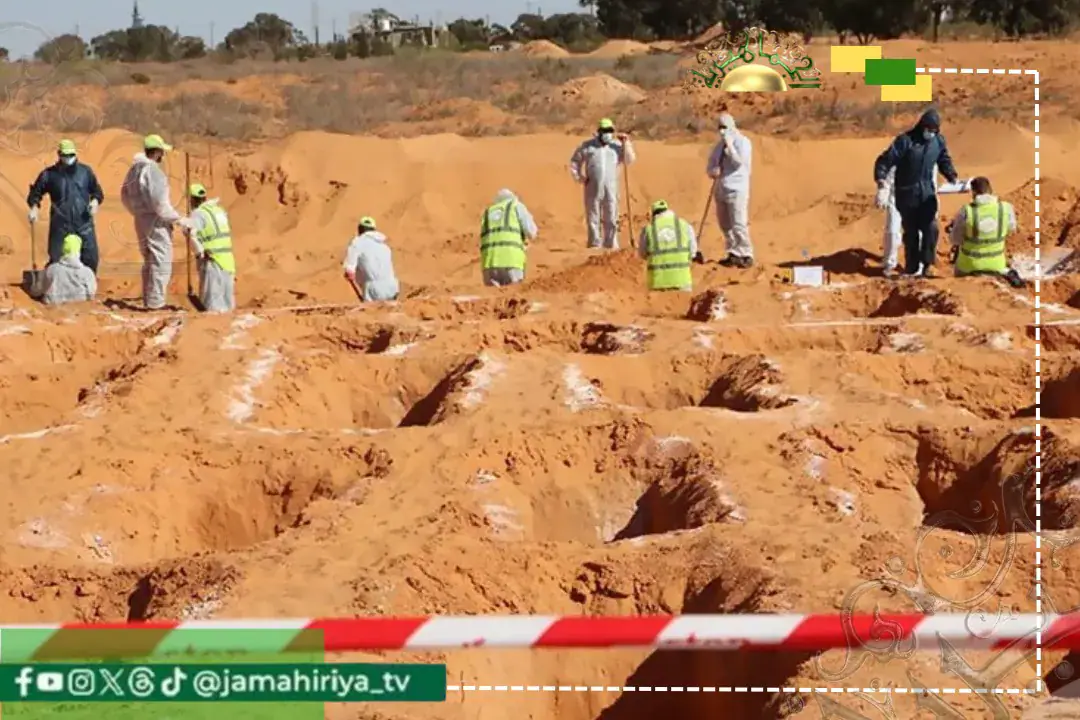
The Qatari-based Al Jazeera network has highlighted the mass graves in Tarhuna, Libya, which continue to reopen wounds from years of killings and enforced disappearances. Families are still waiting to learn the fate of their loved ones, and many remains have yet to be identified. According to Al Jazeera, numerous calls have been made for accountability for those responsible for these graves, which are considered one of the most heinous crimes in Libya's modern history.
The Association of Tarhuna Victims has documented 364 missing persons, in addition to victims whose bodies have been recovered but were not registered with the association. These numbers do not account for all those affected by the mass graves. The bodies found are not only from Tarhuna but also from other cities, including Beni Walid, Tripoli, Al Khums, and the southern and eastern regions. This suggests that the impact of these crimes extends far beyond Tarhuna.
A relative of a victim from inside the "Bokسات" prison reported that 21 members of his family were either killed or went missing, with six still unaccounted for, including his brother, brother-in-law, and uncle, as well as three of his uncle's sons. A father of a missing person recalled his son, who used to lead prayers at the mosque and was loved by everyone, and assumed he was killed years ago without his body being found.
The General Authority for Research and Identification of Missing Persons has discovered 82 mass graves in Tarhuna. Dozens of families continue to appeal for information about the fate of their loved ones. The case of the mass graves gained prominence in June 2020, when forces from the former Government of National Accord recaptured Tarhuna from Khalifa Haftar's forces.
During the previous years, Tarhuna was under the control of the "Kaniyat" group, which was linked to kidnappings, detentions, killings, and enforced disappearances of individuals suspected of opposing them. The group later switched allegiance to Haftar's forces, which used Tarhuna as a rear base for their attack on Tripoli.
The locations of the victims' remains vary, including mass graves, areas around the general hospital, wells, farms, and security premises. Reports have also surfaced of missing women and children, with allegations of extrajudicial killings and some victims being buried alive.
The issue of mass graves in Tarhuna remains a painful reminder of the atrocities committed in Libya. Efforts to identify the remains and bring those responsible to justice continue, with many families still seeking closure and answers about the fate of their loved ones.
Key points
- The mass graves in Tarhuna, Libya, are a stark reminder of the years of violence and human rights abuses committed in the country.
- The Association of Tarhuna Victims has documented 364 missing persons, and many more remain unaccounted for.
- The General Authority for Research and Identification of Missing Persons has discovered 82 mass graves in Tarhuna.
Reporting sources
- سنوات من القتل.. الجزيرة: المقابر الجماعية بترهونة وصمة عار تطارد الجناة · Aljamahiriya TV