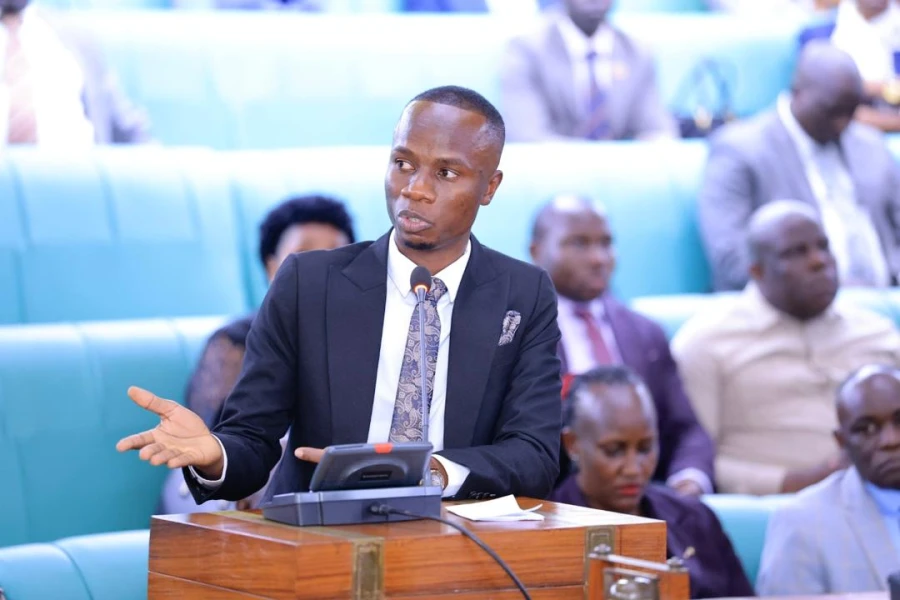
Industrial Division Member of Parliament, Hon. Karim Masaba, has urged the government to consider using part of Uganda's growing foreign exchange reserves to help stabilise the Uganda shilling amid renewed pressure on the local currency. Masaba made the call in Parliament on Tuesday, October 6, 2026, during debate on the depreciation of the shilling against the United States dollar and its implications for traders, fuel prices and the wider cost of doing business.
The MP said Uganda's foreign exchange reserves have risen to about US$6.5 billion, arguing that the country should examine how the reserves can be deployed to cushion the shilling and reduce the financial burden being faced by businesses that depend on imported goods. His remarks came after Leader of the Opposition Rt. Hon. Joel Ssenyonyi raised concerns over the continued depreciation of the shilling and its impact on the cost of imports and living expenses.
According to the Ministry of Economic Planning and Development's August 2026 performance report, the shilling depreciated by 0.7 percent against the US dollar in August, moving from an average of Shs3,704.51 per dollar in July to Shs3,730.25. The ministry attributed the depreciation largely to increased demand for foreign currency from the energy and manufacturing sectors.
Petroleum companies required more dollars to finance fuel imports, while manufacturers and other businesses also needed foreign currency to purchase raw materials, machinery and intermediate goods. Although inflows from commodity exporters, non-governmental organisations and remittances provided some support to the foreign exchange market, the ministry said they were insufficient to offset the increased demand for dollars.
Masaba questioned why the government and the central bank would not consider using the stronger reserve position to intervene in the foreign exchange market. He said traders were particularly concerned about the effect of the rising dollar on goods that had already been purchased or were still in transit. The MP also questioned the decision to increase the cash reserve requirement for commercial banks instead of using the country's foreign exchange position to support the shilling.
Uganda's reserve position has indeed strengthened considerably over the past year. The Bank of Uganda's May 2026 Monetary Policy Report said gross international reserves stood at US$6.1 billion at the end of April 2026, representing an increase of more than 50 percent from US$4.0 billion a year earlier. The International Monetary Fund subsequently reported that Uganda's gross international reserves had reached US$6.1 billion at the end of May 2026, equivalent to about 2.7 months of imports of goods and services.
The debate in Parliament raises the question of how much of the reserve stock can appropriately be used for exchange-rate intervention without weakening Uganda's ability to meet those other obligations. The exchange-rate debate has also been linked to the rising cost of fuel, with petrol and diesel prices reaching levels of between Shs6,800 and Shs7,000 per litre, warning that high pump prices were feeding into the cost of living.
Key points
- Masaba urges government to deploy $6.5bn foreign exchange reserves to stabilise shilling.
- Shilling depreciation attributed to increased demand for foreign currency from energy and manufacturing sectors.
- Uganda's foreign exchange reserves have strengthened considerably over the past year, rising to $6.1bn.