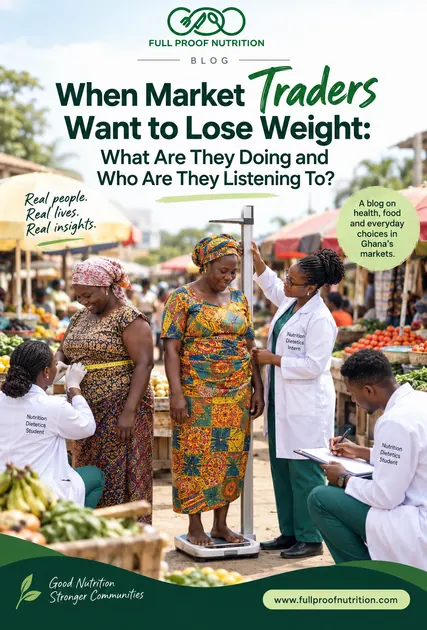
A recent study supervised by Dr. Laurene Boateng has shed light on the weight management practices of market vendors in Ghana. The study, which involved 150 vendors in Dansoman, Accra, found that many traders struggle with their weight, with 4 in 10 classified as overweight and 1 in 3 living with obesity. The study measured various health indicators, including weight, height, waist and hip circumference, body fat percentage, and muscle mass. The findings suggest that the health and nutrition needs of market vendors in Ghana deserve greater attention.
The study found a noticeable difference between the vendors' perceived weight and their actual weight. Although many vendors were classified as overweight or obese, many perceived themselves as having a normal weight. Dissatisfaction with body weight was common, with many participants unhappy with their current weight and trying to lose weight. This combination of findings suggests that wanting to change one's weight does not necessarily mean that a person has an accurate understanding of their current weight status.
The study also explored the weight management practices of the vendors. Walking was a commonly reported form of physical activity, while participation in more structured exercise such as going to the gym was uncommon. When it came to food, one practice stood out: skipping meals. A large number of vendors reported skipping meals as a strategy for losing weight, while relatively few reported intentionally modifying their diet. However, research suggests that skipping meals may not be an effective weight management strategy.
The study found that social media, friends, and family were important sources of weight management information for the vendors. Comparatively few participants reported obtaining this information from dietitians or nutrition professionals. This finding highlights the need for nutrition professionals to think seriously about where people are already looking for information and how credible nutrition guidance can become easier to access.
The study's findings are consistent with previous research on the health and nutrition needs of market vendors in Ghana. A study involving 402 female traders at Abura and Kotokuraba markets in Cape Coast reported similar findings, including high rates of overweight and obesity. Earlier work among traders at Kaneshie Market in Accra also examined obesity alongside hypertension, highlighting the need for greater attention to the health and nutrition needs of this occupational group.
The study's lead author, Dr. Laurene Boateng, notes that weight management recommendations have to make sense within the context of the vendors' working lives. For people spending long hours attending to customers and protecting their income, recommendations about eating, exercise, and weight management need to take into account their working conditions and available resources. The study's findings highlight the need for a more nuanced understanding of the challenges faced by market vendors in Ghana.
Overall, the study provides valuable insights into the weight management practices and challenges faced by market vendors in Ghana. The findings suggest that a comprehensive approach to weight management is needed, one that takes into account the vendors' working conditions, nutrition knowledge, and access to credible information. By addressing these challenges, it may be possible to improve the health and well-being of market vendors in Ghana.
Key points
- Many market vendors in Ghana struggle with weight management, with 4 in 10 classified as overweight and 1 in 3 living with obesity.
- The vendors' working conditions and limited access to credible nutrition information are significant challenges to effective weight management.
- A comprehensive approach to weight management is needed, one that takes into account the vendors' working conditions, nutrition knowledge, and access to credible information.