American scientist Margaret Hamilton, a renowned computing pioneer, has died at the age of 90. Her former employer, the Massachusetts Institute of Technology (MIT), announced her death on September 30. Hamilton was a prominent figure in the development of the computer system used by NASA's Apollo lunar program. She worked at MIT from 1959 to the mid-1970s, teaching and conducting research.
Hamilton was born in Indiana in 1936 and studied mathematics before moving to Boston, Massachusetts, with her husband in 1959. She found employment at MIT, initially working in meteorology before joining a lab in 1965 that aimed to develop software to send a man to the Moon. Hamilton was hired as the first programmer for the Apollo project at MIT and the first female programmer in the project.
By 1968, Hamilton had become the assistant director in charge of the Command and Service Module team, overseeing a team of more than 400 people working on Apollo's software. Her contributions to the Apollo program were instrumental in its success, enabling the United States to beat the Soviet Union in the race to land humans on the Moon. Olivier de Weck, the Apollo Program Professor and interim head of the MIT Department of Aeronautics and Astronautics, praised Hamilton as a "computing pioneer" and a "software engineer at a time when that field was in its infancy."
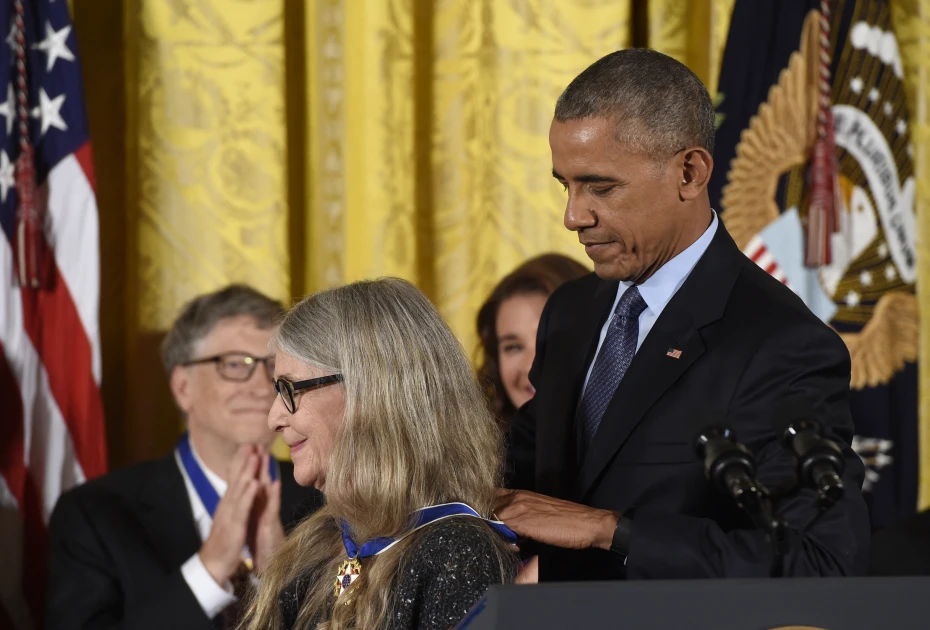
Hamilton's achievements were widely recognized, including being awarded the Presidential Medal of Freedom by former President Barack Obama in 2016. In 2009, she reflected on her work on the Apollo project, saying that her team had "no second chance" and that they "took our work seriously, many of us beginning this journey while still in our 20s." Hamilton also emphasized the importance of mutual respect and trust within her team.
Throughout her career, Hamilton published more than 130 papers and started her own software companies, Higher Order Software and Hamilton Technologies. Her legacy as a pioneering software engineer and computing expert continues to inspire new generations of scientists and engineers. NASA Administrator Jared Isaacman paid tribute to Hamilton, calling her "a pioneer whose work helped make Apollo and humanity's first journeys to the moon possible."
Hamilton's work on the Apollo program was characterized by her dedication, commitment, and innovative approach to problem-solving. She led a team that developed one of the most complex systems humanity had ever achieved, and her contributions played a significant role in the program's success. Hamilton's impact on the field of computer science and software engineering is still felt today.
The news of Hamilton's passing has been met with tributes and condolences from the scientific community and beyond. Her legacy serves as a testament to the power of innovation, hard work, and determination. As a pioneering scientist and engineer, Hamilton paved the way for future generations of women in STEM fields and left an indelible mark on the history of space exploration.
Key points
- Margaret Hamilton, a renowned computing pioneer, died at the age of 90.
- Hamilton led the development of the computer system used by NASA's Apollo lunar program.
- Her contributions to the Apollo program were instrumental in its success, enabling the United States to land humans on the Moon.