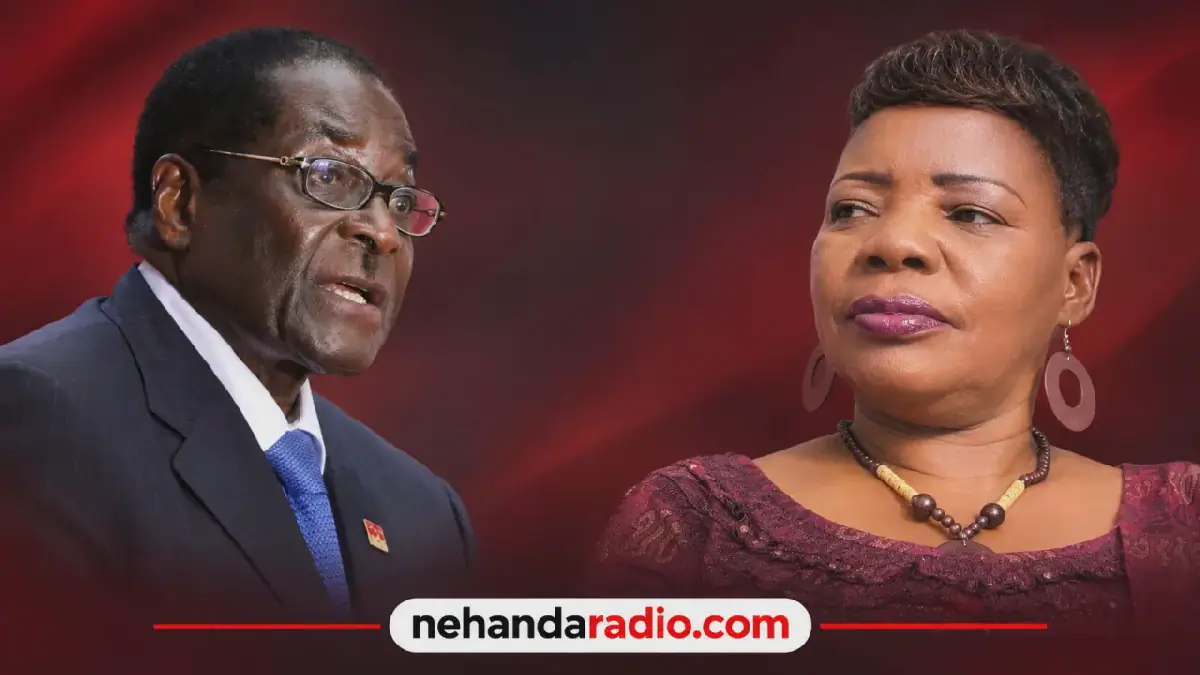
On a scorching afternoon in Harare South in October 1995, Margaret Dongo, a 35-year-old former guerrilla fighter, made history by forcing the High Court of Zimbabwe to set aside an official election result. She had been ousted from the ruling ZANU PF nomination and was standing as an independent parliamentary candidate. Dongo's actions exposed systematic irregularities engineered by the state's political apparatus. She then returned to the ballot and decisively defeated the candidate backed by President Robert Mugabe.
In the mid-1990s, Mugabe's political dominance appeared total, with ZANU PF holding 147 of the 150 seats in the National Assembly. The economy was governed through tightly controlled state patronage, and the narrative of the 1970s liberation struggle was wielded as an untouchable shield against domestic scrutiny. Dongo broke that spell by taking the ruling party to court and winning both the legal battle and the subsequent rerun. This shattered the myth of ZANU PF's electoral invincibility from within its own liberation lineage.
Dongo's confrontation with the political establishment was not merely a tactical electoral spat. It marked a fundamental fault line in Zimbabwe's post-independence history: the moment a genuine product of the armed struggle turned the moral authority of the liberation war against the corrupt hierarchy of the post-colonial state. Her life, spanning the bush war in Mozambique, the corridors of Parliament, public exposés of state corruption, and violent intimidation, raises questions in Zimbabwean political history about what made Margaret Dongo such a formidable rebel.
Born Margaret Natalia Dongo in 1960 in Highfield, Salisbury (now Harare), she grew up in a township that served as the crucible of Zimbabwean nationalism. Highfield was an environment steeped in political debate, trade unionism, and constant colonial police surveillance. Her family life was modest, shaped by the racial and economic segregation of Ian Smith's Rhodesia. In 1975, at just 15 years of age, Dongo abandoned her secondary education to join the armed struggle against minority rule.
Dongo joined the Zimbabwe African National Liberation Army (ZANLA), the armed wing of ZANU, and adopted the nom de guerre Comrade Tichafa ("We shall die"). She survived the devastating Rhodesian military raid on the Chimoio camp in November 1977, an event that claimed the lives of hundreds of unequipped recruits and deeply traumatised those who survived. Her wartime service extended beyond basic military training, working within the medical and administrative units of ZANLA.
When the war ended with the Lancaster House Agreement in 1979 and the celebrated independence elections of April 1980, Dongo returned to a transformed country. She completed her professional qualifications in public administration and joined the civil service, working inside the Ministry of State Security and later the Ministry of Labour, Manpower Planning and Social Welfare. Her transition into formal politics occurred in 1990, when she was elected to Parliament as the ZANU PF member for Harare East.
By 1995, the structural adjustment programmes pushed by international financial institutions had begun to squeeze ordinary Zimbabweans, while allegations of high-level government corruption mounted. Within ZANU PF, internal democracy was rapidly eroding. Dongo's actions in Harare South marked a turning point in her relationship with the party and the government. Her bravery in taking on the regime had made her a formidable opponent, and her legacy continues to be felt in Zimbabwean politics.
Key points
- Margaret Dongo forced the High Court to set aside an official election result in 1995.
- She defeated the candidate backed by President Robert Mugabe in a subsequent rerun.
- Dongo's actions marked a fundamental fault line in Zimbabwe's post-independence history.