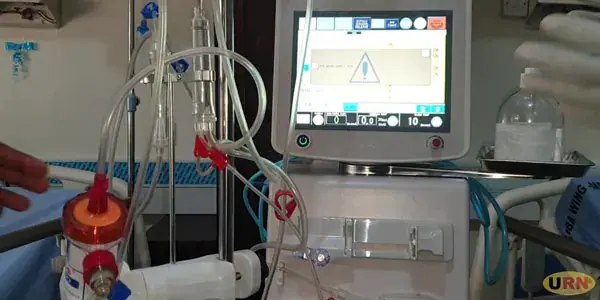
Many Ugandans suffering from kidney disease are struggling to afford dialysis due to funding constraints at Kiruddu National Referral Hospital. The hospital requires Shs48.967 billion annually for dialysis consumables but received only Shs10.677 billion, leaving a significant shortfall. This has forced the hospital to reduce dialysis sessions for some patients from three times a week to twice weekly.
The affordability challenge is compounded by the high cost of treatment, with a dialysis kit costing about Shs350,000 per session. Although the hospital charges patients Shs60,000, which is described as a modest contribution, many patients still struggle to afford it. Patients who cannot afford the contribution are not turned away, but the hospital accumulates unpaid bills as it tries to keep the service accessible.
Kiruddu Hospital Director and Accounting Officer Dr Charles Kabugo told Parliament’s Public Accounts Committee that the hospital conducts between 80 and 90 dialysis sessions daily, reflecting the demand for the service and pressure on available supplies. The hospital’s dialysis budget increased from approximately Shs2.5 billion to Shs10.2 billion, but resources remain insufficient to meet growing demand.
The hospital has exhausted its November allocation for consumables and is making arrangements to procure supplies for December. Dr Kabugo said the hospital has requested supplementary funding from the Ministry of Finance and is engaging Ministry of Health management over the cost of dialysis.
Beyond funding constraints, Dr Kabugo raised concern about patients arriving at national referral hospitals with critical conditions due to delayed referrals. He urged Ugandans to seek medical attention early and use regional referral hospitals, which are increasingly equipped with specialised diagnostic services.
Dr Kabugo also noted a change in disease burden, with fewer malaria cases and more complicated conditions like kidney disease and cancer becoming prominent. He attributed some of these changes to lifestyle, diet, limited physical activity, and possible exposure to harmful substances in food and the environment.
Kiruddu has introduced a zero-cost policy for mothers with kidney complications following childbirth and accident victims with kidney injuries. The hospital is also supporting the establishment of dialysis services at regional referral hospitals, including Mbale, Lira, Mbarara, and Hoima, with plans to extend support to Jinja and Arua.
Key points
- Kiruddu National Referral Hospital faces a Shs38.3 billion funding gap for dialysis consumables.
- The hospital has reduced dialysis sessions for some patients from three times a week to twice weekly due to funding constraints.
- Dr Kabugo urged Ugandans to seek medical attention early and use regional referral hospitals equipped with specialised diagnostic services.