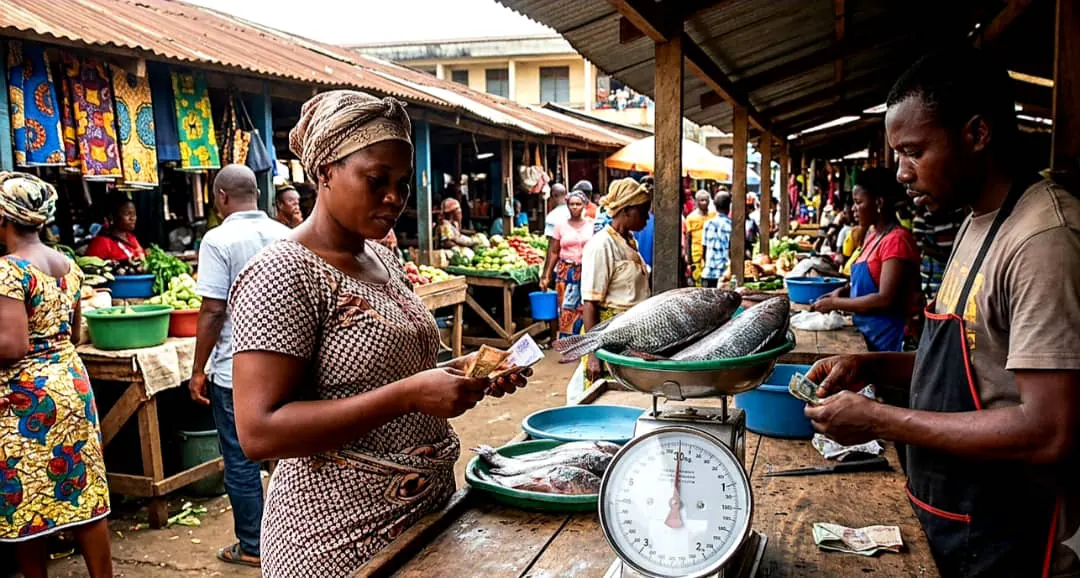
A recent report by the National Institute of Statistics of Equatorial Guinea (INEGE) has highlighted a concerning trend in the country's markets. The report reveals that scales used to weigh goods, such as meat and fish, have been tampered with. This means that consumers are paying for a kilogram of product but receiving less than that. The practice is not only unfair but also detrimental to the economy, particularly for low-income families who rely heavily on these markets for their daily needs.
The issue of manipulated scales affects not only the consumers' wallets but also erodes trust between buyers and sellers. When consumers purchase goods, they assume that the scales used are accurate. However, if the scales are tampered with, this trust is broken, and the seller suffers the consequences. The INEGE report emphasizes that this practice is a form of economic fraud, which has severe consequences for the consumer and the overall market.
For low-income families, the difference of a few hundred grams can be significant. These families often struggle to make ends meet, and any shortfall in their daily purchases can have a substantial impact on their livelihood. The issue of manipulated scales is not just about the economic loss; it also affects the well-being of these families. The government and relevant authorities have a crucial role to play in addressing this issue and ensuring that consumers receive fair value for their money.
The INEGE report calls for urgent action to address this issue. The authorities must take steps to protect consumers and ensure that sellers act with integrity. One possible solution is to conduct regular checks on the scales used in markets and impose penalties on sellers who are found to be using tampered scales. Additionally, public awareness campaigns can educate consumers on their rights and encourage them to report any instances of manipulated scales.
The government must also work to restore trust in the market. By taking concrete steps to address the issue of manipulated scales, the government can demonstrate its commitment to protecting consumers and promoting fair trade practices. This, in turn, can help to boost consumer confidence and stimulate economic growth.
Experts argue that the issue of manipulated scales is not unique to Equatorial Guinea and that similar problems exist in other countries. However, this does not diminish the need for urgent action to address the issue. The government and relevant authorities must work together to develop effective solutions that protect consumers and promote fair trade practices.
Ultimately, the goal is to ensure that consumers receive fair value for their money. By taking action to address the issue of manipulated scales, the government can promote a fair and transparent market that benefits both consumers and sellers. The authorities must prioritize this issue and work to create a level playing field for all market participants.
Key points
- The Equatorial Guinea government must take urgent action to address the issue of manipulated scales in markets.
- The issue of manipulated scales affects not only consumers' wallets but also erodes trust between buyers and sellers.
- The government and relevant authorities have a crucial role to play in addressing this issue and ensuring that consumers receive fair value for their money.