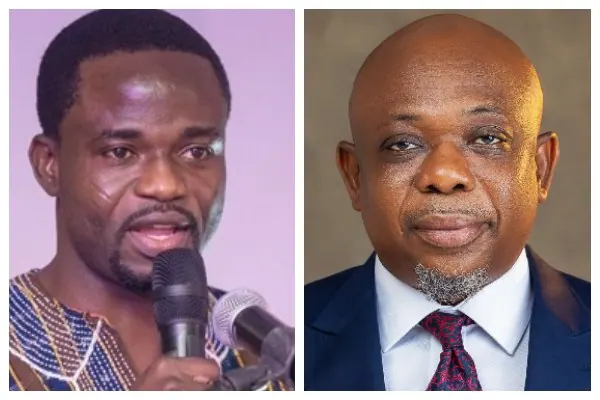
Ghana's cocaine trafficking scandal has taken a sharply partisan turn, with investigative journalist Manasseh Azure Awuni publicly rebuking the Majority Leader for what he describes as an attempt to blame the previous government for enforcement failures happening on the current administration's watch. The clash follows a press briefing James Agalga held in Parliament on September 24, 2026.
According to Agalga, a 2018 policy decision excluded the Narcotics Control Commission (NACOC) from mandatory joint inspections at Tema Port, weakening the agency's ability to monitor cargo passing through the country's busiest port. He pointed to figures showing NACOC recorded 73 arrests nationwide in 2024, a number that jumped to 217 arrests across 165 cases in 2025.
In a Facebook post on September 26, 2026, Azure pushed back forcefully, arguing that the current government had been in office for close to two years and should own the responsibility for fixing gaps in the country's security and narcotics apparatus rather than pointing fingers at the NPP. He questioned why officials appointed by the Mahama administration would need foreign law enforcement agencies to expose weaknesses in Ghana's drug monitoring system.
Azure was blunt in dismissing the idea that a flawed 2018 policy fully explains the current wave of seizures, suggesting it was untenable for government to claim credit for recent enforcement gains while simultaneously blaming the opposition for the underlying problem. He argued that whoever controls the national security architecture bears responsibility for both the successes and the failures within it.
The blame exchange lands amid an already turbulent few weeks for Ghana's anti-narcotics establishment. NACOC itself had admitted its operations were "more or less useless" before recent reforms, even as a Member of Parliament claimed earlier warnings about drug trafficking routes had gone unheeded. An arrest carried out by the Economic and Organised Crime Office (EOCO) involving an MP has raised more questions than answers.
The scandal has also spilled into Parliament itself, prompting a formal recall of MPs to address the crisis, following mounting pressure after a €225 million cocaine bust implicated an East Legon spa owner, Jessica Hartog, who was arraigned in court. Calls for a full parliamentary probe into the wider network of cocaine cases linked to Ghana have grown louder.
Neither GhanaWeb's report nor Agalga's briefing indicated a specific timeline for further government action beyond the reforms already cited, such as NACOC's reinstated role in port inspections. No date has been given for a parliamentary probe, and it remains unclear whether the political sparring between Azure and the Majority Leader will influence how lawmakers proceed with existing calls for an inquiry into the scandal.
Key points
- Journalist Manasseh Azure Awuni accuses Majority Leader James Agalga of dodging responsibility for Ghana's widening cocaine scandal.
- Agalga blames a 2018 policy decision for current enforcement failures, while Azure argues the current government should own the responsibility for fixing gaps in the country's security and narcotics apparatus.
- The scandal has prompted calls for a full parliamentary probe into the wider network of cocaine cases linked to Ghana.